
Landspitali - University Hospital
HAMUR care bundle
HAMUR is a care bundle, a standardized procedure based on evidence-based knowledge, where the main interventions are compiled into a single package.
HAMUR consists of five key components, with each letter in the acronym representing one of the interventions:
H for Hreyfing (Movement)
A for Athuga húð (Skin Assessment)
M for Mat,vökva og næringu (Fluids and Nutrition)
U for Undirlag (Support Surface)
R for Raki (Moisture Management)
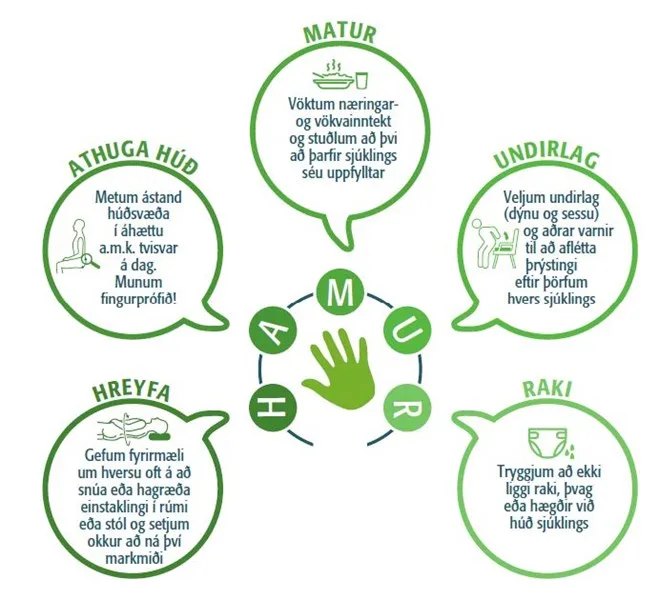
At Landspítali, the HAMUR care bundle is used for patients at risk of developing pressure injuries.
A HAMUR checklist is kept by the patient’s bedside. This document helps track individual nursing interventions that are performed repeatedly to prevent pressure injuries. The HAMUR checklist enhances oversight of intervention status and encourages communication and education for patients and their families.
The HAMUR checklist is not part of the patient’s medical record, so it is essential that all relevant information from the checklist is documented under the nursing diagnosis "Risk of Pressure Ulcer" in the patient’s medical records.
For further details on each HAMUR intervention, refer to quality document LSH-508.
Relieving pressure on vulnerable skin areas is the most important prevention and treatment for pressure injuries.
In the H (Movement) component of the HAMUR care bundle, an individualized plan is established to determine how often an at-risk patient should move or reposition, whether in bed or in a chair. Patients who lack sensation or the ability to reposition themselves must be assisted.
The frequency of turning or repositioning depends on:
The condition of the skin and tissues in pressure-prone areas
The patient's ability to reposition independently
The patient’s medical condition
Comfort level
Treatment goals
If a patient has redness or a pressure injury, it is crucial to ensure they do not lie on the affected area. If a patient has a pressure injury on the sacrum or ischial tuberosities, sitting in a chair should be limited.
It is essential to educate the patient about the effects of prolonged immobility, pressure, and shear on specific skin areas and how these factors contribute to the development of pressure injuries. The patient should be informed about ways to relieve pressure from at-risk skin areas by repositioning in bed and in a chair, turning, standing up regularly, or transferring between bed and chair. Additionally, the patient should be shown how to use available aids, such as bed rails, turning sheets, hoists, and walkers, to facilitate movement and repositioning in bed and in a chair, as well as when standing up.
No support surface (e.g., an air mattress or an air cushion) can completely eliminate pressure on the skin of a patient who remains immobile. Therefore, even patients lying on an air mattress must be repositioned and turned regularly. It is also important to document the patient's level of movement and repositioning, including how long they sat in a chair, how long they remained in a particular position in bed, and whether they required assistance with repositioning and turning.
Consulting a physical therapist may be beneficial if repositioning and moving the patient proves difficult. If movement or positioning is restricted based on medical instructions, it is necessary to find alternative ways—possibly in collaboration with other healthcare professionals, such as physical therapists and physicians—to reposition and mobilize the patient to prevent pressure injuries.
Repositioning in Bed
Patients should be encouraged and assisted in lying in a 30° supine or lateral position, as this reduces pressure on bony prominences. In a supine position, it is important to elevate the legs slightly before raising the head of the bed to improve comfort and prevent the patient from sliding down. Prolonged supine positioning increases the risk of pressure injuries on the sacrum, spine, shoulder blades, heels, and occiput. Checking for pressure on the sacrum can be done by placing a hand under the patient’s sheet.
When a patient is lying on their side, palpating the greater trochanter can help determine whether they are resting on a bony area. Using support pillows and wedges helps stabilize the patient in the desired position and enhances their comfort.
It should be kept in mind that in some cases the 30° rule may need to be deviated from and that the patient may need to be elevated more due to their condition and/or treatment, e.g. during tube feeding.
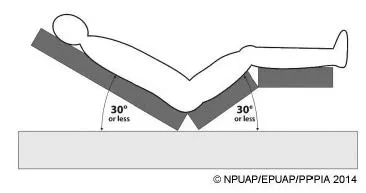
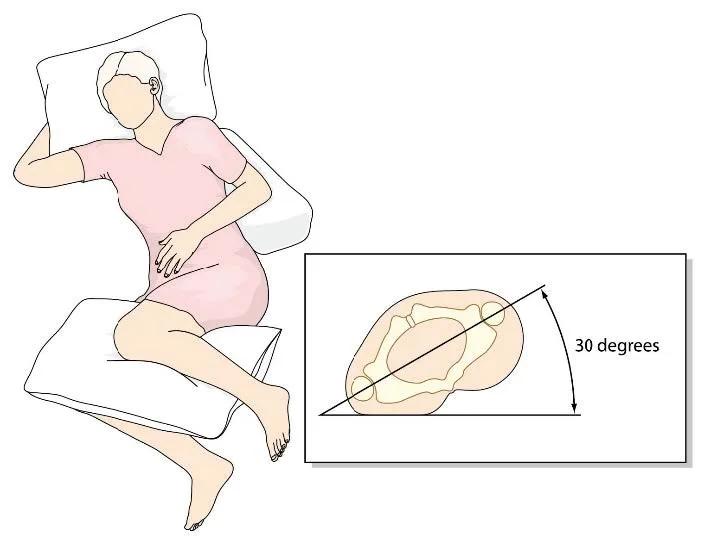
It is important to ensure that when repositioning or adjusting a patient in bed or a chair, the skin does not drag across the surface, as this can cause shear, pressure, or friction injuries. Therefore, assistive devices such as hoists, turning sheets, and similar aids should be used whenever possible and when needed.
When repositioning and moving a patient, it is crucial to check that no objects, such as tubes, braces, or clothing, are beneath the patient or pressed tightly against their skin. Pressure from medical devices should be minimized, and these items should be repositioned or removed as soon as possible.
For patients at risk of developing pressure injuries on their heels, their heels should not come into direct contact with the surface. Heel protectors and support cushions can be used to elevate the heels off the surface.
Repositioning in a Chair
Proper seated posture helps prevent pressure and shear forces on the soft tissues over the sacrum and ischial tuberosities (sitting bones).
The patient should be stable, with both feet on the floor or a footrest, with adequate support for the back and arms, and with the seat adjusted to the correct height.
Consultation with an occupational or physical therapist is recommended when needed.
Patients who spend extended periods in a chair, such as wheelchair users, need to shift their position regularly.
Assistance should be provided to those who cannot reposition themselves independently.
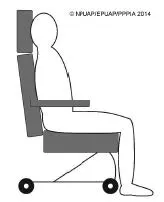
From the European Pressure Ulcer Advisory Panel, National Pressure Injury Advisory Panel and Pan Pacific Pressure Injury Alliance. Prevention and Treatment of Pressure Ulcers/Injuries: Clinical Practice Guideline. The International Guideline. Emily Haesler (Ed.). EPUAP/NPIAP/PPPIA: 2019.
Points to Consider
Have instructions or guidelines been provided regarding the repositioning and movement of the patient in bed and in a chair?
Has the patient been repositioned and turned according to the plan in both the chair and bed?
Has the patient been encouraged to adjust their position, turn, and move regularly?
Has the patient received education on why it is important to regularly relieve pressure on the skin?
Is the patient adequately pain-managed to facilitate movement and repositioning?
Has the patient received training on techniques to help them reposition and move more easily?
Does the repositioning and turning schedule need to be reviewed?
Has it been checked whether the patient’s weight is resting on bony prominences, tubes, wrinkled sheets, or other objects that could cause pressure on the skin?
Is it ensured that the patient is not lying or sitting on a skin area with wounds or redness?
Is care taken to prevent the patient's skin from dragging across the surface during repositioning or turning?
Is work being done to maximize the patient's mobility?
Could support cushions be used to elevate body parts, provide support, and increase patient comfort?
Could turning sheets help facilitate position changes and repositioning in bed?
Is the patient positioned in a 30° lateral and supine position? (There may be contraindications for this.)
Is the patient’s sitting posture in the chair optimal? (The patient is stable, both feet are on the floor or a footrest, there is support for the back and arms, and the seat cushion is properly positioned.)
Is the patient's sitting time on the toilet, commode chair, or bedpan being limited?
Regular Skin Assessment and Clinical Evaluation
Regular skin assessment and clinical evaluation based on the best available knowledge are key factors in preventing pressure injuries. Skin inspection helps monitor skin integrity and screen for signs of tissue damage, allowing for appropriate intervention. By assessing the patient’s skin regularly, caregivers can better determine whether repositioning should be done more frequently, if specific skin areas require closer monitoring, or if alternative equipment such as air mattresses, heel protectors, cushions, or support pillows is needed.
That said, it is essential that skin assessments are systematic, standardized, and performed regularly.
Skin condition should be evaluated over bony prominences and other high-risk areas, such as where medical devices, equipment, or other objects come into contact with the skin. See quality document LSH-494 for further details on skin condition assessment.
At Landspítali University Hospital, skin condition should be assessed upon admission, twice daily for patients at risk of pressure injuries, and whenever a patient is transferred between departments. Every opportunity should be used to assess and evaluate exposed skin areas, such as during assistance with toileting, dressing, and bathing. If a patient complains of pain or tenderness, it is crucial to examine the surrounding skin areas closely.
When performing a skin assessment, good lighting is important, and both visual inspection and palpation of the skin should be conducted. Look for redness, wounds, blisters, moisture, temperature changes, firmness, etc. When assessing the heels, using a small mirror or checking while the patient is in a lateral position can be helpful.
If redness is detected, the finger test should be used, and pressure should be relieved immediately.
Patients at risk of developing pressure injuries should be informed about the importance of regular skin assessment and evaluation and how these assessments are performed. Patients should also be encouraged to notify healthcare staff if they notice redness, wounds, tenderness, or discomfort in specific skin areas.
The findings from the skin assessment should be documented in the patient’s medical record, and repositioning and mobility instructions should be reassessed if needed. If a pressure injury is detected, it should be classified according to the severity of tissue damage, and an appropriate treatment plan should be implemented.
Points to Consider:
Have all skin areas exposed to pressure been examined?
Is every opportunity being utilized to assess the skin, such as during routine care, physiotherapy, toileting, and bathing?
Is the skin being assessed for redness, pallor, dryness, rashes, wounds, temperature changes, moisture, swelling, and localized pain?
Is the finger test being used when redness is detected on the patient’s skin?
Are skin injuries being addressed by initiating new nursing interventions or reassessing the care plan?
Nutrition and Hydration in Pressure Injury Prevention and Healing
Research suggests that poor nutritional status increases the risk of developing pressure injuries and affects wound healing.
At Landspítali University Hospital, all patients should undergo a malnutrition risk assessment within 24-48 hours of admission. If the assessment indicates a high risk of malnutrition (a score of 5 or more, or 4 or more for patients with lung disease or cancer), a referral is sent to the hospital’s Nutrition Unit through the Heilsugátt system. A dietitian then establishes an appropriate nutrition plan.
The patient's weight should be measured weekly or whenever there is a change in their condition.
Patients who are at risk of developing pressure injuries and have a high likelihood of malnutrition, as well as those with existing pressure injuries, should receive energy- and protein-enriched meals (OP diet). If regular meals do not meet the patient’s nutritional needs, additional high-energy and high-protein snacks and/or oral nutritional supplements should be provided.
For patients with stage 2-4 pressure injuries and a high risk of malnutrition, specialized nutritional supplements or tube feeding formulas containing arginine, zinc, and antioxidants (e.g., Cubitan or Nutrison Advanced Cubison) should be provided. If the patient has poor oral intake or deficiencies in specific vitamins and/or minerals, additional supplements should be given as needed.
If oral intake is insufficient, enteral (tube) feeding should be initiated.
If enteral feeding is not possible, parenteral nutrition (intravenous nutrition) should be considered.
Fluid requirements for patients with pressure injuries vary, but a general guideline is 1,600 ml per day for women and 2,000 ml per day for men.
Patients should be informed if they are at risk of malnutrition and educated on ways to meet their nutritional and hydration needs.
Food and fluid intake for patients at risk of malnutrition should be recorded in the medical record. See quality document LSH-514 for further details on nutrition protocols for patients at risk of or with pressure injuries.
Points to Consider:
Has a malnutrition risk assessment been performed for the patient?
Does the patient need to be on a nutrition or fluid intake record?
Is the patient’s nutritional requirement being me?
Does the patient receive encouragement and education on the importance of proper nutrition and hydration?
Is the patient’s nutritional intake being monitored and documented?
Is the patient receiving high-energy and high-protein snacks and/or nutritional supplements if their dietary intake is insufficient?
Is the patient weighed at least weekly, and is their weight documented?
Has a dietitian consultation been requested if the patient is at high risk of malnutrition?
Are dietitian recommendations being followed if available?
Could the patient have swallowing difficulties, requiring a speech therapist consultation?
Is the patient’s fluid intake sufficient?
Are there signs of dehydration, such as decreased urine output or reduced skin turgor?
Is additional fluid supplementation needed due to fever, vomiting, diarrhea, excessive sweating, etc.?
Underlay refers to the area on which the patient lies, sits, or supports their body. The appropriate underlay can help distribute or relieve pressure on the patient's skin. Examples of such equipment include mattresses, cushions, heel protectors, turning sheets, and support pillows.
The underlay should align with the patient's needs, and equipment instructions are documented in the patient's medical record and on the HAMUR checklist.
The patient must be informed of the benefits of the equipment and how to use it best so that the equipment is most effective in preventing pressure injuries.
At Landspítali, guidelines have been issued for the selection of mattresses that can be used alongside clinical assessments.
Advice can be sought from occupational therapists and physiotherapists when selecting equipment for the patient and if an application needs to be made for assistive devices through the Icelandic Health Insurance.
The following factors should be considered when choosing equipment:
Risk of pressure injuries
Risk of skin shear
The patient's mobility and activity level
Moisture and perspiration
Patient's height and weight
The number, severity, and location of pressure ulcers the patient has
It is important to regularly assess whether the equipment in use for the patient is in good condition, properly positioned, and functioning as the instructions dictate. The aim should be to have as few sheets and other linens between the equipment and the patient as possible while ensuring the linens are smooth so that wrinkles do not cause pressure injuries to the skin."
Bed
General hospital beds have a three-part bed base, which allows for changes in the patient's position, shifting pressure between areas of the skin.
Mattresses
At Landspítali, three types of mattresses are available for general hospital beds: pressure-relieving foam mattresses, non-motorized air mattresses, and motorized air mattresses.
See the guidelines for mattress selection and the instructions for mattress use in the quality manual.
Foam mattresses are suitable for patients with low to moderate risk, such as those who can move and adjust themselves mostly independently.
Non-motorized air mattresses are suitable for patients with moderate to high risk or with stage 1 and 2 pressure injuries. They are also appropriate for patients who have difficulty repositioning or turning without assistance.
Motorized air mattresses are suitable for patients with high risk or with pressure injuries, even severe pressure injuries (stage 3-4, unstagable pressure injury, and deep pressure injury). It is strongly advised that patients with unstable spinal fractures should not lie on motorized air mattresses.
Cushions
It is important to assess whether the seat the patient is sitting on provides adequate protection against pressure injuries. In some cases, pressure-relieving cushions must be used in general chairs, such as those near the patient's bed or in the dining room. In wheelchairs, cushions designed for such chairs should be used. If the patient has a wheelchair and cushion from Icelandic Health Insurance (SÍ), it is necessary to check whether the current cushion still suits the patient to reduce the risk of pressure injuries. Special padding can be used on toilet and shower chairs for those who need it.
Turning Sheets
Consider using turning sheets to assist the patient in turning and adjusting, while also relieving pressure on staff when moving the patient in bed.
Support Pillows
Support pillows come in numerous designs, large and small, narrow and long. Support pillows are intended to support the patient’s body and ensure they remain in a specific position, often to relieve pressure from areas of the skin such as the hips, heels, spine, and other bony prominences. They also help contribute to the patient’s comfort.
Heel Protectors
Consider using special heel protectors for patients at risk of developing pressure injuries on their heels, especially those who spend significant time lying on their back, have reduced mobility, and/or have sensory impairments and/or circulatory problems in their feet. Heel protectors specifically designed to relieve pressure from the heels should be used.
Other Equipment
Elbow protectors may be necessary when there is significant pressure and friction on the elbow area, such as when a patient rests heavily on their elbows in bed, on a high walking frame, or on the arms of a chair.
There are also pillows that can be useful to relieve pressure on the ears or neck if there is a risk of pressure injury forming on these skin areas.
Points to Consider
Does the patient have an underlay suitable for their condition?
Are the instructions for the underlay documented?
Is the equipment in use in good condition?
Is there a need for advice from an occupational therapist or physiotherapist regarding the selection or use of underlays?
Is the mattress positioned correctly in the bed?
Is the cushion positioned correctly in the chair, and is it the right size?
Is there a need for heel protectors?
Can the number of underlays, such as sheets and covers, be reduced?
Has the patient received education on the importance of using pressure-relieving underlays?
Strong links exist between moisture on the skin and the formation of pressure injuries. Moisture on the skin, whether caused by urinary and/or fecal incontinence, sweat, or wound exudate, increases the risk of skin breakdown, resulting in the skin losing its ability to retain moisture, drying out, and weakening its protective barrier. When moisture is in contact with the skin, the skin becomes fragile, and increased friction occurs between the skin and the underlay. Urine and feces contain chemicals and enzymes such as ammonia and proteases, which further weaken the skin’s defenses, making it more susceptible to pressure injury.
It is important not to confuse moisture in contact with the skin with the need to maintain normal moisture levels in the skin. When the skin is dry, it has less elasticity, and the risk of tears and cracks increases as the skin becomes drier.
Skin assessments
During regular skin assessments for patients at risk of pressure injuries, it is important to assess whether moisture is in contact with the skin. If moisture is in contact with the skin, for example, due to urinary and/or fecal incontinence, more frequent monitoring of the skin condition is necessary to minimize the time moisture is in contact with the skin. The following factors should be considered when developing a plan to protect the skin from external moisture:
Identify the cause of urinary or fecal incontinence and address it appropriately.
Maintain regular toilet visits.
Offer a bedpan or urinal for those who cannot access a toilet.
Consider advice on using assistive devices for urinary and/or fecal incontinence.
Consider using diapers, uridomes, or catheters for urinary incontinence.
Change a soiled diaper as soon as possible.
Change wet linens, such as bed linens and clothing.
Diapers and underpads contain plastic and their use should be limited as much as possible.
Skin Care
The key is to regularly cleanse the skin, especially when urine or feces are detected in contact with the skin. The main goal of skin care is to maintain and restore its protective properties. The following points should be considered when caring for the skin:
If cleansers are used, they should be fragrance-free and have a low pH.
Use soft cloths for skin cleansing and dry the skin gently.
If soap is used for skin cleansing, the skin should be rinsed afterward and gently dried.
If cleansing foam or creams are used, follow the manufacturer’s instructions.
Use skin barrier creams (e.g., zinc cream) or liquid films as needed, following the manufacturer’s instructions for use.
If the skin is dry, apply a moisturizing cream with good fat content, free from fragrances and dyes.
Avoid rubbing the skin.
Patients should be educated about the importance of keeping the skin clean and dry. If the patient is unable to maintain their own hygiene, ensure they receive the appropriate assistance.
Points to Consider
Is the skin surface clean and dry, and is this information documented in the medical record?
Does a plan need to be implemented to reduce the risk of the skin being exposed to urine or feces?
Is there a need for expert advice regarding urinary or fecal incontinence?
Is there a need for skin-protective products?
Is every opportunity taken to check whether moisture is in contact with the skin?
Are cleansers being used appropriately?
Is moisturizing cream being applied to dry skin?
Has the patient been informed about the importance of keeping their skin dry and clean?
Are diapers and underpads being used unnecessarily?
Is there a need for more frequent changes of diapers and linens?