Driving test - ÖR-test
ÖR-próf is a written test for all who take increased driving licences. ÖR-próf is a traffic security test. When the basic training is completed, an ÖR-próf can be taken if the age requirement is met.
General information
The ÖR-test can be taken as soon as the basic training is finished in the driving school.
Frumherji hf is responsible for conducting ÖR-tests throughout the country according to an agreement with the Icelandic Transport Authority. The candidate schedules the test.
The theoretical exam is taken on tablets. The exam consists of 50 statements that must be answered true or false. The questions are about material you have learned in the driving school. The categories and examples of questions can be found further down the page.
You will receive the results of the exam immediately after the exam. You must answer 45 statements correctly to pass the exam.
If you fail the exam, you can retake it after a week. The same fee is paid for each exam taken.
Dictation is available for all in theoretical tests. It is provided through a web-based tool that can be accessed during the exam by clicking on a designated option
The ÖR tests are available in the following languages:
Icelandic
Arabic
English
Polish
If the candidate does not speak any of the translated languages , they can bring an interpreter to the test.
It is important that the interpreter is legally certified or has approval from the Icelandic Transport Authority.
See the rules for approving interpreters.
The test taker is responsible for the cost of interpretation.
Interpretation is only provided from Icelandic into the relevant language.
It is important to familiarise the test rules of Samgöngustofa and Frumherji
The Icelandic Transport Authority does not have a practice test for the driving test but recommends the Icelandic Driving Instructors Association and driving schools for practice skills.
Categories in ÖR-test and examples of questions
This section includes 8 questions covering the following categories of traffic signs: prohibition signs, indication signs, priority signs, warning signs. The questions focus on the meaning of these signs and the appropriate behavior when encountering them.
See all traffic signs and their classification.
Example of a question (mark true or false):
This traffic sign indicates a tunnel ahead.
True
False

This section includes 4 questions covering the following categories of traffic signs: special rules signs, lane signs, information signs, road signs, service signs and other signs.
The questions focus on the meaning of these signs and the appropriate behavior when encountering them.
See all traffic signs and their classification.
Example of a question (mark true or false):
This traffic sign points out a pharmacy.
True
False
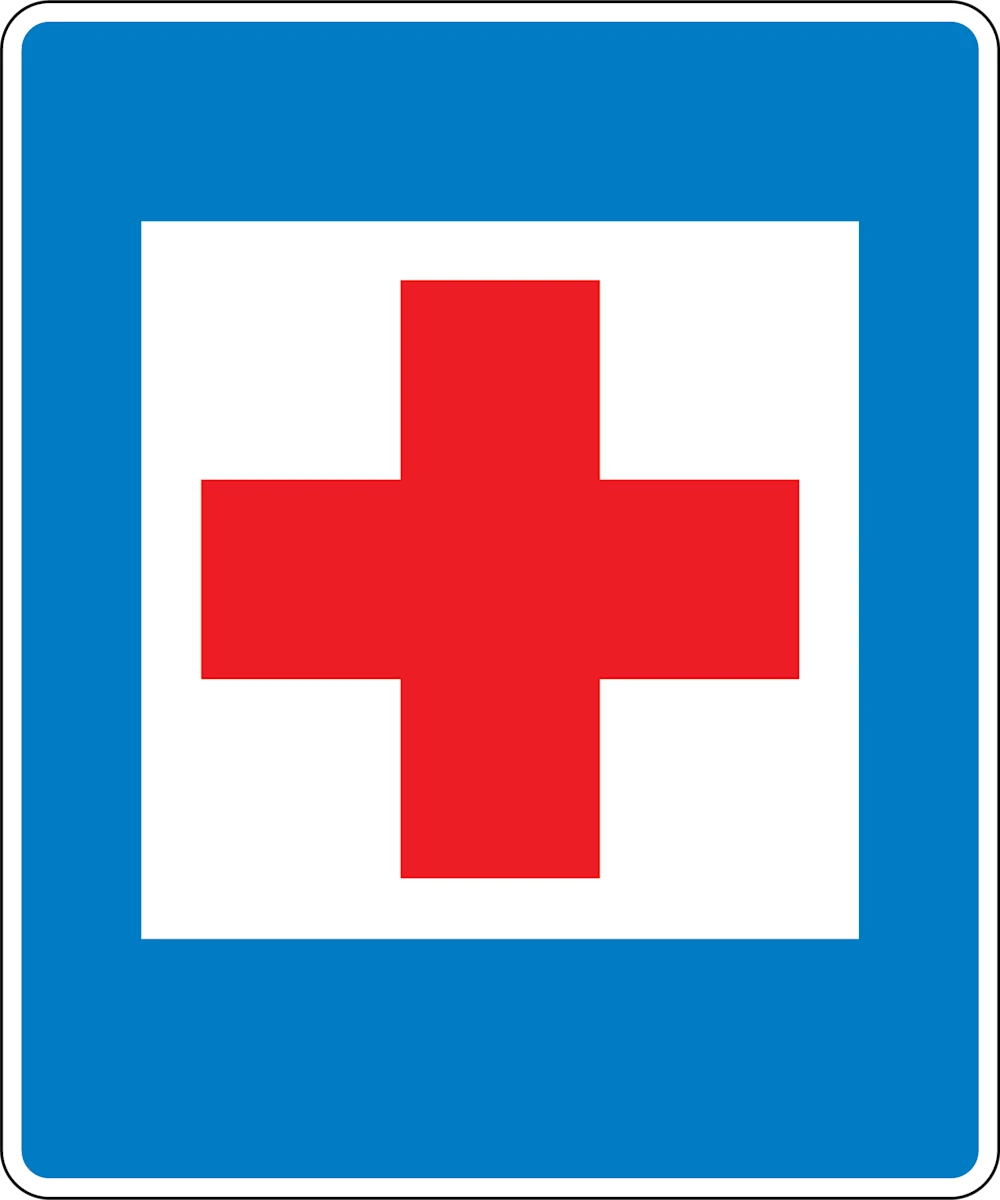
This category contains 6 questions from traffic signals, mainly related to large vehicles. The questions are about the meaning of the signals and how to move around them.
Example question (mark true or false):
This traffic sign indicates that transporting water-polluting material is forbidden.
True
False
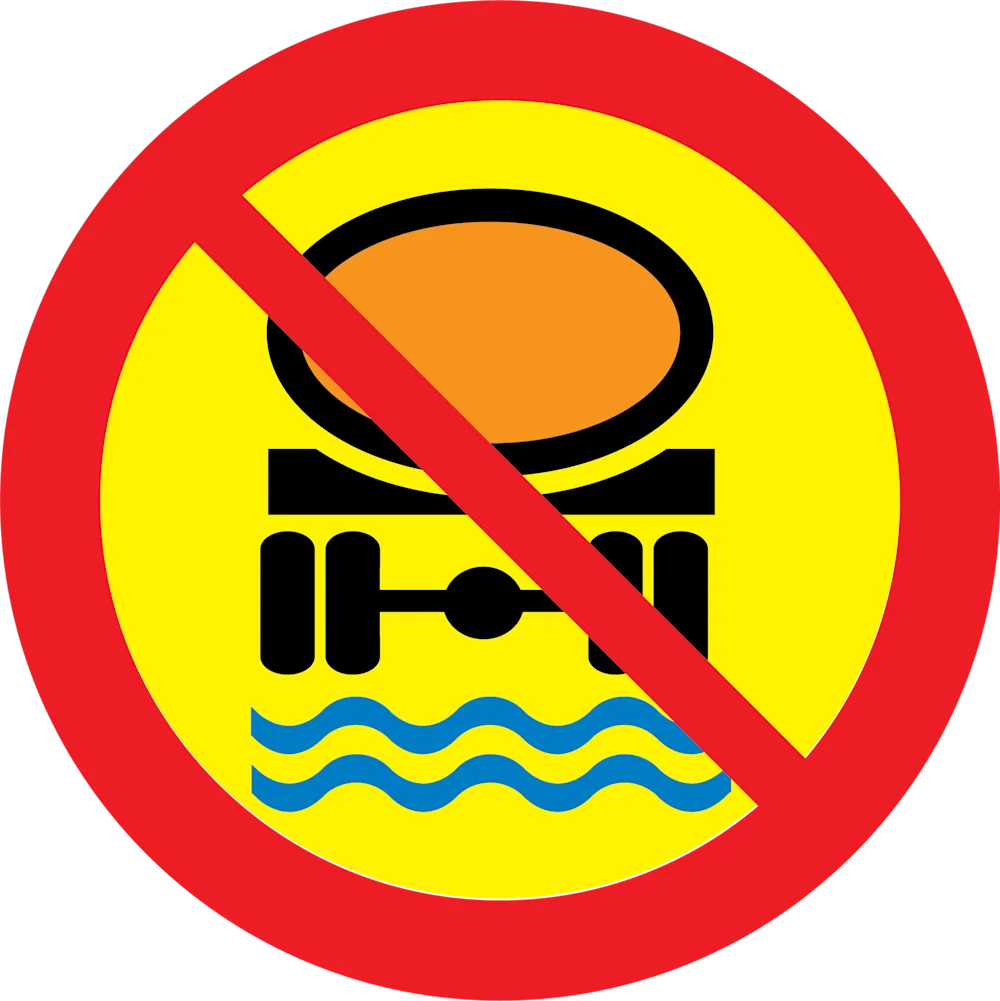
This category contains 4 questions related to priority in traffic. Especially regarding traffic lights and traffic management by the police.
Example question (mark true or false):
The police officer in the picture is directing traffic. Car A should stop.
True
False
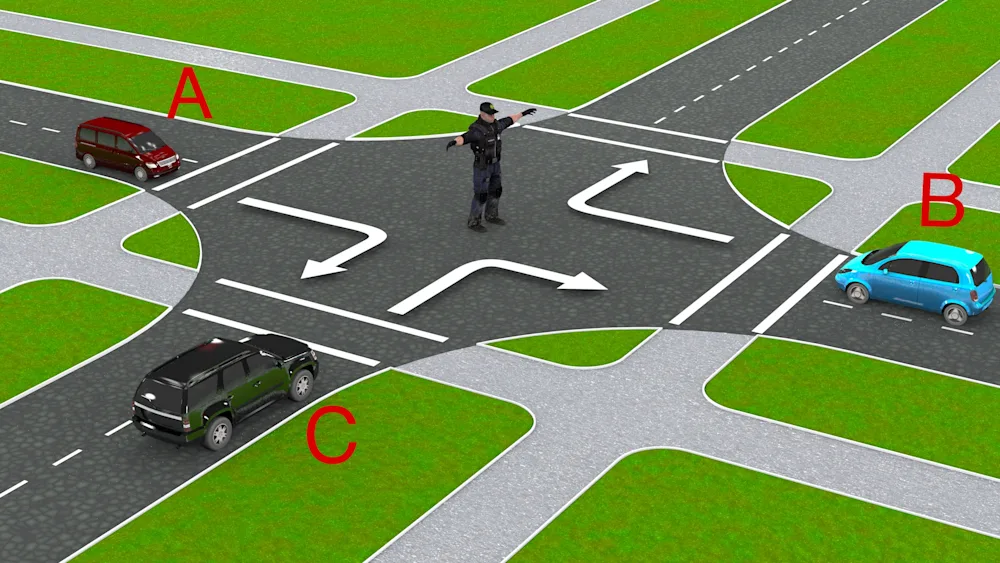
This category contains 3 questions where the driver is asked if he knows what the rights of the driver are, the rules on compulsory insurance and traffic violations. Also if he knows the main institutions that are involved in traffic and their main role.
Example question (mark true or false):
Vehicles for shared transportation (buses) must be inspected annually after the first registration date.
True
False
This category contains 2 questions about stopping and parking cars. Here you need to know what is the difference between stopping and parking and the rules that apply to each of them.
Example question (mark true or false):
In general, vehicles are allowed to stop to let passengers out at junctions.
True
False
This category contains 2 questions related to vulnerable road users and rules that apply to pedestrian crossings.
Example question (mark true or false):
When driving past horse riders, it is best to warn them by beeping the horn.
True
False
This category contains 4 questions related to priority in traffic. Here the right-hand rule, use of priority signs and priority at intersections and in roundabouts are asked.
Example question (mark true or false):
Driver C can go first.
True
False
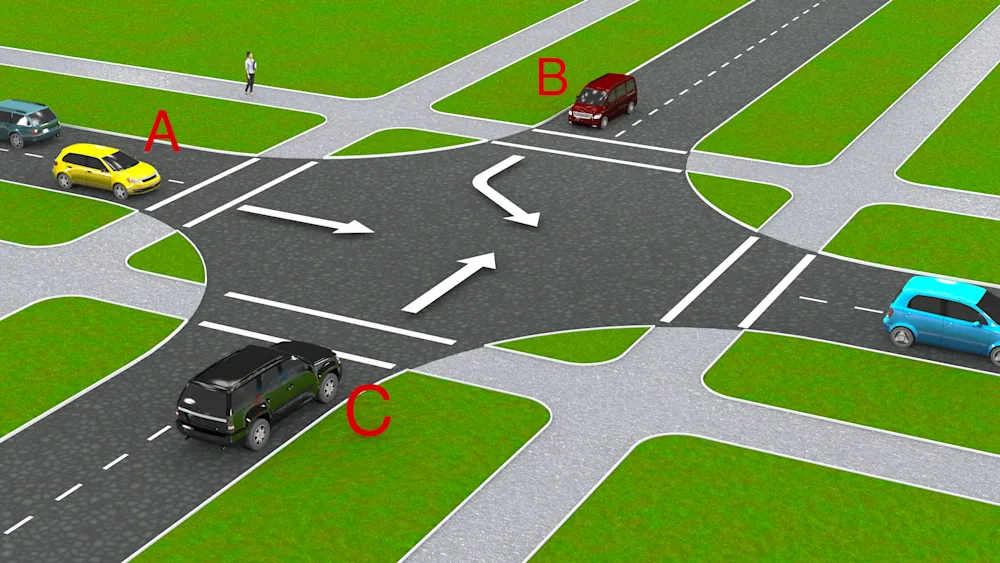
This category contains 3 questions where the driver is asked if he or she knows the main safety rules relating to vehicles as well as the environmental factors that can affect driving qualities.
Example question (mark true or false):
The vehicle registration certificate includes information about the allowed transportation weight of the cargo.
True
False
This sections includes 2 questions that assess whether the candidate understands the rules for the use of car lights and the use of signals.
Example of a question (mark true or false):
When cars are driven with full beams on, it is required to switch to normal beams approx. 200-300 metres before cars intersect.
True
False
This section includes 2 questions about maximum speed and stopping distance (reaction, braking distance)
Example of a question (mark true or false):
The maximum speed cannot be higher than 50 km/h of a vehicle with a trailer.
True
False
This section includes 4 questions about the human factors that can affect our driving ability and our behavior in traffic.
Example of a question (mark true or false):
In order for a commercial driver to be considered a professional in their job, they need, among other things, to have good knowledge of the rules of driving and rest time of drivers.
Rétt
Rangt
This section includes 4 questions about general driving habits. For example, about driving in difficult situations, driving habits and general traffic behavior.
Example of a question (mark true or false):
When driving towards a roundabout, a priority should be given to those who are already in the roundabout.
True
False
This section includes 2 questions about first aid and the responsibilities of drivers at the scene of an accident.
Example of a question (mark true or false):
The first person to arrive at the scene of an accident must first ensure that the scene of the accident is safe.
True
False

Service provider
The Icelandic Transport Authority