
Landspitali - University Hospital
The content on this page has been translated using Artificial Intelligence (AI). If there are discrepancies in meaning between the English and Icelandic versions, the Icelandic version is the authoritative version.
Answers to common questions relevant to both children and adults with large or small burn injuries. If you don't find the answers you're looking for, you're welcome to send an email to brunasar@landspitali.is. Our burn specialists will endeavor to answer all questions within three business days.
Burn Injuries
The most common causes of burn injuries in Iceland are hot water, other hot liquids, and fire, such as from house fires. Children and the elderly are at the highest risk of sustaining burn injuries. Other at-risk groups include those with mobility issues, individuals with epilepsy, those living risky lifestyles (e.g., smoking or drug use), and those residing in housing with inadequate fire protection.
The skin is the body's largest organ and plays a crucial role in, among other things, protecting the body from infections, regulating body temperature, maintaining normal fluid and electrolyte balance, producing Vitamin D, and enabling us to perceive our environment normally. Skin also impacts our self-image and self-confidence. Extensive burns severely disrupt these vital functions of the skin.
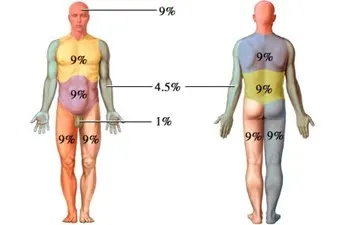
A critical component of successful burn injury treatment is accurate assessment of the wound's extent. The total surface area of burn injuries is estimated in percentages, according to the "Rule of Nines." Alternatively, the wound's extent can be estimated by considering that the patient's hand (palm + fingers) covers approximately 1% of the body's surface area. Both the patient's hand and the Rule of Nines provide only a rough estimate of the wound's extent. A precise burn area chart, which considers the patient's age, is used when hospital admission is necessary.
Rule 9:
The depth of burns is estimated by how deep into the skin the burn or the heat damage is. The skin is divided into three main layers which are epidermis, dermis and hypodermis.
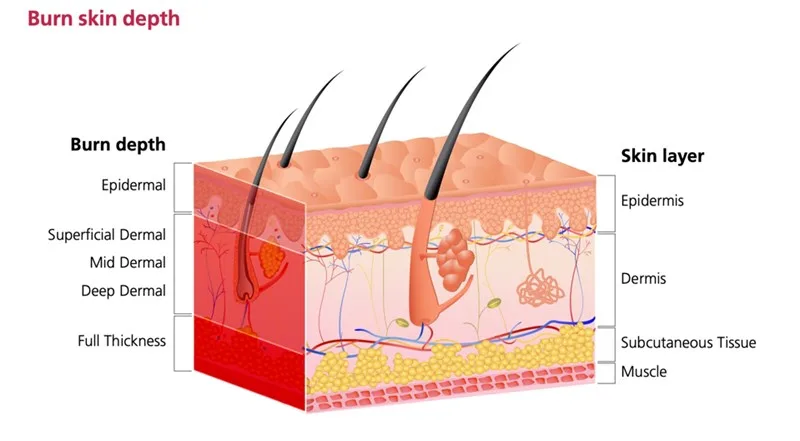
The epidermis, the outermost layer of the skin, is made of horny cells that regenerate every two to three weeks. An epidermal burn, also called a 1st-degree burn, typically heals in three to five days. An example of an epidermal or 1st-degree burn is sunburn, which causes redness, swelling, peeling, stinging, and pain in the skin.
The dermis is located beneath the epidermis. It's rich in nerves and blood vessels and also contains hair follicles, sebaceous, and sweat glands. A burn that extends into the dermis is called a partial-thickness burn or 2nd-degree burn. It can be superficial or deep, depending on how far it penetrates the dermis. A superficial 2nd-degree burn usually heals in two to three weeks.
A burn that extends through all layers of the skin is called a full-thickness burn or 3rd-degree burn. In most cases, a skin graft is necessary for full-thickness burns. The same can apply to deep partial-thickness burns. If deep wounds cover a large part of the body, they usually need to be closed with skin grafts in stages, performed through repeated surgeries.
When dealing with burns caused by water and liquids, it can be challenging to determine the depth of the burn wounds for the first three to four days, even for experienced professionals. Therefore, wounds initially thought to be superficial may turn out to be deeper over time.
Burn wounds, both large and small, can worsen with incorrect treatment. An infection in a wound can deepen the burn wound, so it's crucial to seek all ways to prevent infection, closely monitor for signs of infection in the wound, and take appropriate measures as soon as possible.
The severity of burn injuries depends, among other factors, on the age of the person involved, the extent and depth of the wounds, respiratory tract damage, and smoke poisoning. Minor burn injuries refer to burns confined solely to the epidermis (1st-degree burn) or superficial partial-thickness burns (2nd-degree burns) covering less than 10-15% of the body surface area. Generally, burn wounds are considered severe in a child if they cover more than 15% of the child's body surface area, and in adults, a burn is considered severe if the wounds cover more than 30% of the body surface area.
Initial response to a burn injury and proper early treatment are crucial for successful outcomes. It's urgent to assess individuals with burns without delay to determine if hospital admission is necessary or if treatment can be provided at a primary healthcare center. In Iceland, specialized burn treatment is only provided at Landspítali (Children's Hospital Iceland, Plastic Surgery Department A4 in Fossvog, Intensive Care Unit E6 in Fossvog). If the burn wounds are extensive, the individual may need to be sent to a specialized Burn Center abroad, such as in Norway (Bergen) or Sweden (Uppsala, Linköping).
It's important for primary healthcare centers and hospitals outside of Reykjavík to contact Landspítali immediately if any of the following apply:
Burn wounds covering more than 10% of the body surface area.
Full-thickness burns, i.e., third-degree burn wounds.
Burn wounds on the face, outer neck, hands, feet, over major joints, or genitals.
Possible heat injury to the mouth, pharynx, larynx, or lungs, and/or suspected smoke poisoning.
Eye injury.
A young child or very elderly individual.
Burn wounds that encircle an arm or a leg.
Burn injuries caused by electric current or lightning.
Burns caused by corrosive chemicals.
Severe underlying disease that could affect recovery after a burn injury, e.g., heart or lung disease, immunosuppressive therapy, or diabetes.
Burn injury during pregnancy.
Mental well-being after burn injuries
The burn injury and its physical consequences can have a profound impact on the mental well-being and behavior of both children and adults, regardless of the wound size. Deep burn wounds can lead to cosmetic changes such as skin discoloration and texture, loss of body parts, and impaired mobility. Losing one's former appearance affects body image and self-confidence and can cause deep grief, as the individual mourns what once was.
In addition to physical and psychological harm, burn accidents often cause significant financial damage when worldly possessions and homes are damaged or lost. Financial worries and concerns about housing or homelessness are a major source of stress.
During the first months after the accident, various emotional states may emerge, such as anger, guilt, sadness, grief, hopelessness, and even a loss of the will to live. Symptoms of post-traumatic stress can also be expected, including sleep disturbances and nightmares.
It can be a significant shock for both the patient and their relatives to see the burn wounds for the first time, for example, seeing one's face in a mirror. To mitigate this experience, healthcare professionals can support and prepare the patient for seeing their reflection, showing sensitivity, choosing their words carefully, and being present.
Here are some points worth considering:
Good preparation for viewing the wounds for the first time is important, such as choosing the right timing and circumstances. For instance, it's not advisable to look in a mirror until facial swelling has largely subsided, and it's important to have someone you trust and can talk to by your side.
Over time, the wounds will undergo significant changes, even if the skin doesn't become exactly as it was before. It takes two to three years for scars to reach their final appearance.
Experiencing mood swings such as anger, guilt, grief, sadness, anxiety, hopelessness, or the feeling of not wanting to live, are normal reactions to trauma and a new reality.
It's important to accept help and support from family and friends.
It's important to talk about your feelings and emotions with professionals, such as pastoral care providers or psychologists, as soon as possible.
Sleep and rest are priorities, as is finding a balance between exercises (physiotherapy) and rest.
Days vary in quality and will continue to do so. But this is also true for those who haven't experienced trauma.
It's advisable to think and speak positively to yourself, don't put yourself down, but rather think "I can do this."
Many find it helpful to look for the positive aspects in the situation and remind themselves of them repeatedly. In difficult situations, you can almost always find something positive. It's more beneficial to remind yourself of the positives every day than to dwell on and relive all the bad things you can't change anyway.
It's good to set realistic goals for each day, week, or month, for example, with the help of a physiotherapist and other professionals. It's helpful to write down the goals or ask someone to do so and review them regularly.
Useful Websites:
A trauma is an event an individual experiences or witnesses where life or limb is threatened, and the person feels intense fear, helplessness, or horror. Being trapped in a burning house or car, experiencing an explosion, being physically assaulted, or having clothes catch fire are examples of situations that can induce various symptoms of Post-Traumatic Stress Disorder (PTSD). Both the person directly affected by the accident, loved ones, rescue workers, and bystanders can experience these symptoms.
Symptoms of PTSD in adults can include, for example:
Sleep disturbances, bad dreams, nightmares.
Flashbacks of the accident, such as smelling odors, hearing sounds, or vividly seeing scenes related to the accident.
Intrusive thoughts about the accident (can't stop thinking about what happened).
Anxiety and/or depression.
Irritability, inability to relax.
Avoiding thinking about the accident, avoiding the place where it happened, or avoiding people connected to the accident.
Lack of concentration.
Emotional numbness.
During a hospital stay, patients and their relatives need to be assessed for these symptoms, and appropriate support should be provided. If these PTSD symptoms persist for longer than 2-3 months, it's advisable to seek treatment from a psychologist or psychiatric nurse.
Body image is the mental picture we have of how our body looks and functions. It also involves how we perceive others see us. Our body image develops and changes throughout our lives, from a young age into adulthood, by which point our self-perception is fairly well-formed. The society we live in significantly shapes our ideas of how we want to look and how our body image develops. For example, signs of aging like gray hair and wrinkles are widely considered symbols of wisdom and experience in many parts of Asia. In some African tribes, scars on the face and body are desirable and command respect.
Deep burn wounds and skin grafts can lead to changes in appearance, such as alterations in skin color and texture, scarring, hair loss, loss of body parts, and impaired mobility. Losing one's former appearance impacts body image and self-confidence, and can cause deep grief, as the individual mourns what once was. In addition to affecting mental well-being, changes in appearance can impact behavior, social interactions, and relationships in both children and adults, regardless of the size or location of the wounds.
Distress and insecurity due to changes in appearance are normal reactions, and it takes time to adjust to a changed appearance and body image. For many, a significant step toward better mental well-being is realizing that appearance doesn't define the person we are inside. We are all diverse.
It's important to be aware of how you see yourself, as this impacts your interactions with others and intimate relationships. Some adults in intimate relationships may fear their partner will lose interest. Those who were single at the time of the accident might worry about finding a life partner or never having children. If you avoid social interaction, shy away from meeting strangers, or fear your partner is no longer attracted to you, it's a good idea to pause and seek advice and support from a psychologist or other professional.
Effects on Hormone Function
As noted on these pages, severe accidents like burns impact mental and physical well-being, and the body's hormone function is no exception. For women, this can lead to temporary amenorrhea (cessation of menstruation) or irregular bleeding, and decreased libido. Despite irregular periods or temporary amenorrhea, it is crucial for women of childbearing age to consider contraception in the same way they did before the accident.
For more information on body image and intimate relationships, please see the following pages:
People who experience a serious accident, along with their closest relatives, are suddenly reminded of their mortality and the fleeting nature of life. A serious accident and illness of a family member impact the roles, relationships, and ability of others in the family to manage daily tasks and obligations, and life can suddenly become overwhelming. To be able to support the patient in the process ahead, close relatives need to consider their own needs for rest, sleep, nutrition, and exercise.
It is important to seek professional help as soon as possible after the accident, to get guidance on how the family can cope with difficult circumstances, alleviate distress, and keep up with daily life. Pastoral care from priests and deacons, and support from psychologists and social workers is available for all patients at Landspítali and their relatives. Continued specialized support after discharge is provided at Landspítali's outpatient department if requested.
Coping strategies that relatives have found helpful in difficult situations include, for example, to:
Utilize the hospital's specialized support as soon as possible (see above) and talk to others about their feelings.
Share responsibilities and tasks, so that everything doesn't fall on one or two family members. Accept help and assistance from others. Divide hospital visitation among those closest to the patient.
Nourish and rest, and try to get adequate sleep. Avoid fast food and junk food long-term.
Make time for daily walks and outdoor activity. A few minutes are better than none.
Maintain a daily routine for the children in the family, such as around kindergarten, school, bedtime, and meal times.
Get guidance and assistance from professionals on what and how to inform children. Professionals providing pastoral care are always ready to specifically talk to children and follow up with them.
Find a channel for sharing information with family members and friends. Many have found it helpful to create a Facebook group, thereby reducing the disturbance from phone calls and text messages.
Keep a diary. Write down questions and information that came up, for example, during family meetings and interactions with hospital professionals.
Ask and get explanations for everything the family is wondering about. Uncertainty and speculation are often more difficult than knowing the facts.
Inform the staff caring for the patient as soon as possible about what could be improved in the patient's treatment, service, and interactions with the patient and family.
Burn injuries
When a burn injury is deep or extensive, the patient is admitted to the Plastic Surgery Department A4, Fossvog Intensive Care Unit, or the Children's Hospital Iceland. Burn wound treatment is individualized, based on the depth and extent of the wounds and the patient's age. The treatment's goal is always to accelerate healing by, for example, protecting wounds from infection, providing correct wound care as soon as possible, and ensuring the patient receives adequate nutrition.
Wound care involves cleaning the wounds, sometimes daily or 2-3 times a week. For patients with larger burns, wound care can take one to two hours per session, and the patient receives pain medication and may even be anesthetized during the procedure. Different dressings are used depending on the nature and location of the wounds, but wounds on the face or on and around the genitals are usually left undressed.
The length of hospital stay after a burn injury primarily depends on the depth and extent of the injury. Once treatment is completed in the Plastic Surgery Department or at the Children's Hospital Iceland, continued outpatient care or rehabilitation at Grensás Department (for adults) may be necessary.
When wounds are small in extent and do not require hospital admission, monitoring and wound care are provided in an outpatient clinic or at a primary healthcare center.
If a wound is deep and unlikely to heal within three to four weeks, a skin graft is performed. The skin graft procedure takes place in an operating room under general anesthesia. A piece of healthy skin is taken from another part of the body and meshed (perforated) so it can be stretched and laid over the wound after it has been carefully cleaned. The skin is usually secured with staples, which are removed on the fifth to sixth day. It takes about five to six days for the grafted skin to heal firmly and turn a pink color. It's crucial that the grafted skin remains still and is well protected from any trauma and external pressure. The area from which the skin is taken is called the donor site and heals in 12-14 days if infection can be avoided and with good nutrition.
A patient with extensive burns will require multiple skin grafts until all wounds are healed, as it's not possible to graft skin onto all wounds at once if their extent is significant.
The goal of burn treatment is to heal the wounds in the shortest possible time, thereby reducing the likelihood of severe consequences from the injury, such as infected wounds and extensive scarring. It is crucial to protect the wounds from bacteria and dirt. Therefore, good hand hygiene is essential before any contact with dressings and wounds, whether the patient is in the hospital or at home.
In some cases, patients hospitalized for burn wounds are placed in protective isolation to guard against external germs and infections. In such instances, the patient is in a private room, and everyone entering the room must wash their hands thoroughly, use hand sanitizer, wear a yellow protective gown, and possibly gloves and a mask. People with colds should not visit patients in protective isolation.
It's important that the patient's room is tidy, with all unnecessary items and trash removed, and that relatives maintain a clean and orderly environment. This makes it easier for cleaning staff to perform daily cleaning. Furthermore, frequently touched surfaces in the environment, such as doorknobs, bed frames, remote controls, and tabletops, need to be sanitized daily. Clothes and bed linens are changed daily.
Patients with burn injuries have an increased need for energy and many nutrients, including protein, vitamins, and trace elements. Adequate intake of energy (calories), protein, vitamins, and trace elements is essential for wound healing and for rebuilding strength and endurance. It may be necessary to provide nutrition via a feeding tube if a patient with extensive burns cannot eat enough due to loss of appetite or the effects of pain and medication. A feeding tube is a soft plastic tube inserted through one nostril and down into the stomach. Special formula containing all necessary nutrients is given through the tube in addition to what the patient can eat and drink on their own.
It's important to note that Vitamin D production from sunlight in deeply burned skin is limited, even after wounds have healed. There's a risk of Vitamin D deficiency following deep and extensive burns, especially in children, making it crucial to take recommended daily doses of Vitamin D year-round.Once wounds have healed, the body's energy and protein needs decrease, returning closer to pre-injury levels. Nutritional requirements and eating habits should be re-evaluated upon hospital discharge. A dietitian will reassess nutritional needs and advise on supplement use. Dietitian follow-up may be necessary for several weeks or months after hospital discharge.
For minor injuries not requiring hospital admission, a generally healthy diet in accordance with dietary guidelines from the Directorate of Health is likely sufficient to meet nutritional needs. If the diet doesn't align with these recommendations, there might be a reason to assess the need for other supplements in addition to Vitamin D, which all Icelanders are advised to take, especially during winter. Protein drinks can also be a good supplement while wounds are healing.
Initial wound cleaning for small wounds takes place in the emergency department or at a healthcare center, where instructions are given on how to care for the wounds at home and when to return.
For all wound care, it is crucial to practice good hand hygiene and use hand sanitizer. It's important to be vigilant for signs of infection, which can include increased pain, warmth, a pulsating sensation in the wound, redness around the wound, increased fluid in the dressings, and elevated body temperature.
Burn wounds on the hands or feet can cause swelling (edema), so it's important to keep the affected hand or foot elevated for the first few days to reduce swelling.
Back to life
Back to life
When the wounds are healed
New skin is delicate and requires good care, whether the wounds have healed on their own or received a skin graft. New skin needs to be protected from external irritants such as pressure, bumps, trauma, heat, cold, sun, dryness, and irritating substances. Damage to nerves and nerve endings in the skin leads to changes in skin sensation, such as heat and cold perception, but can also cause numbness, tingling, and pain. Additionally, sweating can change or disappear in areas where the wounds were deepest. The insulating capacity of new skin is less than that of healthy skin because it is thinner. This, along with changes in the body's metabolism, can cause a feeling of being cold.Healthy skin contains fat and sweat glands, nerves, and nerve endings.
Deep burn wounds cause damage to these vital functional units of the skin. The skin becomes dry and peels easily because it lacks normal moisture and fat. New skin needs external moisture from moisturizing creams. It is individual what type of moisturizing cream works best. Moisturizing cream needs to be applied often throughout the day, but not so much that the skin remains greasy for a long time afterward.
If pressure garments are used, the cream needs time to absorb into the skin before putting on the garments.
Creams that contain wax, paraffin, or are very oily can damage pressure garments and should be avoided.
Pressure garments can cause friction and irritate the skin, so it's important to ensure they are the correct size and to monitor the skin in exposed areas.
If pressure garments cause pain, for example, in the armpit, silicone pads might need to be placed underneath where the pressure is greatest.
At Landspítali, thin cotton gloves are available to protect the delicate skin of the hands.
Furthermore, loose-fitting clothing made of soft material is best for the skin on the body while it is most sensitive.
If the feet have been burned, custom-ordered shoes may sometimes be needed while the new skin is strengthening.
In addition to protecting new skin from trauma and dryness, general hygiene must be maintained.
For new skin, it is better to shower with low water pressure than to take a bath. It is important to always check the water temperature beforehand.
It's crucial to remember that all soaps and creams containing lanolin or alcohol dry out the skin.
It is not desirable to use soap, but if soap is necessary in some cases, it should be mild and liquid. Generally, it's best to use a soft towel and avoid rubbing the skin when drying it.
Furthermore, chlorinated water in swimming pools or hot tubs causes increased dryness and itching if care is not taken to protect the skin well before and after swimming.
New skin has a different texture and color than healthy skin. It takes months or years for the skin and scars to achieve a more normal color and texture, as the reconstruction of skin and tissues continues for the first two to three years after the burn injury, even though the wounds have closed. If the burn wounds were deep, the skin will never regain its original texture or color.
Once burn wounds have healed, the new skin is significantly thinner and more delicate than unburned skin.
This new skin remains thin and fragile for the first few years, especially on the hands, backs of hands, feet, and lower legs, making it prone to abrasions and blisters from even minor contact. Therefore, it's crucial to protect the new skin from all trauma, such as pressure, bumps, scratches, friction, dryness, heat, and cold.
Pressure garments can cause friction and irritate the skin, so it's important to ensure they're the correct size and to monitor the skin in exposed areas. If pressure garments cause irritation, such as in the armpit, silicone pads may need to be placed underneath where the pressure is greatest.
At Landspítali, you can obtain thin cotton gloves to protect the sensitive skin on your hands. Furthermore, loose clothing made from soft materials is best for the body's skin while it's most vulnerable. If the feet have been burned, custom-ordered shoes are sometimes necessary while the new skin strengthens.
Small blisters, less than the size of a coin, are best left undisturbed (don't pop them) and protected from trauma. If they burst, you can rinse the wound with clean water and apply a silicone dressing (non-stick gauze) and dry bandages, securing them with a light gauze or elastic bandage.
Never put a plaster (adhesive bandage) on newly healed skin. Plasters can cause blisters, and there's also a risk of abrasions when they're removed. You can also use a special wound spray for smaller abrasions. If large abrasions or blisters form, it's important to contact your department, outpatient clinic, or primary healthcare center as soon as possible.
In the first year after a burn injury, new skin on the extremities, especially the legs, may turn blue and form dark spots. The discoloration and spots often become most noticeable after long positions and walks or if the limb is hanging down.
The blistering and spotting is caused by blood vessel disturbances and the thinness of the skin. It is therefore important to have your feet on the chair when sitting and to have pillows under your hands and arms. Tight ties, ducts and pressure dressings also support the blood vessels and improve blood circulation in limbs.
When a wound heals, it's normal to experience itching, and most people feel considerable itchiness for weeks and months after a burn injury.
The itching is typically worst on the limbs and back. Children are often more severely affected by itching than adults.
New skin is sensitive to scratching, friction, and any kind of trauma, so if the itching is severe, it may be necessary to sleep with mittens on.If the itching is so intense that it disrupts sleep and rest, affects concentration, or causes irritation and annoyance more or less around the clock, it's important to assess the causes and provide treatment.
There are numerous reasons for severe itching following burn injuries.
It's known that mental stress, fatigue, and lack of sleep increase itching and skin irritation.
One of the most common reasons for itching in newly healed skin is dry skin due to a lack of natural skin oils.
Burn injuries damage the skin's sebaceous glands, and they can even be completely destroyed if the burn is deep.
The skin becomes dry and flaky, and itching and stinging sensations intensify.
To reduce dryness and itching, it's therefore essential to apply moisturizing cream frequently throughout the day.
Histamine release in the skin can be a cause of chronic itching. Therefore, the use of antihistamines can be effective.
Many believe that the nerves carrying itch messages are the same ones that transmit pain and chronic pain signals, and drugs in the class of neuropathic pain medications have been used for itching that hasn't responded to other treatments.
It's also important to remember that in individual cases, severe and increasing itching along with redness and warmth in the skin can indicate an infection that requires antibiotic treatment.
Burn wounds are accompanied by pain, which is worst during the first few days.
Pain in new skin graft donor sites can even be more severe than the pain from the burn wounds themselves. In most cases, this short-term pain is relatively easy to manage with pain medication. However, it's known that chronic pain can follow burn injuries, referring to pain that persists for longer than five to six months.
This chronic pain can be constant throughout the day or occur in episodes. Chronic pain can disrupt rest, sleep, and an individual's ability to study and work. The best methods and medications for treating chronic pain after burn injuries are highly individual, often requiring time and patience to find what works best.
It's important to remember that anxiety, fatigue, and sleep disturbances can heighten pain perception, potentially creating a vicious cycle of anxiety, fatigue, sleeplessness, and pain that needs to be broken.
Furthermore, severe and persistent itching can increase the experience of pain, making it crucial to treat itching if present. The first point of contact for individuals with chronic pain after burn injuries is usually a primary healthcare center. The primary healthcare center will then refer to Landspítali's Pain Management Team or Reykjalundur if necessary.
New skin is sensitive to temperature changes and UV rays and burns quickly. It is important to use a good sun protection system with a high SPF 50 sun block and protect skin from the sun with a light clothing. For example, to protect face and neck, you can use a derhetor or a shade.
A sunbath is never ideal for new or healthy skin. New skin is also sensitive to cold and it is especially important to protect the skin in the face, for example, with a good scarf or lambhouse cap and use warm gloves or mittens and socks for hands and feet.
Once the wounds are well healed, it is okay to go swimming, but then it is important to use a strong sun block (SPF 50 sun block) and use moisturising fertilisers in greater numbers than usual before and after swimming. Care should be taken to rinse all chlorine water thoroughly from the body after swimming
Physical training is an important part of the treatment of burn injuries and should be started as soon as possible after the patient has stabilized.
The goal of physical therapy and exercise is to maintain joint movement, prevent contractures and strengthen stamina and endurance.
If a burn injury is sustained over a joint, the stiff and hard skin can prevent the full movement of the joint. Reduced movement and immobility causes the muscles and tendons around the joint to shorten, leading to stiffness and can cause crises. It is important to do stretching exercises from the beginning to prevent such movement damage and in some cases, the use of braces is necessary.
The need for continued rehabilitation at Grensásdeild or in the outpatient ward at physiotherapists is assessed during the hospital stay.
After discharge from hospital, it is recommended to establish a regular schedule where physical activity and exercise are priority. You must build up your fitness, for example, by regular walking trips and general physical training in consultation with your physiotherapist. It can take one to two years to reach your previous fitness level.
Children are usually faster than adults to get up to speed and can tolerate the effects of the game because they are more able to move around.
Scars and cramps
Skin that has been burned and takes longer than three to four weeks to heal will rarely be as elastic and soft as unburned skin. However, the extent of scarring is highly individual.
Scar formation is primarily linked to age at the time of the burn injury, ethnicity, wound depth, location on the body, how long the wounds take to heal, and whether skin grafting is necessary. Wounds that have taken longer than three weeks to heal and grafted skin always leave scars that can vary in color and texture. New skin and scars feel different to the touch; for instance, they can be hard, stretched, stiff, and vary in how raised they are. Color changes are also common in new skin, often appearing red or bluish.
Temperature changes affect blood flow in the skin and scars, and new skin is sensitive to both heat and cold. Thus, the skin and scars can turn blue or white in cold temperatures but redden with heat and physical exertion.Even if the wounds appear healed after a deep burn, the reconstruction of tissues and skin remains active for one to two years after the burn injury. Therefore, the final appearance of the skin and scars can rarely be determined until after two to three years.
If a burn injury is located over a joint, the stiff and hard skin can hinder full joint movement. Reduced movement and immobility cause muscles and tendons around the joints to shorten, leading to stiffness that can result in contractures.
It's crucial to seek advice from a physical therapist and perform stretching exercises to prevent such impaired movement, and in some cases, splints may be necessary.
Since new skin matures over 2-3 years, it's essential to perform daily exercises throughout this period, and possibly longer, to minimize movement impairment and stiffness.
The methods primarily used to reduce scars are pressure garments, laser therapy, silicone, and massage.
International studies suggest that laser therapy can soften scars and make them less raised, increase skin elasticity, and also reduce pain and itching.
The use of pressure garments has been a traditional method for treating burn scars for decades. However, studies on the efficacy of pressure garments have not shown conclusive benefits.
Research also indicates that silicone in various forms can soften scars and make them less raised.
Furthermore, massage is believed to soften scars.
Useful Websites:
As the name suggests, pressure garments apply a certain pressure to the new skin and scars. This pressure appears to slow down scar growth, making them less raised, softer, lighter, and more elastic, thereby improving joint mobility. Pressure garments reduce itching and can also lessen pain in thick scar tissue. Furthermore, the garments protect the skin from trauma and injuries.
Tightly wrapped elastic bandages or wraps are often used soon after wounds have healed for limbs as a form of pressure garment. It is recommended that both children and adults who have undergone skin grafting use them, as well as those with burn wounds that take longer than three to four weeks to heal. As soon as the wounds have healed, the use of pressure garments begins because at that stage, scar tissue is most receptive to pressure.
Pressure garments are made from soft, stretchy material that stretches in all directions. The material is covered with tiny holes, allowing the skin to breathe through it. They are available in various colors. Pressure garments are custom-made for hands, arms, feet, legs, torso, and face.
Pressure garments must be custom-ordered for each individual, and precise measurements are crucial. An orthotist handles the measurements and ensures that the pressure garments fit well and apply the correct pressure to the scars. New garments need to be made as children and adolescents grow and develop.
For children under 10 years of age, pressure garments may need to be replaced every six months.
For adults, new garments should be considered if body weight changes by four to five kg.
For pressure garments to be most effective, it is necessary to wear them 23 hours a day for approximately 12 to 18 months.
You need to have two sets of garments for rotation to ensure continuous use and pressure on the scars. It is recommended to only remove them for bathing, showering, or swimming, or when eating (for face/head pressure garments).
How are pressure garments washed?
It is recommended to wash pressure garments daily. Often, it is sufficient to rinse them by hand and occasionally wash them in a washing machine at 40° C on a delicate cycle. Bleach must not be used. Use mild detergents (low in phosphates). Pressure garments must not be ironed, tumble-dried, or dry-cleaned. The garments need to be dried thoroughly, and it is best to lay them flat or hang them to dry.
Can lotions and creams be used under pressure garments?
Very oily lotions and lotions containing wax or paraffin can damage the garments. It is good to allow the lotion to fully absorb into the skin before putting the pressure garments back on. Pressure garments are expensive, so it is very important to take good care of them to ensure they last as long as possible. Iceland Health (Sjúkratryggingar Íslands) contributes to the cost of purchasing pressure garments, with the patient's share of the cost being 10% of the total price.
Useful Websites:
Laser treatment of burn scars in children and adults has been studied extensively abroad and it has been shown that the treatment can smooth out raised scars, increase the elasticity and softness of the skin, reduce redness and discolouration in the scars and in some cases reduce itching and pain. Laser treatment can be applied on both newly burned and older scars, but to achieve the best results it is preferable to start treatment as soon as the skin is well healed.
The appearance and nature of the scars and the age of the patient is the main factor determining which laser treatment is used at any given time.
To be effective laser treatment usually needs to be applied three to ten times every four to eight weeks.
In some cases where there is a large thickening or overtness, a combination treatment is used where drugs, such as steroids, are injected into the scars along with the laser treatment.
It must be kept in mind that laser treatment can never make the scars disappear but the treatment can make the scars less noticeable and the skin soften.
Laser treatment is very specialized and equipment (types of laser equipment) is constantly evolving. Therefore, it is important to select specialists who have experience and knowledge of the treatment of burn ulcers and have the most recent types of lasers.
In Iceland, this specialized treatment is provided by specialists in dermatology at the dermatology clinic and Útlitslækning, who also provide treatment for elective burns. Both the dermatology clinic and Útlitslækning have an agreement with the Icelandic Health Insurance.
Studies indicate that silicone can soften scars and reduce the amount of upholstery and stiffness. Silicon can be used as soon as the skin is healed. It is not known for certain what it is to silicone that gives it the ability to reduce the growth of scars.
Silicon is produced in various forms such as spray, gel, fertilizer and silicone gel sheets.
The most common use is silicone gel sheets on burned scars, and they can also be used for pressure dressings in difficult places. There are also silicone face masks.
For more information about silicone, see:
When massage is used to soften scars and increase the elasticity of the skin, gently massage with circular movements. It is important to use softening cream or oil, for example. good olive oil
In some cases, it may be necessary to repair scars and crises after a deep burn with surgery, as well as applying some of the methods described in other chapters.
The formation of scars and their appearance is very individual and it is different which methods are appropriate in each case.
It is also very individual whether and what it is with scars or newly healed skin that is bothersome.
Most people prefer to try methods that do not require surgery.
Therefore it can be useful to get an opinion from both specialist dermatologists and plastic surgeons regarding which methods are most appropriate in each case.
Skin that has been burnt is sensitive. Therefore, you need to choose and use cosmetic products carefully and use products that are tested for allergy. It is very individual how your skin reacts to beauty creams and make-up products. It is most safe to test creams on small spots first and wait for a day until the cosmetic product is applied to a larger area. If you are bothered by changes in the colour of your face or throat, you can try to reconsider your colour choice, for example, on sweaters, throat scarves and scarves. Because in some cases, for example, cold colours can make the blue and red of the skin more noticeable.
See Also: https://www.changingfaces.org.uk/services-support/skin-camouflage-service/
Children and burns
The location, extent, and depth of burn wounds, along with the child's age, determine whether the child can receive treatment at a primary healthcare center or outpatient clinic, or if admission to the Children's Hospital Iceland is necessary.
For burn wounds to heal as quickly as possible, they must be kept clean and protected from dirt and trauma.
The frequency of cleaning and the type of dressings used depend on the location and depth of the wounds and the child's age.
Facial wounds are usually left undressed and are washed 1-2 times a day, with ointment applied to keep them moist and reduce scab formation.
Dressings are most often applied to wounds on limbs and the torso. Typically, wound cleaning and dressing changes are performed 3-4 times a week initially.
As the wounds heal, the interval between dressing changes may lengthen.
The child is anesthetized for all larger dressing changes, which take place in an operating room or intensive care unit.
Wound care for larger wounds can take 1-3 hours.
If the wounds are small, it's often sufficient to give the child mild pain and anxiety medication, and dressing changes then occur in a bathroom on the pediatric ward.
Soon after the burn injury, edema (swelling) can accumulate around the burn wounds and often throughout the entire body. This fluid accumulation can last for several days.
If a burn injury is on a limb, it's therefore essential to keep the affected foot or arm elevated to reduce fluid buildup.
If the burn injury is on the face or neck, it's important for the child to have their head and upper body elevated and not lie in a flat position.
Burned skin and healing skin are not as elastic as healthy skin.
If a burn injury extends over a joint, the stiff skin can hinder full movement of the joint.
In some cases, it may be necessary to use splints to keep fingers, hands, or limbs in the correct position while the wounds are healing.
Therefore, physiotherapy and exercises are crucial for maintaining normal joint mobility.
Burn injuries, like other traumas in childhood, can impact the mental well-being and development of children and adolescents.
Despite effective pain management from the outset, pain and itching can be companions during wound treatment and physiotherapy. The hospital stay itself can cause both stress and separation anxiety. The strain under these circumstances can significantly affect the child's and adolescent's behavior.
Children react differently depending on their age when the burn injury occurs.
Anger, irritability, restlessness, fear, and anxiety are common symptoms.
The child may become very self-conscious and find it difficult to trust staff and others outside the family.
Sleep disturbances and nightmares are also common, as are behavioral changes. For instance, a child who previously used a potty might revert to using diapers.
These changes in well-being and behavior can persist after returning home or may even first appear after hospital discharge. In most cases, these are normal reactions that can last for the first few months after such a trauma.
Burn scars can also affect the body image of children and adolescents; that is, the idea each individual has of their own body's appearance and function. Body image develops from birth, and this development is part of a child's healthy sexual maturation. Research suggests that those who sustain burn scars in childhood seem to adapt well and develop a strong body image, regardless of the scars' location and extent. Growing up with scars as a child and adolescent during the formative years of sexual development thus appears to be easier than experiencing significant changes in appearance in adulthood, when sexual development and self-image are more or less fully formed.
The accident, the child's distress, and the hospital stay affect everyone in the family.
Parents may grapple with guilt over how the accident happened.
Siblings might feel bad because they may have played a part or witnessed the accident, and feel distressed watching their sibling being ill.
Siblings can also feel neglected due to the attention and presence the injured child requires.
Furthermore, the family's normal routine and structure, such as meal times and bedtimes, are at risk of disruption.
When a trauma occurs, such as when a child sustains a burn injury, it is crucial for the family to receive specialized support as soon as possible. At Children's Hospital Iceland, both a child psychologist and a social worker are available, in addition to priests and deacons who provide pastoral care and counseling to the child, parents, and siblings upon request.
See more:
Pain is individual, so pain medication must be managed accordingly. Parents know their child best and can help staff assess their child's comfort.
To reduce pain, the child receives pain medication at regular intervals around the clock, and specifically before and during wound care. Sedatives may also be necessary. Distraction techniques like music, games, video games, and virtual reality can also be useful in reducing pain and discomfort.
It's important for the child or adolescent to get good night's sleep, as sleeplessness and anxiety create a vicious cycle of pain and distress. Environmental factors such as maintaining a consistent bedtime routine, getting daylight exposure during the day (opening curtains), exercising, and limiting screen time before bed, significantly impact sleep quality and, by extension, pain and well-being.
Everyone caring for a child with burn wounds needs to adopt hygiene rules to minimize the risk of bacteria entering the wounds. The more extensive the wounds, the more vulnerable the child is to infections.
Good handwashing and hand sanitizer use, along with general cleanliness, are key to reducing infection risk. These points are vital whether the child is at home or receiving treatment in the hospital.
If the child is admitted to the hospital, they may sometimes need to be in protective isolation during the first few days to guard against infections. In this case, the child is in a private room, and everyone entering the room must wash and sanitize their hands thoroughly, wear a yellow protective gown, and possibly gloves.
Visits from anyone with a cold or other contagious illnesses are not permitted.
It's important to keep the hospital room tidy and immediately remove any unnecessary items or trash. This makes it easier for cleaning staff to clean the room, which is done daily. Furthermore, frequently touched items in the environment, such as door handles, bed frames, remote controls, and tabletops, need to be disinfected daily. Bed linens and clothing should be changed daily if the child is dressed.
Facial burn wounds are usually left undressed and can therefore become dirty if the child touches their face, drools onto the wound, or if nasal discharge runs over the wound. So, it's essential to ensure the child always has clean hands.
It's also crucial that the child's hair doesn't touch facial wounds, and hair may need to be cut.
When the child returns home, and if pets are in the household, you'll need to vacuum more often than usual to reduce the likelihood of pet hair getting into dressings and wounds.
One of the most effective ways to control itching is to keep the skin moist with moisturising creams. It is also important to cut the needles regularly. Even young children need to sleep with mittens to prevent them from scratching the wounds or newly healed skin. In addition, it is often necessary to give the child medicines to control itching, especially before sleep.
The child may go swimming a few weeks after the wounds have healed and it is wise not to stay in the water for too long for the first few times due to the effects of chlorine in the water on the skin. Before going to the pool it is important to apply a moisturising or sunscreen to the healed skin and burned arrows to protect the skin from dryness caused by the swimming pool water.
It should be remembered that chlorine in swimming pool water can increase itching and therefore the chlorine water should be rinsed thoroughly after the swim and moisturising cream applied to the skin.
In most cases, the child can attend school or kindergarten soon after discharge from hospital when the wounds have healed. It is important to prepare schoolmates and teachers before the child or teenager returns to school.
The preschool teacher/teacher and school nurse along with parents and nurses in the Child ward need to consult and organize all kinds of information and education that schoolmates, friends and other teachers need.
If the child has scars, needs to wear a pressure dress or a brace or has other visible changes in appearance, then good preparation for the child's return to school can reduce the likelihood of irritation, bullying, disturbances and uncomfortable questions. In this way, the child/adolescent can also reduce the likelihood of refusing to go to school or to play sports such as swimming.
See more:
https://www.phoenix-society.org/what-we-do/saras-steps
https://www.changingfaces.org.uk/advice-guidance/children-parents-families/children-young-people/social-life-friends-school/
Contact Us
We hope this information provides support and guidance on your path to recovery, whether you have experienced a burn injury yourself, or are a family member or friend.
If you cannot find the information or answers you are looking for on this page, please feel free to send an inquiry to Landspítali specialists or explore the websites listed below:
Burn Injuries/Wounds: brunasar@landspitali.is
American organization for individuals with burns: https://www.phoenix-society.org
British organization for individuals with scars: https://www.changingfaces.org.uk
About this Publication
Publisher: Landspítali, Patient Education Centre February 2024
Responsibility: Chief Physician and Head of the Department of Endocrinology, Plastic and Vascular Surgery.