

Social Insurance Administration
This news article is more than a year old
A milestone: New disability and rehabilitation system – the changes affect close to 30,000 people
1st September 2025
The following news item is on the website of the Government Offices.
Today, the biggest changes to the disability and rehabilitation system in recent decades took effect. The changes affect nearly 30,000 people.
The new system looks at what people can do instead of focusing on what they cannot.
The new system is simpler, allowances are higher, income-linking is reduced, and it is made easier for people to participate in the labour market if they so choose.
Support for people in rehabilitation is increased, and the focus is on preventing people from falling through the cracks and ending up with a premature disability assessment.
About 95% of those who have been receiving a disability pension will receive a higher allowance in the new system. People whose allowance is reduced have high monthly pension fund incomes, and those who will receive the same allowance are those with limited rights in the social insurance system. Due to the changes, the Social Insurance Administration today paid out 1,200 million ISK more to disability and rehabilitation pension recipients than at the end of last month.
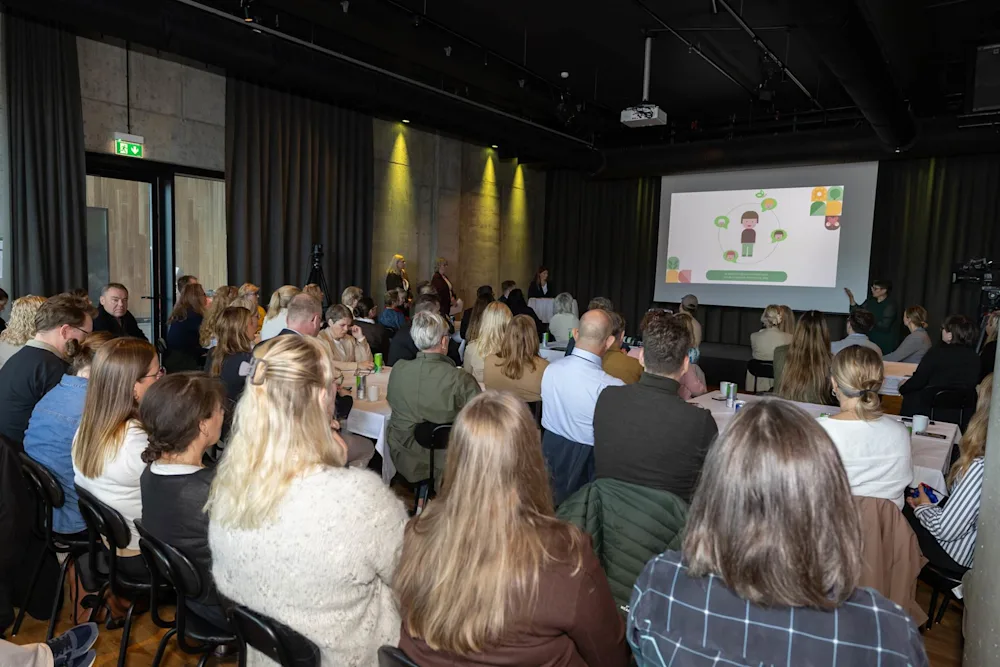
To mark the occasion, there was a live stream from Gróska where the reforms were reviewed.
Inga Sæland, Minister of Social Affairs and Housing:
“The new system is better, more humane, and fairer. We are now taking better care of our people and the human capital they possess. The increase for people with disabilities is 18,000 million ISK per year, which is the biggest improvement in their financial terms in decades. I know from personal experience how unjust and complicated the old system was, and I am extremely proud at this milestone.”
Huld Magnúsdóttir, Director of TR:
“The changes are a major step towards a more modern disability and rehabilitation system that is in line with societal changes in recent years. The idea is that each individual receives services appropriate to their needs and that the new system will provide greater continuity and efficiency in services.”
Unnur Sverrisdóttir, Director General of the Directorate of Labour:
“The new system provides greatly increased opportunities for people who want to and can enter the labour market. The changes open doors that were previously closed to many.”
Vigdís Jónsdóttir, Director of VIRK:
“The new medical- and rehabilitation allowance ensures people's income during difficult times, and that is incredibly important. The new system also has increased flexibility that better meets the diverse needs of individuals in rehabilitation.”
Sigríður Dóra Magnúsdóttir, Director of the Primary Health Care of the Capital Area:
“The new system significantly simplifies the lives of primary care clients. People's fear of falling through the cracks in the system has been palpable, but now service providers work together systematically through coordination teams, forming a network around those who need it.”
Innovations in the new system
Alþingi passed a law on the revision of the social insurance disability pension system in June 2024, and extremely extensive preparations have been underway since. A new disability pension has now been introduced, and other innovations include:
Integrated expert assessment:
The medical disability assessment, which was introduced in Iceland in 1999, is being abandoned and replaced by a new integrated expert assessment. This does not only look at health but takes a holistic view of the individual and their skills, which they also assess themselves. The person's ability to be active in the labour market is assessed.
Coordination teams:
New coordination teams promote continuity of service for individuals with complex service needs who require more than one service provider in their rehabilitation. In these teams, service providers work together, suggest services that could benefit the individual, and guide them between systems.
Partial disability pension:
Partial disability pension is a new provision intended for those who have the capacity for part-time work in the labor market (are assessed with 26-50% capacity for labor market participation according to an integrated expert assessment). The exemption limit is higher than ever before, and people receiving a partial disability pension can have an income of ISK 350,000 per month without their allowance from the Social Insurance Administration being reduced.
Activity grant:
Those entitled to a partial disability pension can receive an activity grant from the Directorate of Labor for up to 24 months while they are actively seeking employment with the assistance of the Directorate of Labor. The combined amount of the partial disability pension and the activity grant is equal to the amount of a full disability pension. If the individual does not find a job, they can request a new integrated expert assessment.
Medical and rehabilitation allowance:
The new medical- and rehabilitation allowance is intended to ensure continuity of income for people who need rehabilitation due to a long-term or serious health impairment or disability. Those waiting for rehabilitation to begin can now receive an allowance during the waiting period and also until they are deemed capable of starting rehabilitation. People seeking employment following rehabilitation can also receive an allowance for three months after rehabilitation is completed.
See the Social Insurance Administration website for more details on individual aspects of the changes, as well as videos explaining them:
A new system - reforms for your benefit
Examples of individuals in the new system
As mentioned before, the changes affect individuals all over the country, all of whom have individual circumstances. However, here are a few examples of how people fare in the old and new systems.

Figure 1. The highest allowance for an individual who does not live alone and receives the highest age supplement (is granted a disability assessment at 18-24 years of age and therefore has little to no opportunity to accrue work-related rights during their lifetime). A disability pension is paid to individuals who are assessed as having 0-25% capacity for activity in the labour market.

Figure 2. The highest allowance for an individual who lives alone and receives the highest age supplement. Those who live alone had previously received increases above those who live with others and, for example, have allowances higher than the minimum wage (ISK 450,000). This group therefore receives a smaller increase in the new system than, for example, the individual in Figure 1. Neither example includes allowances for possible mobility impairments, such as a car operating allowance.

Figure 3. In this example, a 55-year-old woman has been dealing with various health problems for many years. Of the total number of disability assessments in effect in the country, just over a third apply to women aged 50 and over. Furthermore, about 55% of those who receive a disability assessment for the first time are between 50 and 66 years old, and women are much more numerous than men in this group. Individuals who receive their first disability assessment at this age have usually accrued the right to disability allowances from a pension fund, which is therefore assumed in this example.

Figure 4. The individual in this example has two primary school-aged children and therefore receives a child pension. A child pension is paid for children under 18 years of age in cases where a parent receives a disability pension, for example. The child pension is neither taxable nor income-related. The example assumes that the work accident was serious and the person cannot return to the labour market.

Figure 5. In this example, a single mother has been dealing with health problems for many years and has three primary school-aged children. She is granted a disability assessment at the age of forty and has had a low income throughout her working life. In addition to the child pension, she receives a single parent allowance. The single parent allowance is paid to single parents who are supporting two or more children.

Figure 6. In this example, a 63-year-old man is granted a disability assessment after a sudden illness. He has a long work history with a high income and, in the new system, does not receive an allowance from the Social Insurance Administration. Those whose allowances decrease in the new system have high monthly pension fund incomes, like the individual in this example. In total, however, 95% of disability pension recipients will receive a higher allowance in the new system.

Figure 7. The individual in this example has faced difficulties for many years, has been in and out of the labour market, and was granted a disability assessment at the age of 36. He works a small part-time job. In the new system, disability pension recipients can have a total income of ISK 100,000 without their disability pension being reduced.

Figure 8. A young individual who still lives at their parents' home is a participant in the labour market and earns ISK 350,000 in monthly income. The example shows how they fare in the old system on the one hand, and in the new system on the other. In the new system, they have a partial disability pension.

Figure 9.An individual who receives a partial disability pension and an activity grant receives a combined allowance from the Social Insurance Administration and the Directorate of Labor equal to that of an individual who receives a full disability pension allowance. When the person finds work, the activity grant is discontinued, and their monthly income can be up to ISK 350,000 without the partial disability pension being reduced. If it is foreseeable that the person will not find work, a new assessment of their capacity to participate in the labor market can be requested. The outcome of this could be that the person is assessed as having a disability and is entitled to a full disability pension.

Figure 10. The woman in Figure 3 struggled with complex health problems for many years. When difficulties in her immediate environment were added, with the associated stress, she was exhausted and ended up on sick leave. During the rehabilitation process that followed, she felt that no one was responsible for her case. Furthermore, she did not receive continuous rehabilitation allowance, and her worries about insecure subsistence caused her anxiety and delayed her recovery. Her case ended with her being assessed as having a disability and entitled to a full disability pension allowance. In the new system, one can imagine the same woman receiving a continuous new medical- and rehabilitation allowance as well as services from a coordination team that guides her between service providers as appropriate at any given time. She recovers and eventually returns to the labor market, either in a full-time or part-time job.