
Landspitali - University Hospital
Poison Information Center
Table of contents
First aid for poisoning
Among the main functions of the Poison Information Center is to provide information about toxic substances and to give advice on response and treatment in cases of poisoning.
Call the Poison Information Center at 543 2222 anytime for assistance.
Ingestion
Dilution is recommended after ingestion of corrosive or irritant substances (soaps, cleaning agents, acidic or alkaline substances). Give 1–2 glasses of water or milk if severe symptoms are not present. Never force fluids.
Seek medical attention immediately if severe symptoms occur, such as pain in the oesophagus or stomach, difficulty swallowing, or breathing difficulties.
Medications: Dilution may increase toxicity. Do not drink or eat after ingesting medication unless advised by a doctor.
Vomiting
Do not induce vomiting at home unless instructed by the Poison Information Centre or a doctor.
Ensure the patient’s position prevents aspiration; avoid lying on the back.
Eyes
Rinse immediately with comfortably lukewarm water for 15 minutes. If the substance is strong (acid/alkali), rinse for longer.
Inhalation
Move the person to fresh air and loosen tight clothing.
Avoid confined spaces with toxic gases unless using proper protective equipment.
Skin Contact
Rinse with plenty of water and mild soap. Remove contaminated clothing and jewelry.
Examples of Hazardous Substances
Ingestion: Acids, alkalis, cleaning agents
Inhalation: Chlorine gas, ammonia, carbon monoxide, hydrogen sulphide, organic solvents
Skin Contact: Acids, alkalis, irritant cleaning agents
Five Good Tips
Always store hazardous substances in their original packaging.
Follow the instructions on the label.
Avoid contact with skin, eyes, or lungs when handling hazardous substances.
Keep hazardous products out of reach of children.
Consider the environment before disposing of hazardous products.
It's a good idea to check all rooms in the house and ensure that hazardous substances and medications are stored properly.
Images and explanations of common poison warning labels.
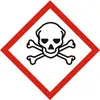
Acute toxicity
Substances that are toxic and can cause harm or be fatal if ingested, inhaled, or after contact with skin.
Wear protective equipment.
Avoid ingestion, inhalation, and contact with skin and eyes.
Store in a locked location: Pesticides, methanol, and nicotine refills for e-cigarettes.

Serious health damage
Substances that can cause long-term effects and health damage, harm fertility or an unborn child, be carcinogenic, cause allergies or asthma symptoms, and damage organs.
Handle with care.
Avoid ingestion and inhalation.
Avoid contact with skin and eyes.
Store in a locked location: Turpentine, gasoline, paint thinner, epoxy, and lamp oil.

Corrosive substances
Substances that are corrosive to the skin and cause severe eye damage. Also applies to materials that corrode metals.
Keep in the original container.
Avoid ingestion and inhalation.
Wear protective equipment.
Examples: Drain cleaners, grill cleaners, toilet cleaners, acids, bases, acetic acid, hydrochloric acid, and ammonia.