Equipment and machinery
On this page
Safety in soilwork
Various types of hazards can be associated with work involving excavation, foundations, material extraction, and other types of excavation that are part of construction work. It is therefore important to conduct a risk assessment that identifies the risks and make a risk prevention plan for how to respond to them.
Preparation is important
Risks can be reduced by preparing the work as thoroughly as possible, using proper work methods, and organizing the worksite in such a way that no danger is created for workers or others.
The employer must ensure the highest level of safety, good working conditions, and hygiene practices at the workplace. This especially applies to the execution of the work, the worksite itself, machinery, equipment, and hazardous materials.
Important considerations before starting work:
Information must be obtained about all underground pipes and cables before excavation begins.
Caution must be exercised when working near machinery, cranes, and other equipment.
Report any damage to underground cables or pipes to the relevant authority immediately.
Read more:
Planning and execution
Those who plan, execute or supervise work must have the knowledge and experience for such tasks. The person responsible for the job must ensure that the highest level of safety is maintained.
Site inspections
Before starting excavating for structures, it is necessary to assess these following items:,
The properties of the soil,
The depth, length, and width of the excavation,
The groundwater level,
How long the trench or foundation will remain open,
The load that will be placed on the trench walls.
In some cases, soil testing may be necessary.
Preventing collapse
To prevent trench collapse, it is necessary to use an appropriate slope or support system. Risk can also be reduced by excavating in short sections wherever possible, installing pipes, and backfilling promptly. Additionally, the risk of collapse can be minimized by placing a suitably tight mesh on the sides and edges of trenches and foundations.
Machinery work
When digging trenches and foundations, it is important to keep them open for as short a time as possible. During excavation, special care must be taken not to place materials too close to the edges, as this can put too much load on the walls and increase the risk of collapse.
Load from machinery and vibrations during excavation can place significant stress on trench walls. Therefore, excavators should be operated as little as possible near the trench, and they should always be driven away from the trench once excavation is complete.
Cranes and machines used near trenches and foundations should be kept at a suitable distance from the edges. Extra caution is required when the ground is thawing.
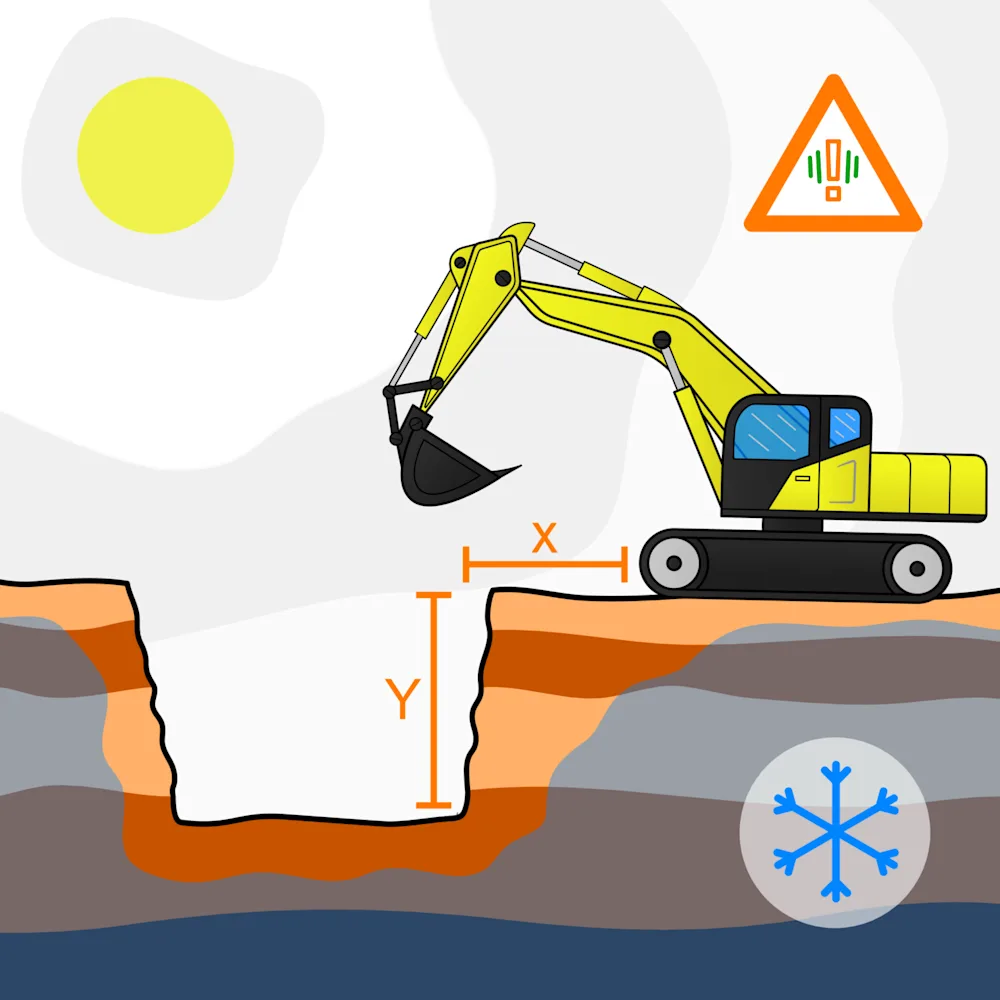
Slope on trench walls
When trenches have sloped sides without supports, the slope must be steep enough to prevent the trench from collapsing. The soil composition in each case must be considered. If rocks protrude from the sides, it is essential to remove them or secure them correctly to ensure maximum safety.
It is not possible to set universal rules for what this slope should be. Many factors play a role, such as the composition of the soil, the depth of the trench, the distance from traffic, the distance from structures, and more.
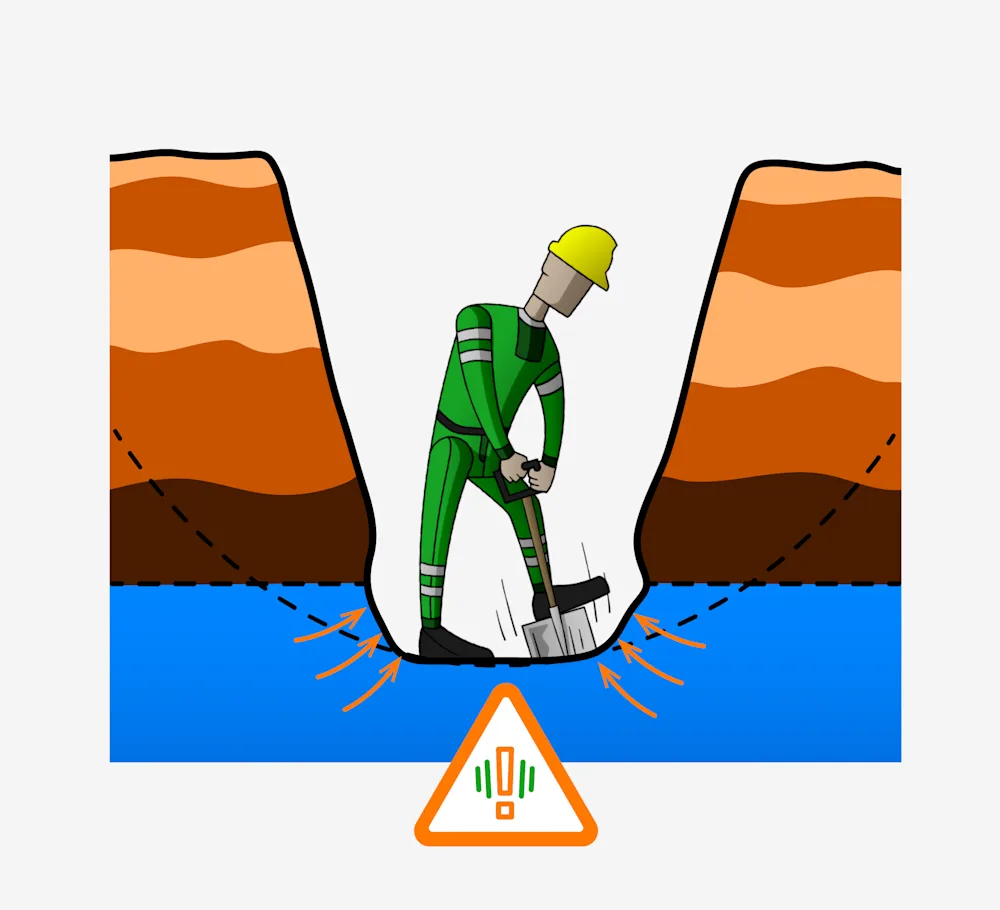
Examples of Hazardous Conditions. The trench has become deeper than the groundwater level, and the side slopes are minimal.
Shoring: general
If the material is loose, vertical trench walls must be properly shored—either with supports, sloped banks, or other methods that ensure safe work within the trench.
The shoring must be strong enough to withstand the earth pressure exerted on it and thereby prevent the trench walls from collapsing.
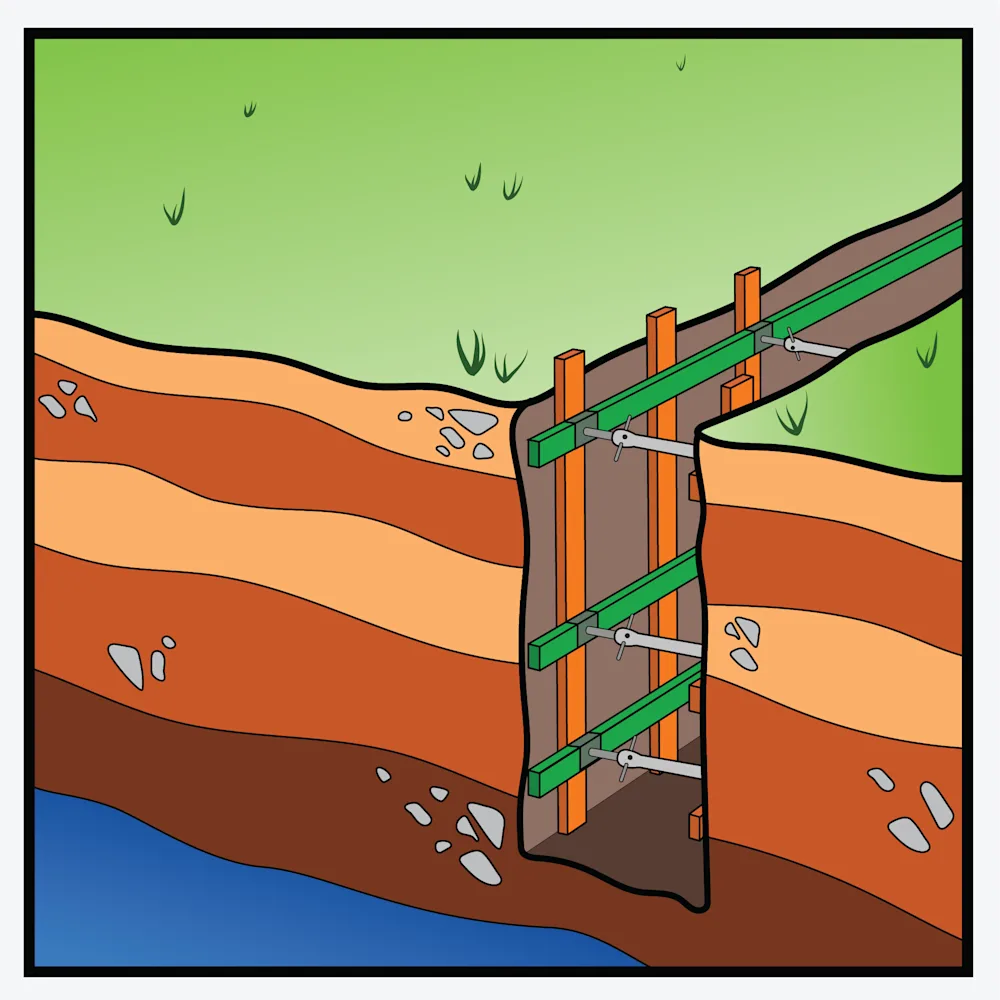
Examples of Shoring.
When excavating in wet clay or saturated sand in deep trenches (below the groundwater level), there is a risk of bottom failure or water pressure pushing up from the trench floor. In such conditions, sheet piling should be used.
Special conditions
When excavating lengthwise along a slope, special conditions may arise. Soil layers, groundwater, and soft clay can pose particular hazards—especially when clay mixes with groundwater. Extra caution is also needed right after the ground thaws, particularly when the thaw happens quickly. In such situations, it is advisable to consult someone with strong geological expertise.
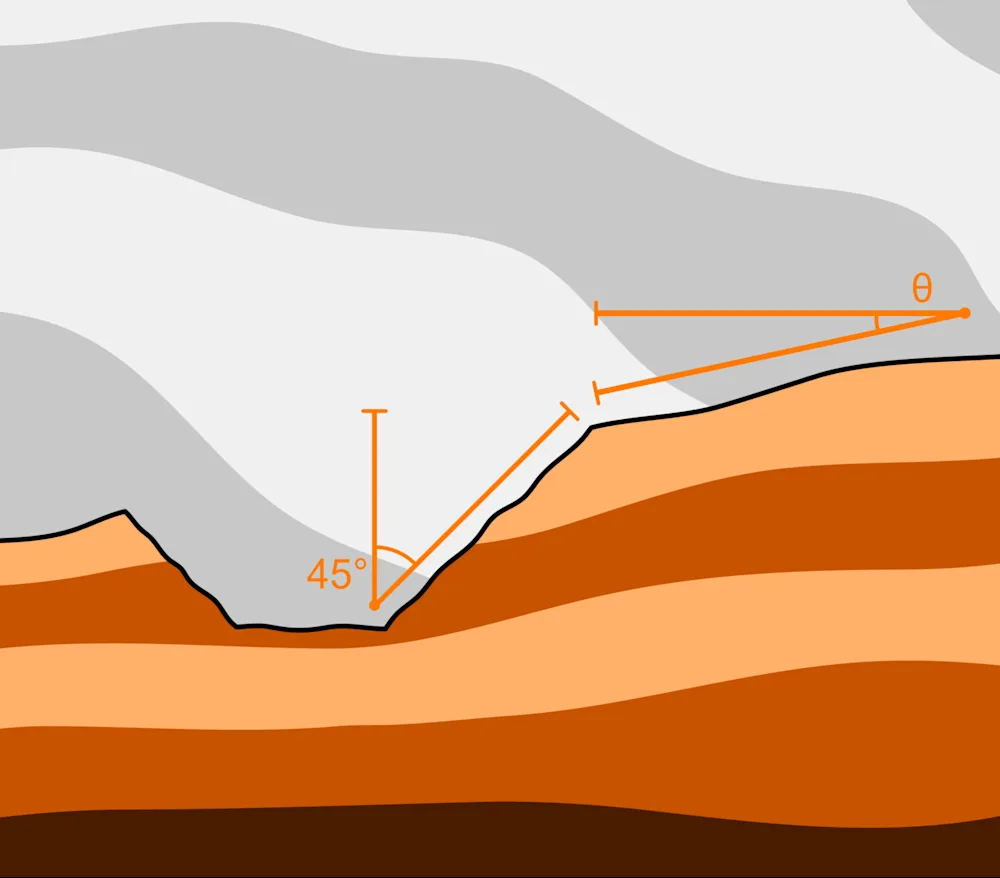
In conditions like this, it is necessary to shore both the walls and the retaining wall .
When excavation is carried out near a retaining wall, certain hazards can arise. It is essential to seek professional advice in such situations to determine whether the excavation—and possibly also the retaining wall—needs to be shored. In conditions like those shown in the image above, it is necessary to shore both the trench walls and the retaining wall.
Excavated material
The material removed from the trench increases pressure on its sides and should therefore be placed as far away as possible. The distance should not be less than one meter.
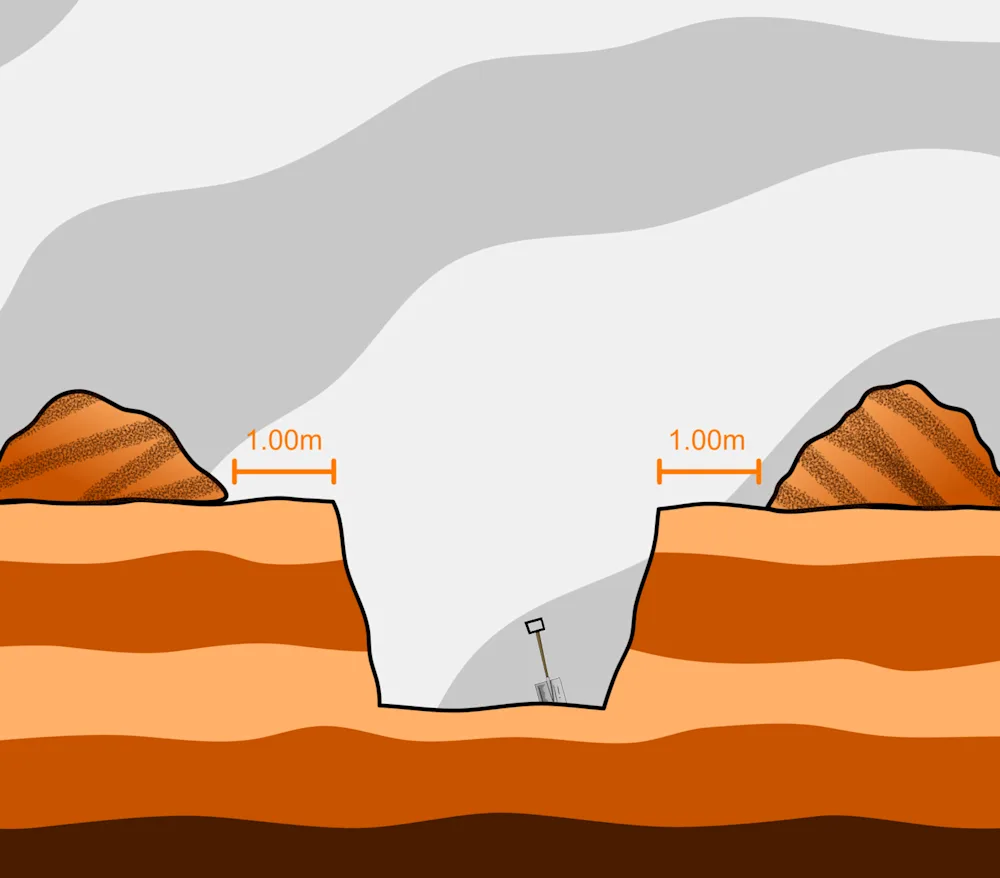
The material excavated from the trench should be placed at a minimum distance of one meter from the edge of the trench.
Loose rocks can easily slide into the trench if the material is placed too close. It should also be possible to walk safely along the trench banks without creating a risk of collapse onto anyone working inside the trench.
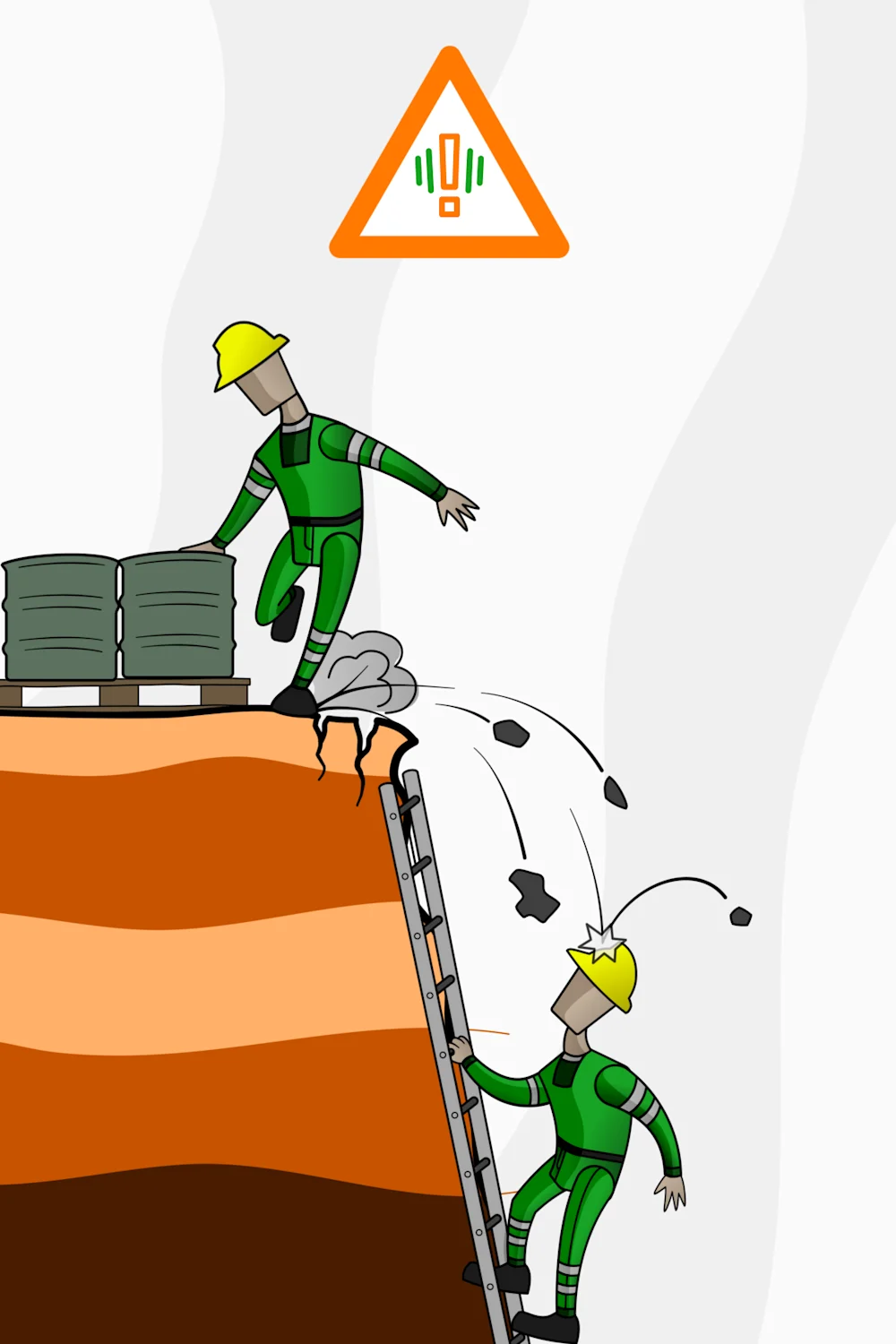
It should be possible to walk safely along the trench banks without creating a risk of collapse onto anyone who may be working inside the trenc
Removal of shoring: backfilling
When removing shoring, work procedures should be arranged in such a way that workers do not have to be inside the trench during the removal process.
Access routes
In all trenches deeper than one meter, at least one ladder must be provided at each work area to allow workers to enter and exit the trench or excavation safely. If the trench is long, more than one ladder should be available for use. Ladders must reach from the bottom of the trench to at least one meter above the trench edge.
Work pauses
If work must be paused, the work area must be well secured and closed off in accordance with applicable safety regulations.
Warnings
Where trench work is taking place, adequate lighting must be provided. Warning systems must be installed for the safety of traffic, particularly pedestrians and children. These may include warning signs, lights, barrier tape, and equipment that prevents people from falling into trenches, especially in the dark.

Service provider
Administration of Occupational Safety and Health