
Akureyri Hospital
One night doesn’t always tell the whole story about sleep apnea in children
31st August 2026
The findings of a new study, conducted with the participation of staff at Akureyri Hospital (SAk), suggest that the severity of sleep apnea in children can vary considerably from one night to the next. The results highlight that a single night of monitoring may not always provide an accurate picture of the severity of sleep apnea in an individual child.
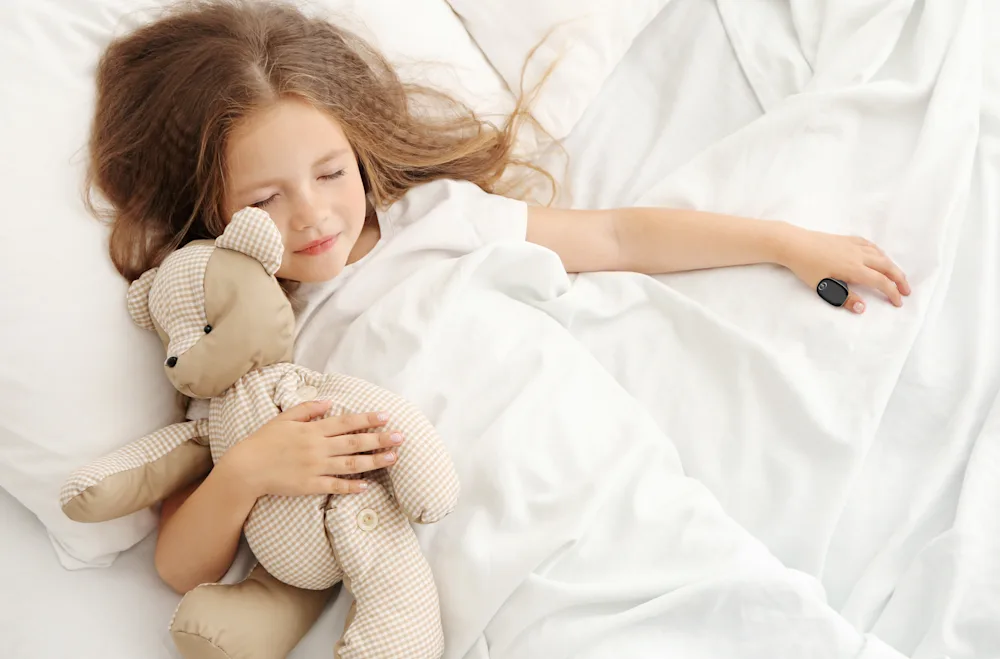
The study, which also formed part of Ingibjörg Ingólfsdóttir’s master’s thesis, was published on 19 August in the scientific journal Frontiers in Sleep. The authors of the article are Hannes Petersen, physician at Akureyri Hospital (SAk); Sólveig Magnúsdóttir, physician at MyCardio Denver; Ingibjörg Ingólfsdóttir, nurse at SAk; Laufey Hrólfsdóttir, Head of the Education and Research Department at SAk; Gróa Björk Jóhannesdóttir, Head Physician of the Paediatric Department at SAk; Hugi Hilmisson, statistician at MyCardio Denver; Magnús Birkisson, physician; and Erla Hallgrímsdóttir, physician.
Sleep of 200 children monitored for three consecutive nights
The study examined sleep recordings from 200 children aged 4–9 who had completed monitoring for three consecutive nights. The aim was to investigate whether the sleep apnea index, which reflects the number of breathing disturbances during sleep, varied from night to night and whether such variability could affect assessments of sleep apnea severity.
The results showed considerable night-to-night variability in individual children. Around half of the children moved between sleep apnea severity categories when the results from two consecutive nights were compared. Among children found to have moderate or severe sleep apnea, the diagnosis was established in 57% after the first night and in 86% after the second night. For 14% of the children, three nights of monitoring were required to confirm a diagnosis of moderate or severe sleep apnea.
The findings therefore suggest that, in certain cases, monitoring over more than one night may improve the accuracy of sleep apnea diagnosis in children.
“The study clearly demonstrates that the sleep apnea index in an individual child can vary substantially from one night to the next, which can affect the assessment of sleep apnea severity. The findings therefore highlight the need to further explore the role that multi-night monitoring could play in diagnosing sleep apnea in children,” says Hannes.
Research built on collaboration
The study also illustrates how research projects and data collected as part of scientific work at SAk can provide a foundation for further research. The data had previously been collected as part of a study on sleep apnea in children, and this study focused specifically on night-to-night variability in the sleep apnea index. This type of variability is well documented in adults, as previously reported, but has been studied less extensively in children. This study helps to address that gap.
The research formed part of Ingibjörg Ingólfsdóttir’s master’s thesis, supervised by Laufey Hrólfsdóttir and Gróa Björk Jóhannesdóttir.
“It is particularly rewarding to see how the research conducted as part of the master’s project continues to be put to use and contributes to new knowledge. The project also clearly demonstrates the benefits that can arise from collaboration between clinical practice, research and academia,” says Ingibjörg Ingólfsdóttir, a nurse in the Paediatric Department at SAk.
The study was carried out in collaboration between researchers from SAk and other institutions in Iceland and abroad. It received funding from, among others, the Akureyri Hospital Research Fund, the SAk Medical Council Research Fund and the University of Akureyri Research Fund.
The study is entitled Exploring nightly variability in sleep apnea and changes in severity classification with multi night sleep testing in a population based cohort of young children and is available in Frontiers in Sleep.