Akureyri Hospital
From Traditional Follow-up to Remote Patient Monitoring
8th July 2026
A pioneering pilot project in nurse-led remote monitoring for people with chronic respiratory diseases is currently underway at the Respiratory Outpatient Clinic at Akureyri Hospital.
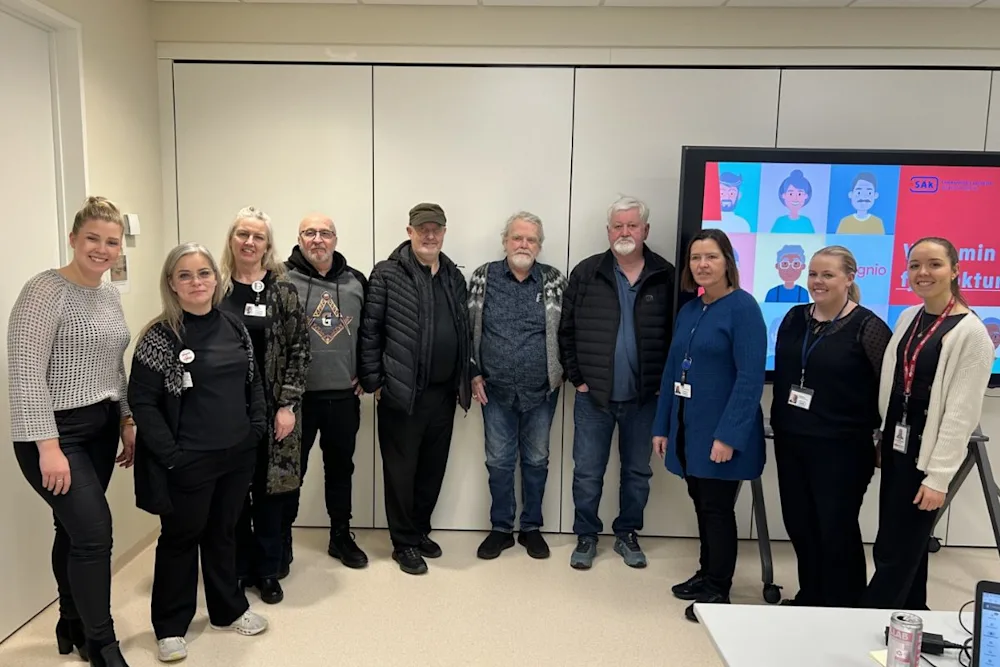
The first four patients in the Respiratory Outpatient Clinic's remote monitoring pilot, with staff from the Internal Medicine Outpatient Clinic and specialists from Öryggismiðstöðin.
The project began in February and will run for one year. Its aim is to use digital health solutions to enhance healthcare services, improve patient safety, and support individuals in managing their health more independently.
As healthcare continues to evolve, new approaches are needed to meet the growing demands of an increasing number of people living with chronic diseases. Telehealth services bring monitoring and support closer to patients, enabling healthcare professionals to identify changes in health status at an earlier stage. This can facilitate more timely interventions, improve patient safety, and ultimately enhance quality of life.
The project uses the CE-certified telehealth platform Dignio, which enables participants to perform regular health measurements at home, complete questionnaires about their symptoms and wellbeing, communicate securely with healthcare professionals through encrypted messaging, and access educational material about their condition and treatment. Video consultations can also be arranged whenever needed.
This approach allows nurses to monitor patients more closely and respond promptly to changes in their condition in collaboration with physicians. As a result, continuity of care is strengthened and patients benefit from greater safety and reassurance.
Active Patient Participation Improves Outcomes
An important aspect of remote monitoring is that patients become active participants in managing their own health. Regular health measurements, symptom reporting, and ongoing communication with healthcare professionals help improve health literacy and encourage greater responsibility for self-care.
At the same time, healthcare professionals provide targeted education, guidance, and support, helping individuals better understand their symptoms and recognise signs of deterioration at an earlier stage. This collaborative approach strengthens the therapeutic relationship and increases confidence for both patients and healthcare providers.
Earlier Intervention Is the Goal
Research has shown that telehealth services can reduce visits to emergency departments and decrease the need for hospital admissions. Through regular monitoring, worsening symptoms can be detected earlier, allowing appropriate treatment to begin before a patient's condition becomes more serious.
This has already been demonstrated during the pilot project, where prompt responses to changes in participants' health made it possible to initiate diagnostic investigations and treatment sooner than would otherwise have been possible. Remote monitoring has also proved to be an important source of support during the first weeks following hospital discharge, helping to reduce the risk of readmission.
Positive Experiences from Participants
Fifteen individuals are currently participating in the project, including patients with chronic obstructive pulmonary disease (COPD), severe asthma, and lung cancer. In addition, remote monitoring is being used on a temporary basis for one patient at a time following discharge from the Department of Internal Medicine. The service also enables the clinic to provide follow-up care for people living outside the Akureyri area.
Initial feedback from participants has been overwhelmingly positive. They report feeling safer, having improved access to healthcare professionals, and gaining a better understanding of their own health. Many believe that the regular follow-up and communication have increased their confidence in managing their disease and encouraged them to seek medical attention earlier when their condition changes.
Healthcare professionals have also experienced clear benefits from the project.
Nurse Hafdís Hafþórsdóttir, who has worked at the Respiratory Outpatient Clinic longer than any other member of the nursing team, describes remote monitoring as a significant positive development.
"It has become much easier to organise and prioritise our work, allowing us to focus first on patients with the most urgent needs. We have a much better overview of our patients' wellbeing and can respond more quickly when their condition deteriorates. Communication has become more secure, more personal, and easier. We also feel that patients have gained a better understanding of their own condition and are more aware of how they are feeling, making it easier for them to take responsibility for their own health. Ultimately, this contributes to a better quality of life for our patients."
An Important Step in the Development of Healthcare
The pilot project reflects a broader transformation taking place across healthcare, where digital technologies are being used to bring services closer to patients without compromising quality. Throughout the project, outcomes will be evaluated by comparing hospital admissions, emergency department visits, patient experiences, and staff feedback.
"The goal is to establish a solid foundation for the broader implementation of telehealth services at Akureyri Hospital. If the project proves successful, it could become an important step towards a more efficient, safer, and more person-centred healthcare service, where patients play an active role in managing their own care," says Þórdís Rósa Sigurðardóttir, Head of the Internal Medicine Outpatient Clinic and project lead for the pilot.