
Land and Forest Iceland
Christmas trees exceptionally beautiful this year
1st December 2025
Harvesting of Christmas trees in Iceland’s national forests is going well, and this year’s trees are considered exceptionally green and attractive. On Saturday, the traditional Hamburg Tree was lit at Miðbakki on Reykjavík Harbour — a fifteen-metre Sitka spruce sourced from Skorradalur.
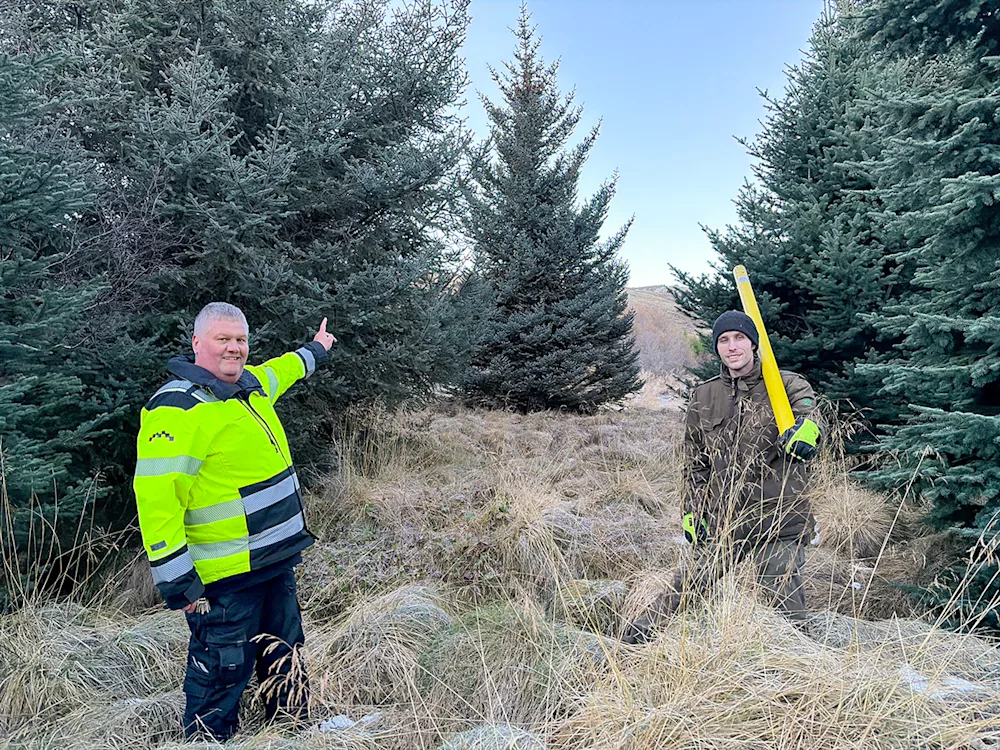
Jóhann Páll Guðnason, chief foreman of port works at Faxaflói Ports, and Viktor Steingrímsson, logger at Land and Forest Iceland, after selecting the Hamburg Tree for 2025. Photo: Steina Matt
Staff from the national forests in the west, north, east and south have spent recent days and weeks gathering Christmas trees. Work has progressed smoothly everywhere in the favorable conditions, although occasional periods of severe frost caused some delays.
Christmas Forest in Haukadalur over two weekends in December
Jóhannes H. Sigurðsson, Deputy District Forester in South Iceland, says that around 45 public Christmas trees are now being sent from the region to various towns and villages in the south and southwest, including the Westman Islands, the Reykjanes peninsula and the capital area. Around 600 household trees will be harvested for the Christmas tree sale of the Reykjavík Air Ground Rescue Team, as well as a few other sellers who supply trees to the general public. These organisations either collect the trees themselves from the Land and Forest Iceland station in Þjórsárdalur or have them delivered. The accompanying photograph shows an impressive public tree ready for transport from Þjórsárdalur.
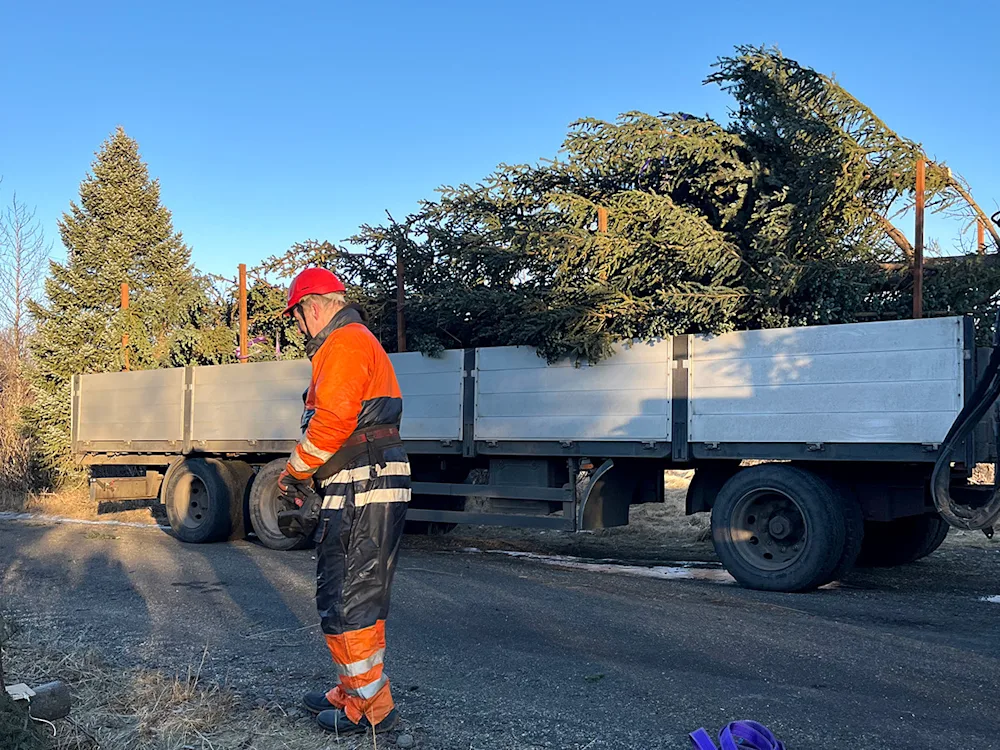
Jóhannes says that most of this year’s trees were taken from Þjórsárdalur and Mosfell. The work is carried out by staff at the Land and Forest Iceland station in Þjórsárdalur. He notes that the trees look particularly good this year after a favourable summer and autumn: dark green, healthy and robust. On the weekends of 13–14 December and 20–21 December, Haukadalur Forest will be open to visitors who wish to pick and cut their own Christmas tree.
Fir tree from the east delivered to the President
Þór Þorfinnsson, District Forester in East Iceland, reports a similar story: the trees look good, green and appealing. Around fifteen public trees will be taken from the eastern national forests this year, destined for towns in Fjarðabyggð, Vopnafjörður and as far as Höfn. Between 400 and 500 household trees will be harvested — mainly lodgepole pine and Norway spruce, with smaller numbers of Engelmann spruce, Siberian pine and subalpine fir. Some of these will be sold at the Christmas tree market of the Eyjafjörður Forestry Association in Kjarnaskógur, and some at Jólakötturinn, a Christmas market held in Egilsstaðir on 13 December.
As in previous years, a handsome subalpine fir from Hallormsstaður will be shipped to Runavík in the Faroe Islands as a friendship community gift from Egilsstaðir, and another fir, three to four metres tall, will be delivered to Bessastaðir presidential residency. President Halla Tómasdóttir is the fourth president to receive a subalpine fir for Christmas. According to Þór, staff at Land and Forest Iceland in Hallormsstaður are currently in the middle of felling the Christmas trees, and work is progressing well, although recent frosts have caused some setbacks. Typically, three to four staff members take part in the cutting.
Norway spruce performing better than before
In the national forests of North Iceland, two to four members of the district forester’s staff have been working on the Christmas trees in recent weeks. Eight public trees and several larger Christmas trees will be harvested this year, mostly from Vaglaskógur, and set up in nearby towns, says District Forester Rúnar Ísleifsson. Around one hundred household trees will be taken — half Norway spruce, one quarter subalpine fir and one quarter lodgepole pine. These are mainly harvested in the national forests of Vaglaskógur and Þelamörk.
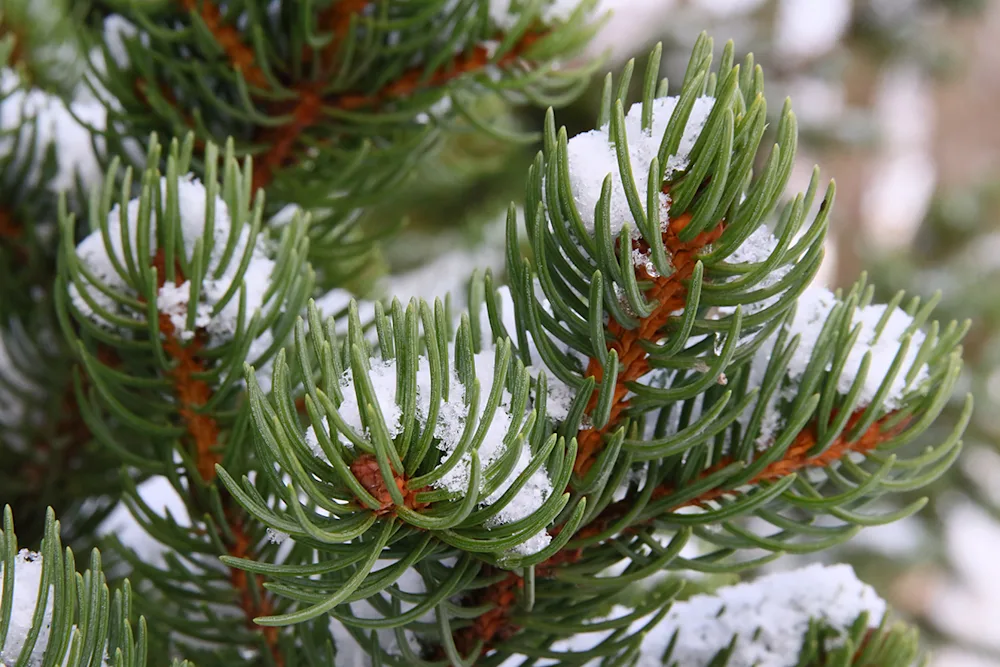
Rúnar says the Norway spruce looks especially good this year, but the fir and lodgepole pine are also in fine condition. Heavy snow is common at this time of year, especially in Vaglaskógur, but this winter conditions have been unusually favourable, making the work easier. As elsewhere, periods of severe frost have been the only major obstacle, and when the frost is intense the trees may not be touched at all.
He notes that relatively few Christmas trees are currently available from the northern national forests because planting for this purpose was limited for some years. In recent years, however, increased planting of subalpine fir and Norway spruce has taken place, and these trees are expected to reach Christmas-tree size before long. Notably, Norway spruce appears to be growing better than before and is now reaching human height in roughly half the time previously observed. On 5–6 December, a Christmas tree sale will be held in Vaglaskógur, where visitors can also purchase branches, firewood and other forest products.
Vesturbyggð municipality now self-sufficient in Christmas trees
In Skorradalur, work has gone well despite an outbreak of seasonal illness among staff. According to Narfi Hjartarson, Deputy District Forester, thirty-nine public trees were felled — mostly Sitka spruce, but also a few four-metre Norway spruces and a single lodgepole pine of similar height. Most came from Stóra-Drageyri, with the tallest taken from Bakkakot. The trees are mainly destined for the capital area, Narfi says, with some going to the Reykjanes peninsula and a few to Snæfellsbær.
For decades, the municipality of Vesturbyggð has received its Christmas trees from Skorradalur, but this year marks a turning point: Vesturbyggð is now self-sufficient in Christmas trees thanks to the success of afforestation in the southern Westfjords. This milestone is warmly welcomed.
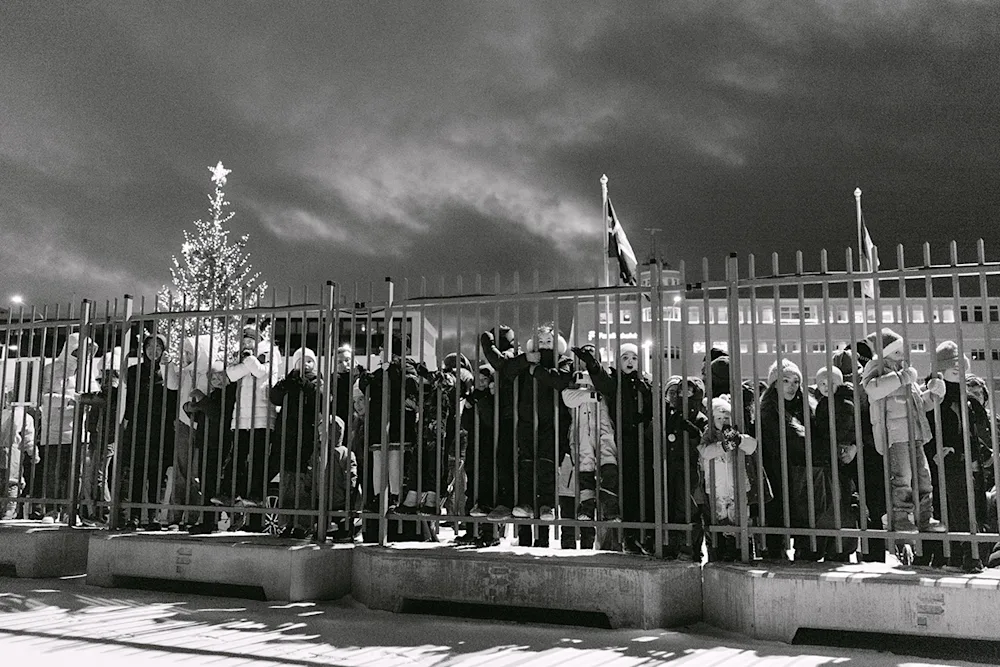
On Saturday, the lights were switched on for the Hamburg Tree at Miðbakki in Reykjavík. It is now sixty years since the first Christmas tree was sent from Hamburg to Reykjavík as a token of friendship. Although the tree is no longer sourced from Germany, the goodwill and friendship of Hamburg’s residents remains unchanged. The accompanying photograph by Steina Matt was taken at the lighting ceremony on 29 November, where children watched the Yule Lads arrive by harbour pilot boat.
Self-grown pines and a stolen spruce
Over the past decade, few household trees have been taken from the national forests of West Iceland. However, colleagues in South Iceland requested assistance in sourcing pine trees. Narfi reports that this went better than expected: almost all the available pines were naturally regenerated trees growing on gravel flats, rock outcrops and eroded heaths across three small areas in Sarpur and Bakkakot in Skorradalur. A total of 127 pines were harvested. Weather conditions were good — calm with frozen ground — which greatly facilitated tractor work when harvesting the larger public trees.
The only unfortunate incident was that an unknown individual stole a specially ordered 3.5-metre tree from the yard at Stóra-Drageyri. This is not the first time such a theft has occurred; on previous occasions, the upper sections of six- to ten-metre market-square trees have even been removed from felled trees. Christmas traditions clearly vary.