
The Healthcare Institution of North Iceland
This news article is more than a year old
Increased Access to Medical Services in Home Nursing
30th April 2025
Arna Rún Óskarsdóttir, a geriatric doctor at HSN, gave a presentation on the Day of the Elderly in March.
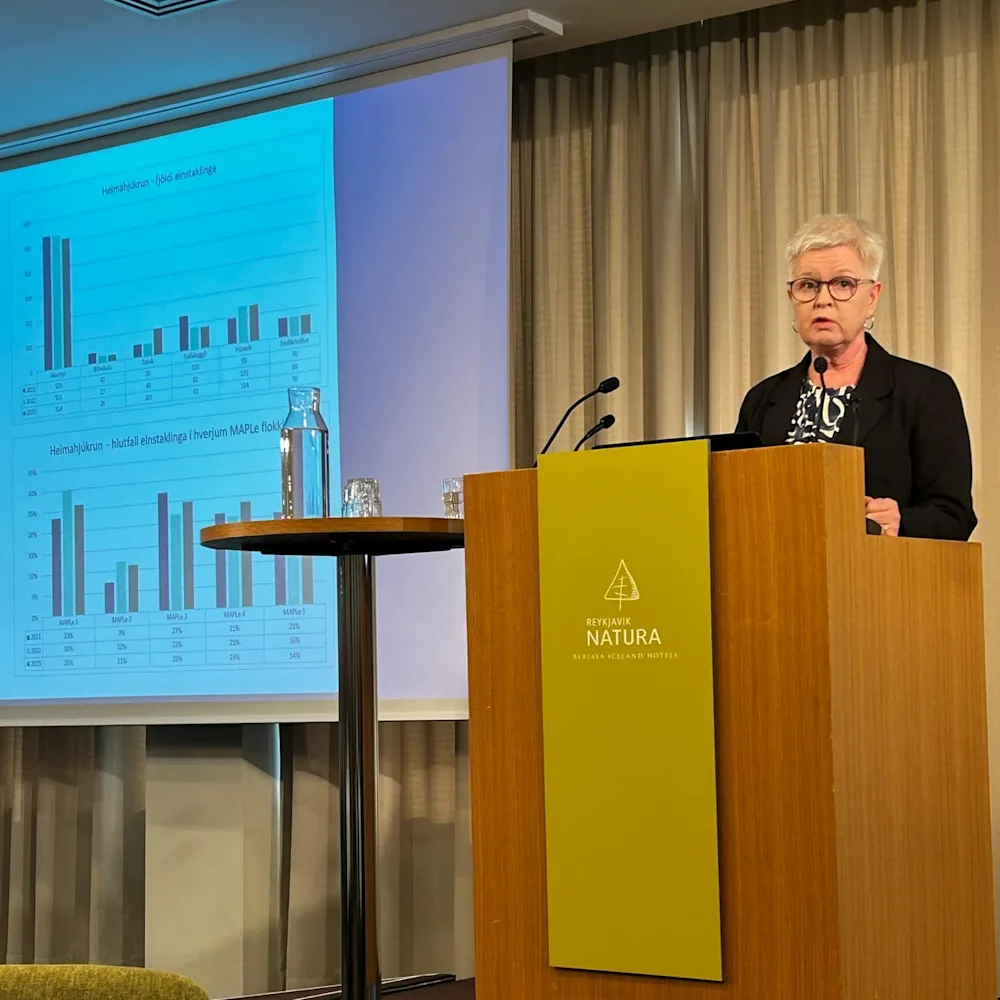
Arna Rún Óskarsdóttir, a geriatric doctor at HSN, gave a presentation on the Day of the Elderly in March. She introduced her experience with doctor's home visits to elderly and multi-ill patients in HSN's home nursing in Akureyri over a six-month period. In addition to collaborating with home nursing, Arna Rún provides consultation within HSN when there is suspicion of memory diseases and plans for further geriatric services at locations outside Akureyri.
"In my work as a geriatric doctor, I provide services to the elderly who face various health problems and often take many medications, increasing the risk of side effects. My role is to see the big picture and try to identify as many health factors as possible that can be improved to enhance people's well-being. This is a diverse group, and genetics, lifestyle, and social factors also have a significant impact."
Restarted Home Visits
According to forecasts from Statistics Iceland, the elderly population is increasing, while the trend in medical services is that they mostly take place at health centers, hospitals, or doctor's offices. Over the years, home visits by doctors have more or less been abandoned for various reasons, but Arna Rún believes this trend should be reversed, at least for the most vulnerable. "Foreign studies show that home visits can have positive effects on, among other things, functionality and health-related quality of life, lifespan, and reduce emergency hospital visits. People are more frail when they move into nursing homes today compared to before, and they live shorter after moving in. This tells us that they are sicker at home while waiting for nursing home space, and we need to care for people as well as possible at home. It is obviously wrong that those who cannot access medical services outside the home due to frailty or chronic illnesses have poorer access to medical services."
Teamwork is Crucial for Best Results
Arna Rún has been developing new procedures for visits to patients in HSN's home nursing in Akureyri in collaboration with HSN's management. To evaluate the effectiveness, she decided to focus on doctor's home visits over a six-month period from September 2024 to February this year. "I examined the reasons for the visits and what was done, and so on. During this period, 45 visits were made to 36 individuals. The main reasons for the visits were weakness and the need for increased home nursing services. Most received one visit, and the most common follow-up action was to review and reduce medications, such as reducing blood pressure medications for weakness and falls or advising people to reduce the use of sleeping pills. For those who received more visits, the main reason was suspicion of infections or the need for more visits due to palliative care."
Arna's conclusion is that with good teamwork between doctors, nurses, nursing assistants, occupational therapists, and other professionals, needs can be better identified and medical assistance directed to the right place at the right time. It is always based on the professional assessment of the nurse and the team when deciding whether a doctor should visit. "This work revealed how important it is to have a team leader with extensive clinical experience, who has an overview and knows their patients, who can identify the most vulnerable individuals and who need a doctor after other measures have been tried. This way, we can make the best use of our time and human resources."
Opportunities to Improve People's Well-Being – Delay Admissions
Arna says there are great opportunities in enhancing cooperation and information sharing among professionals about patients in home nursing. "People's medical records contain a lot of information about, for example, diagnoses and medication use but can be inaccessible when health problems are many. It is important to work together to improve conditions and well-being, for example by reducing or changing medications, promoting physical activity, such as with a physiotherapy request, involving occupational therapists to assess the need for assistive devices, etc. There is a great need for a multidisciplinary approach to people who live at home and are elderly and frail. My conclusion is that visits are extremely important, and we get valuable information from these visits. The cooperation with home nursing has been very rewarding, if we work together to better support people at this stage, we could possibly delay admissions to nursing homes and reduce emergency visits, and that is a significant achievement."