10th August 2026
10th August 2026
Total Solar Eclipse 2026
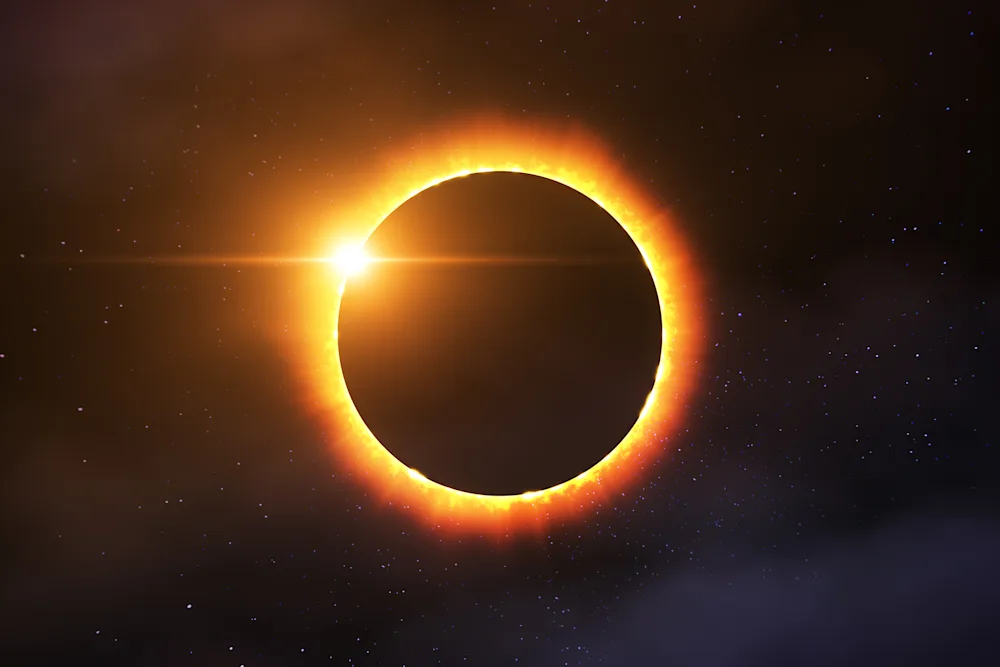
The celestial bodies will perform a unique dance on 12 August 2026, when a total solar eclipse occurs. To enjoy the spectacle safely, several precautions are necessary.
-Automatic translation
It is essential to use safe solar eclipse glasses when watching a solar eclipse. Ensure the glasses meet the EN ISO 12312-2:2015 standard and bear the CE mark. Do not use regular sunglasses, and do not look directly at the sun without solar eclipse glasses or through camera lenses, binoculars or smartphones without approved protection (filters, solar eclipse glasses).
When watching a partial or total solar eclipse, it is important to bear the following in mind:
The decreasing brightness is deceptive and can lead people to forget to protect their eyes.
When a total eclipse occurs, you need to take off your solar eclipse glasses to see the solar corona. This moment, when it is safe to look at the eclipse with the naked eye, lasts for approximately 2 minutes in the westernmost part of the country and about 1 minute in the capital region.
You must put the glasses back on as soon as the sun breaks through again.
Anyone outside the total eclipse zone (the rest of the country) must wear solar eclipse glasses at all times.
Parents and guardians need to pay special attention to children and others who lack the maturity to understand the importance of wearing solar eclipse glasses when the total eclipse ends. These individuals are at particular risk of eye damage.
The retina can suffer permanent damage in a matter of seconds if you look directly at the sun. Symptoms can appear several hours later, including reduced vision, a blind spot, or even blindness.
About light-induced damage and first response
The main symptoms of light-induced retinal damage include reduced or distorted vision, altered colour vision, blurred vision, reduced sharpness, and a blind spot or blindness. Other symptoms may accompany this, including headaches and light sensitivity.
If you suspect your eyes have suffered light-induced damage, it is important to rest them. The first piece of advice is to stop looking at the sun. Then, it is sensible to avoid bright, strong lights and even rest your eyes by wearing sunglasses.
It is important to remember that the retina has no pain receptors. Therefore, painkillers will not help. In addition, there is no specific treatment for light-induced retinal damage.
Symptoms of light-induced damage can be temporary, but the damage can also be irreversible. If you suspect damage to your vision, it is important to contact a health clinic or an ophthalmologist for advice and to have the potential damage assessed.
Information page about the total solar eclipse
The Directorate of Health would like to draw your attention to the government's information page on the 2026 total solar eclipse. There you can find a wide range of information about this unique event.
Further information
Kjartan Hreinn Njálsson, Assistant to the Medical Director of Health
kjartan.h.njalsson@landlaeknir.is