16th September 2026
16th September 2026
Public Health Indicators 2026 presented in Egilsstaðir
The Public Health Indicators were presented for the eleventh time today, Wednesday 16 September, in Egilsstaðir. The event was held in collaboration with Múlaþing and was live-streamed.
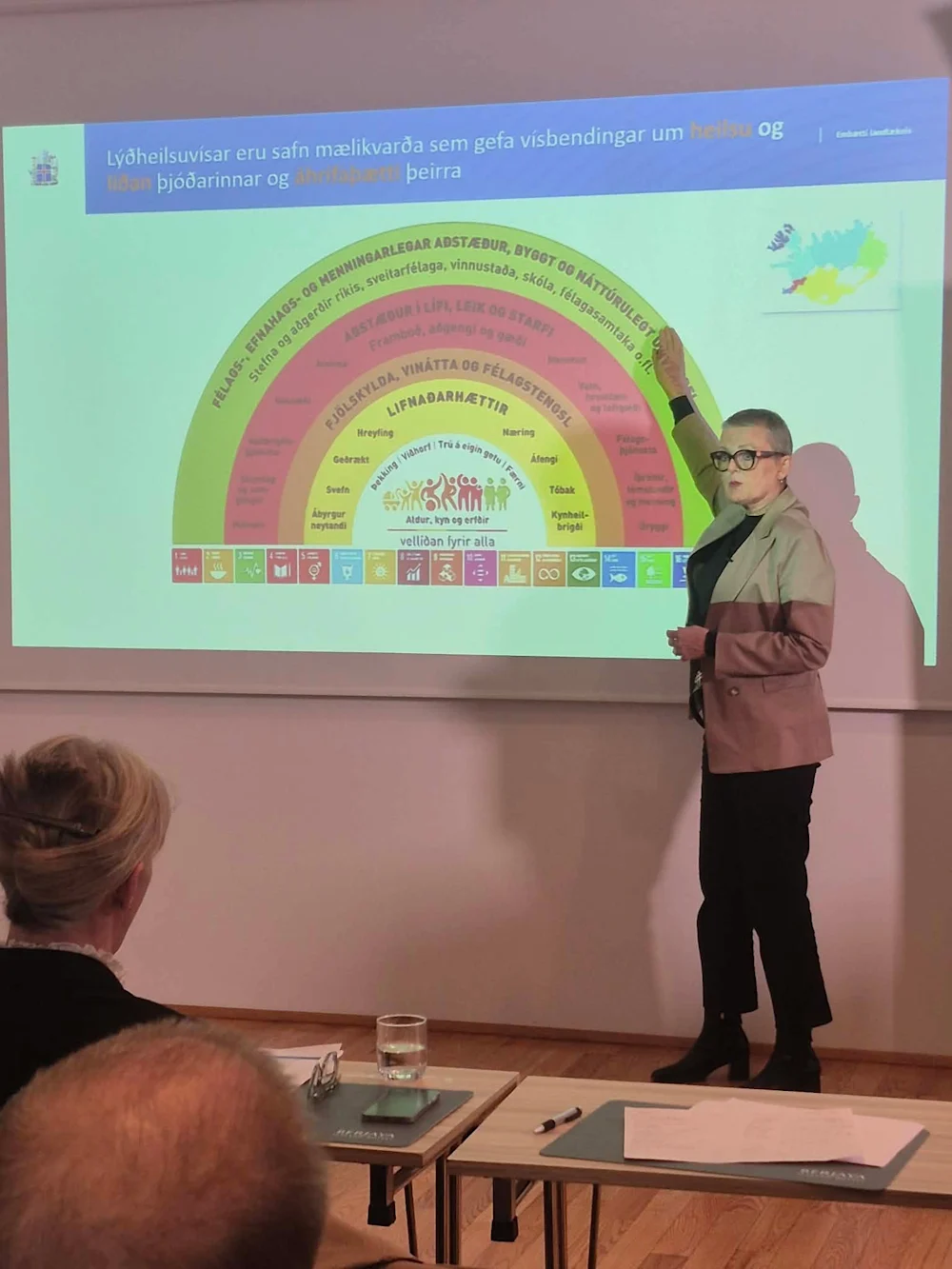
Medical Director of Health, María Heimisdóttir, presents Public Health Indicators 2026
-Automatic translation
The Public Health Indicators 2026 provide many interesting insights into the nation's health, well-being, and related factors. Among the most prominent findings are the following:
Financial difficulties: The proportion of people who said they had difficulty making ends meet fell significantly between 2024 and 2025, from just over 19% in 2024 to 15.5% in 2025 for the country as a whole. The proportion decreased in all healthcare districts, although the change was not significant in every district.
Mental health: Across the country as a whole, the proportion of adults rating their mental health as fair or poor fell between 2024 and 2025, from just over 33% to 30%. However, year-on-year trends vary widely across healthcare districts. In some areas, the proportion increased, while in others it decreased; the Suðurnes region showed a significant decline. Among upper secondary school students, 43% rated their mental health as poor, and 29% said they were often or always lonely.
Anxiety disorders in children: The proportion of children aged 6-17 who have had contact with primary healthcare and have a registered diagnosis of anxiety has increased since 2020, though to varying degrees across healthcare districts. At the same time, prescriptions for anxiety and depression medication for children of the same age have remained fairly stable or have slightly decreased. Differences also exist between healthcare districts.
Vaccinations: Participation in the 4-year booster vaccination was 91% nationwide and 96% in East Iceland. Influenza vaccination among those aged 60 and over was just over 50%, still well below the 70% target.
Social media: Among children in grades 4-5, 80% use social media, even though they have not reached the legal age to use it.
Further details on the presentation: Medical Director of Health María Heimisdóttir opened and closed the presentation. Other speakers included Dagmar Ýr Stefánsdóttir, Mayor of Múlaþing; Sigríður Haraldsd. Elínardóttir, Head of the Division of Health Information at the Directorate of Health; Dóra Guðrún Guðmundsdóttir, Head of the Division of Public Health at the Directorate of Health; Sigurbjörg Hvönn Kristjánsdóttir, Head of Education and Public Health; and Anna Alexandersdóttir, Head of Welfare at Múlaþing. Þórarna Gró Friðjónsdóttir, CEO of the East Iceland Healthcare Institution, moderated the meeting.
At the end of the meeting, the Mayor of Múlaþing and the Medical Director of Health signed a cooperation agreement between the municipality and the Directorate on a Health-Promoting Community.
Earlier in the day, stakeholders from Múlaþing and elsewhere in East Iceland met with representatives of the Directorate of Health. They reviewed the status of public health indicators in the area, the key strengths and challenges, and ways to improve.
Arnar Sigbjörnsson, Project Manager, Division of Health Information
Dóra Guðrún Guðmundsdóttir, Head of the Division of Public Health
Gígja Gunnarsdóttir, Project Manager, Health-Promoting Community
Guðrún Aspelund, Chief Epidemiologist
Sigríður Elínard. Haraldsdóttir, Head of the Division of Health Information