
The Supreme Court of Iceland
The history of the Supreme Court
I. 930 - 965
Sigurður Nordal says in his publication Íslensk menning, að venjan sé að lýsa upphafi alræðisríkis, á Íslandi og stofnun þjóðveldisins sem „óflekkaðri getnaði af almennri þörf fyrir lög og rétt,...“
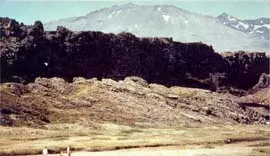
It was an attempt to combine individual freedom with the need for cohesion, so that the issues between the two could be resolved peacefully. It was a voice-in-the-mouth society, where two forces met: on the one hand, the greed of the chiefs to power, the respect of the public for the clans, the aristocracy, the bigots, the bigots, - on the other hand, the respect of every free man for himself and his dignity, the trust in his own part and accepting wrongdoing.”
Alþingi was the Icelandic legislature from the beginning and had the highest judicial authority. In Ara fróði’s Íslendingabók, Hænsna-Þórir is said to have been guilty in Alþingi. According to Hænsna-Þóris saga, the case ended with a fine and the killing of Hænsna-Þórir. This was around 960. From Ara fróði’s words, scholars have concluded that there was a court in Alþingi from the very beginning, or at least before the establishment of the Court of the Quartet around 965. Little else is known about this court.
In the year 965, the judicial system in Iceland changed a great deal. Then, so-called quarter courts were established, one for each quarter. They were each the highest court in cases from their quarter and all gathered in Althingi. It is most likely that 36 people were sitting in the quarter court and each god named one person in each court. Everyone had to agree on the outcome. Shortly after the year 1000, a so-called fifth court was established which covered the whole country. Cases that had been sentenced in the quarter court could be appealed. The idea was probably to promote legal unity in the country. The fifth court had 48 people, but 36 sentenced cases, where each party could remove 6 from the court. The majority ruled the outcome. This structure of the judicial system continued throughout the nation’s republic.
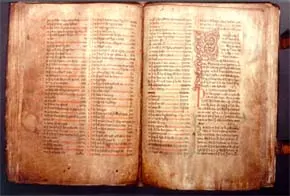
As for the Fifth Amendment, Nordal said: “The fifth amendment completed the development of the Icelandic legal system, and it had reached a perfection that was unique at the time. Cases could go through three stages of adjudication, the spring convenment, the conviction of the victim and the fifth amendment, and each case could be decided by a court decision, although no unanimous decision was reached. It showed the growing public trust in the law and the law, that people should accept, after three quarters of a century of experience, that they should abide by a majority of the judgment. Shortly after the fifth amendment was passed, the passage of a law was numbered as a court order. ... It was the cornerstone of the ancient national structure.”
Icelanders joined the king of Norway in 1262. A new period begins in the court history of the country. Its beginning is traced back to the constitution of the Icelandic Parliament, Járnsíða, from 1271 and later Jónsbók, from 1281. This period can be said to have continued until 1800 when the Landsyfirréttur was founded. It can be divided into two parts.
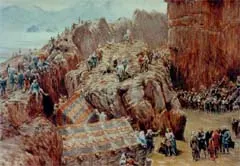
There were two domestic judicial bodies in the first half of the period: the District Court and the Court of Law. The Court of Law was mainly an appellate court, although it also judged cases at the first level. There were 84 lawyers in total during this period, but lawyers appointed 36 of them to serve each time in the court of law, and then appointed 6, 12 or 24 to judge each case. Cases could also be appealed to the Norwegian king, "by the advice of the prudent people." This system governed the appointment of higher judicial bodies in the country for about 300 years. During this period, magistrates began to judge cases at the lowest court level, along with co-defendants or members of the committee. In 1563, a directive was published in Iceland to establish a Supreme Court in Althingi. According to it, the head of the court was to appoint a 24-person judge, who went by the law with the highest judicial authority in the country. “In the beginning of the directive, the commoner and the people of Iceland have publicly informed the king that the lawyers awarded numerous sentences that were not fair. In another place, the reason for the directive is said to be to make it possible for poor people, who are not allowed to appeal their cases to the king, to obtain their rights.”
Many factors indicate that the impetus for the establishment of the Supreme Court was also to reduce the influence of lawyers in the judicial administration of the country. The court was already quite opposed to this order of affairs and lawyers and the head of the court cross-examined the invitation. This led to its renewal in 1593.
This is quoted from the defense of Bishop Guðbrandur, where he says: “But then we Arngrímur the tsar had a legal dispute with Jón Ólafsson about Hóll and Bessastaðir, then the lawyers judged that the letter, which Arngrímur and I knew to the living God, was a false letter. I sued the captain and asked him to name out XXIIII men to that lawyers’ judgment; he went away with his whims and hurried, said he wanted to see that royal letter, which he knew well about and his brother had brought into the country. I had a copium there of and didn’t accept it, and until then I was forced to sue the king. maj. and when he caught up with everyone who said poor things and that they had thrown that letter under the bench, the king. maj. renewed it again, and didn’t ask them permission. Thus this letter came back into the country because of injustices, which the captain did to me and if this letter is against the law and sinful, then the greater and bigger sin, which it first provided, has.”
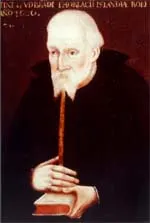
The history of the Supreme Court bears all the marks of its beginning. It never became the institution that it was meant to be. Cases could be appealed to the king and the order was maintained after the king of Denmark replaced the king of Norway. In 1732 the judicial authority of the Supreme Court of Denmark came into force. There were four judicial levels at that time. It is easy to imagine how long it could take to bring a case to a final conclusion. People could wait for it for years in many cases. Additionally, there was almost no legal procedure, as well as no provision for appeals. This was the least of the disadvantages of a judicial process. The biggest disadvantage of a judicial process was that it was not guaranteed that people with sufficient legal knowledge would be in court. In many sources it is evident that the court has often been poorly attended by qualified people.
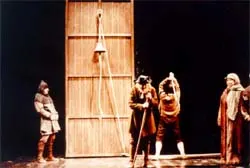
We’ll be hanging out in Althingi this season with Halldór Laxness. He says at the beginning of the Icelandic clock: “There was a time, it is said in books, when the Icelandic people had only one common property valued for money. It was a clock. This clock hung over the gable of the courthouse in Þingvellir, near Öxará, attached to a beam in the upper part of the square. It was called to court and before executions. ... In the presence of a ranger, a lawyer and a priest, and a man to be cut and a woman to be drunk, it was often possible on a still day around the mid-day sun, in the face of the sun and the smell of the Blue Forest, to hear the sound of the clock mixed down Öxarár.”
At the Althingi parliament in 1705, the clock was rung to the courts, which was a long time earlier. The courts met and there the case of Jón Þórarinsson, a thief from Vífilsdal, was heard. The Althingi book states that he had: “...acknowledged that he had hired from Vatn in Haukadalur, out of a locked house, eight stone sorted waistcoats, two hoods, one black antique, but another grey, item one broad rounded and one sheep-black shorts and a man’s trousers of the same colour and one man’s socks and two scarves, one blue but the other discolored.” The lawmakers had no doubt that Jón was verified to the perfect mark. However, since this stolen item was the first one he had been discovered with, he should not be punished with death this time, “...but rather be exiled from the country and have lost his peace and guarantee himself how he will luck out of the country to evacuate, and if he has a deadline for this, until the following November 15th, half a month after the Most Holy Mass. But if this Jón Þórarinsson here in the country is found after the aforementioned November 15th, he shall seize wherever he will be and move to the next magistrate.” The result of the court is described by Jón Þórarinsson’s identification to the information that might hit the country after the aforementioned date. They are: “... medium-groomed, dark-skinned, round-haired, brown-skinned, red-skinned in face, bloody, small-eyed, mouth-sized, with a small sprained dark-rimmed face, front-facing, with a raised upper lip, thick-skinned in the lower, chin-small, nasal-sized and that everlasting, disgusting in appearance, sturdy, thick-skinned, lean-headed, shoulder-high, calf-thick, not uncomfortably established.”
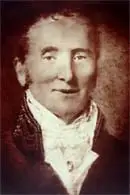
In the late 18th century, the court had been greatly undermined by the words of Magnús Stephensen, but never risen to prominence. In the past it was difficult to appoint qualified judges. According to Magnús, who was then a lawyer, “The court has been filled with co-defendants who have had to gather together from the touristy courtrooms held at the court..., and the court has not been fully appointed at times, unless the judges and the farmers were brought in. These co-defendants, who were called to the court, knew nothing about the cases to be decided.... When it is thought that people sit and vote in court, they are actually beamed and stunned by boredom.... The courtrooms are mostly made up of knife-throwing, wherein ignorant advocates move one another.” The court was not built to enhance its dignity. In Þingvellir, a small wooden building, the courthouse, where courts were held, had long been in use. In 1787, the state of the building is being discussed by the authorities. In a letter to the Danish authorities, repairs to the courthouse are considered unavoidable.
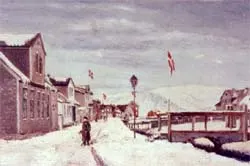
“But the courthouse was so closed that it seemed impossible to hold a court next summer without action, unless there was a guarantee of unusual weather conditions during the parliamentary term, like the summer of 1786, but then it was only possible to hold the court indoors or under the open sky. People said it would be better to hold the court in a tent or under the open sky than in the courthouse because of drag there.”
In the latter half of the 18th century it became clear that the judicial system in Iceland needed to be revamped. It had to be simplified by reducing the number of domestic appeal courts from two to one, as soon as the procedures were improved and legal certainty increased. The Supreme Court of Iceland was established in Reykjavík in 1800, but Magnús Stephensen was keen to move the judicial authority from Þingvellir to the country’s growing capital. There his vision has been the main factor, but he thought the ancient parliamentary seat was increasingly ugly. The Supreme Court of Iceland had the highest judicial authority in Iceland for 120 years, but its decisions could be appealed to the Supreme Court in Copenhagen.
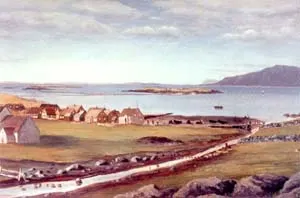
Magnús Stephensen, author of the Landsyfirréttur as Björn Þórðarson calls him, but assassin of Alþingi as Bjarni Thorarensen once called him, was the first Chief Justice of the Landsyfirréttur. It soon became clear that the Chief Justice was determined to take the initiative in the legal affairs of the country. In 1802, the Landsyfirréttur was given theft case by Jón Jónsson of Yzta-Gerði, his wife and Sigfús Þorleifsson of Hlíðarhagi. The court had been decided by Jón Jakobsson, count of Espihóll.
Initially, the Landsyfirdómur settles on many things in the investigation, but later it explains: “It is not at once, but rather most of the time, that this process and the sentence, from the court’s point of view, is brutally solved.” Many comments are made, such as on the questioning of witnesses and the execution of sentences, the disclosure of policy, on the parliamentary sessions until the night, the handling of parliamentary documents, the language and the completion of the sentence. The judges of the Landsyfirdómur deemed all this to be the most messy and were very embarrassed. “In the end, the court has filled his sentence with unacceptable stupidity - bullshit about the fate of marriages, courts of justice, ideas and other things, and without authorization created sheer laws,...”
However, since theft was largely deemed to be a pretext for the criminal characters Jón, Rósa and Sigfúsi, they were despite all of this convicted. The sentence was however reduced. The District Commissioner still gets the benefit of the sentence. “The district court judge, the District Commissioner Jón Jakobsson, begs for a stupid sentence in 1st ECR to the Justitskassan. He also compensates for the defamation and prejudice in quoting from the invitation of the Decree of 3 June 1796 § 35, in his judgment, whether in the case of operation and treatment in the herd, any prejudice is shown or not, 20rd ECR to Saurbæjarhreppur in Eyjafjörður.”
The first building of the National Court was in the school building at Hólavöllur. It seemed a bad place to live and not much was reported about the house in the parliament building at Þingvellir, unless there was less. The house at Þingvellir was never needed to be used during the winter, but the National Court was also kept during the winter. In fact, the building was no longer considered suitable for schooling when the court got it to use and was waiting for demolition. At that time there was not much furniture. The court in the school building had to be kept open windows in a drawer from the doors and floors, and in an unheated room.
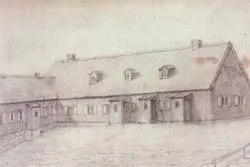
The building of a special building overlooking the court in Reykjavík was the original plan for the building of the Landsyfirréttur, and was temporarily placed in Hólavallaskóli. The building was designed by a Danish architect in 1802. The building plans were cancelled due to cost, but instead a suitable building was sought in the town for the court.
At the beginning of 1807, a raging winter storm, a northern rush with dark gusts and a fire-fighting mist, made its way day after day. Justice had to have its way even though houses were cold and unnatural. It went on until February, but on the 3rd of that month, the lawyers had had enough.
In the parliamentary record of that day it reads: “Anno 1807, on 3 February, the National Court was seated in Mr. Trampe’s Countess’s House, who, for the trial, was now and forthwith willing to leave his courtroom, as it proved impractical, due to hard weather, drag and frost, to keep the court in that old open school building.”
They then felt compelled to write to the authorities in the Kingdom of Denmark. It reads: "1807: En i dag rasende stor og harjst poeneterende Kulde gjör det for Liv og Helbred farligt for Rettens svaglige þingmenn at holde Session i det saa höjt liggende for Blæst og Træk mellem aabne Vinduer, Gulv og Dör, Sundhedse Skolemarkedet, denne Gang. Vi skuldegið ærbödigst fornemme om Deres Höjvelborenhed maatte kunne anvise Retten til denne myndigheder eller i dag Fald, om der kan være myndigheder mod at Session holdes denne gang i Justitiarii Logie. "
In the wake of these events, a storehouse in Reykjavík, which later became Austurstræti 4, was bought at auction. It was then converted to use for the court. At that time, efforts were made to provide furniture, as cheap as possible. The courtroom in this building was then for a few hours the main meeting place of the town, used for dances and theatre performances and, on such occasions, the benches from the cathedral. Some people were shocked that the church’s property and the courtroom were thus used by a complacent people for futile and damaging merchandise.
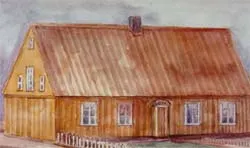
In 1820, the court was given the use of the old manor house on Austurstræti, which still stands in a modified form, but then the prison had been taken under the manor house. In 1873, the court was given a place in Hegningarhúsið on Skólavörðustígur, on its upper floor in front of the garden. There, the court was still housed when the Supreme Court was established in 1920.
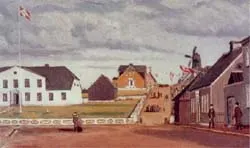
The last courts in the Supreme Court were held on 22 December 1919. At that time, the Chief Justice was Kristján Jónsson, who also became the first President of the Supreme Court. In a speech, he traced the work of the court to the more than century of its operation. Its role has been to make rulings on the legal disputes of citizens and to sentence misdeeds.
How the dispute has been handled, he says, but stresses two things: “...the first, that I think the court has been on a path of progress throughout the history of the court, from the beginning of its operations until the present day; this seems to me to be evident, as the court’s judgments are read with care, as this is in accordance with the normal law, that the detractors build on and exploit, rely on and learn from the actions of the ancestors; and the second, that I pretend to assert from my own experience, that the public has tended to put their issues under the judgment of the court with confidence.”
The process leading up to the establishment of the Supreme Court of Iceland was very long and very closely tied to the nation’s struggle for independence in the 19 th century. One demand was of course that the Supreme Court in Icelandic matters be brought into the country. This demand for a national Supreme Court in Icelandic special cases was first made at the National Assembly in 1851. Throughout the latter half of the 19 th century the case was moved again and again but failed to move forward.
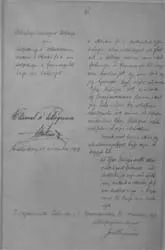
Iceland was granted recognition of its sovereignty by the 1918 federal law, which gave it both the executive and legislative powers. In Article 10 of the federal law it was decided that the Supreme Court of Denmark should have the highest judicial authority in Icelandic matters until Iceland could establish its own court. Icelanders began to use this authority in the federal law. Professor Einar Arnórsson was assigned to draft a bill to the Supreme Court, which was submitted to the Icelandic parliament in 1919 and passed largely unchanged.
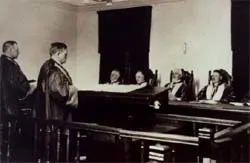
In a speech Sveinn Björnsson, then the barrister, gave on behalf of lawyers at the first sitting of the Supreme Court, it is well reflected how this event was considered to be intertwined with the struggle for independence: “High judges! This moment will always be considered a significant moment in the history of the Icelandic nation. The moment when the highest judges in Icelandic cases take their place again to serve as judges on the foetus field of spring. This event, which is taking place here today, must cause celebration in the hearts of all Icelanders. It is one of the tangible signs that we have again been given sovereignty in all our cases.” Initially, the Supreme Court appointed a judge and 4 co-defendants, who were appointed by the king under the responsibility of the minister. The number of judges has varied. The last time the number of judges was increased at the Supreme Court was in 1994 and now there are 9 of them. The hearing before the Supreme Court was oral from the beginning. It was a novelty in Iceland. Kristján Jónsson, the first president of the court, who was already in his early years, was not entirely satisfied with this, as he was not used to oral hearings at all. In Sveinn Björnsson’s recollections, he spoke to Kristján about the oral hearing. Kristján had to have said: “Blessed are you now not going to give long speeches. You may know that we base our judgment on the court decisions, which are written. There is something wrong with that. How should we remember what you know to say? One is tempted not to listen to you.” Since these words were measured, there has been a great flow of water to the sea and people are now generally in agreement about the merits of oral hearings before the court. It is possible to assume that the judges of the court would still accept Kristján Jónsson’s advice to the Supreme Court lawyers not to give long speeches.
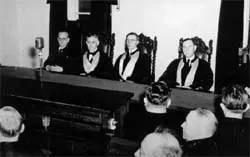
In the words of Dr. Þórður Eyjólfsson, President of the Supreme Court on the 25th anniversary of the court’s founding in 1945, it is clear how the Supreme Court judges have viewed their work. He said: “But the rest of us must never fall short of the greatest demands we have to make to ourselves. The work was a great responsibility. Once a case has been brought here and defenced and a judgment has been made, that resolution will not be made any more. It must never fail, that every case, small or large, is dealt with with the utmost care and everything that is done in its power guarantees its proper resolution according to national law and law. Only in this way can we expect the court to be trusted by the people and to be solvent forever.” In the 75th anniversary of the Supreme Court, it is not out of the question for Icelanders to consider the importance of an independent judiciary and legal certainty. Remember the words of Einar Arnalds, who was President of the Supreme Court on the 50th anniversary of its founding. “The Supreme Court has the duty to honour the fundamental right on which our constitution is built. A number of nations do not yet have legal certainty, but the experience of generations teaches that an independent judiciary is the essential condition for a healthy nation to develop. The most basic human rights will not be guaranteed unless under the protection of an independent and impartial judiciary.”