National Archives of Iceland
This news article is more than a year old
What can be read from court documents? Research Day of the National Archives 2025
14th October 2025
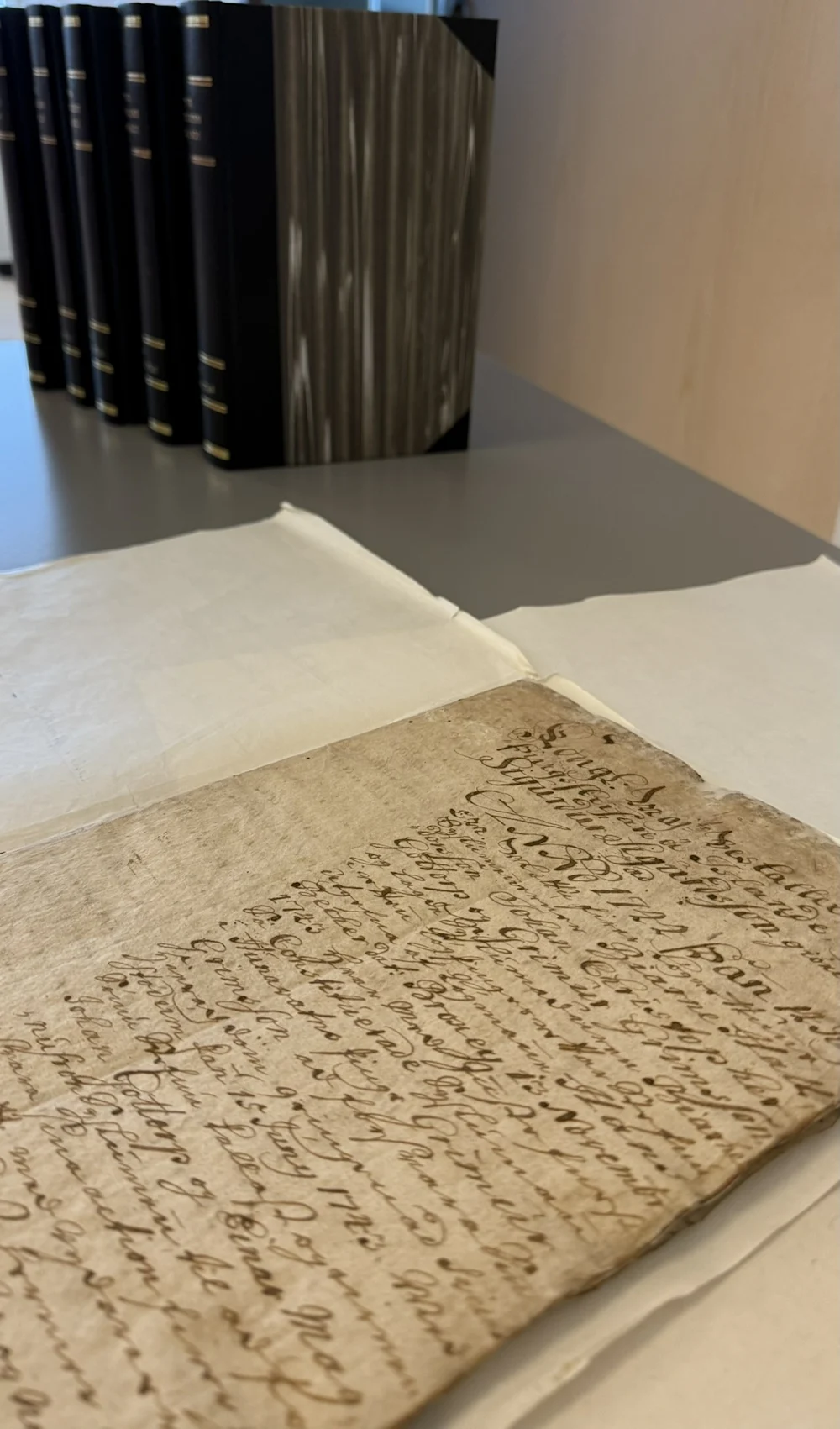
At the annual Research Day on October 9th, the spotlight was directed at one of the National Archives’ major research projects: the publication of verdicts and documents from the High Court in Iceland, which operated from 1573 to 1800.
Documents of the High Court are remarkable sources on life and society in Iceland. They provide insight into the legal system of the country, but are also invaluable records of the people who appeared before the court and spoke about their lives and circumstances. The publication of the High Court’s records significantly improves access to these fascinating sources. In addition to the printed edition, the documents and publication will also be made available on the improved website of the National Archives in due course.
Special guests at Research Day included Jörundur Kristjánsson, Director of the Parliamentary Office and a member of the editorial board for the High Court of Iceland, and Benedikt Bogason, Chief Justice of the Supreme Court. Both addressed the audience and discussed the significance of the research project and its publication.
Speakers at the symposium focused on various aspects of the High Court in their presentations, where corruption played a role, as well as costly legal complications.
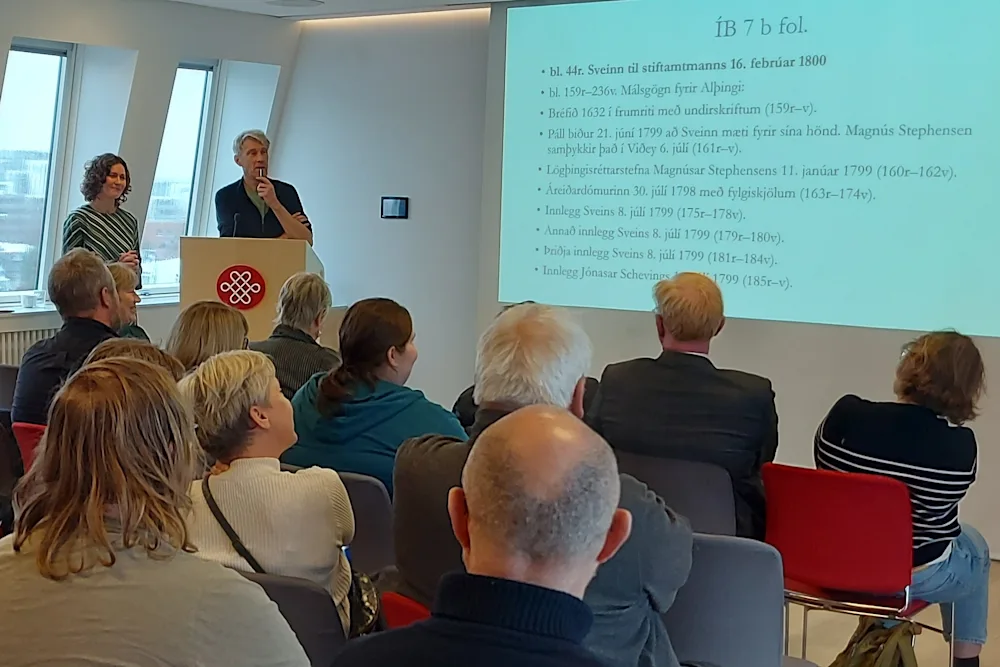
Jóhanna Þ. Guðmundsdóttir, Project Manager of Publications and editor of the High Court of Iceland, delivered the lecture: "“Judge rightly.” On the High Court and the legal system in letters to the First National Assembly.”
In her talk, she wove together perspectives on the legal system and the operations of the High Court as reflected in the sources of the First National Assembly from 1770–1771, previously published by the National Archives in collaboration with the Historical Society. These sources contain harsh criticism of Icelandic legal practices, and when the High Court’s verdicts and documents from previous decades are closely examined, it appears that the criticism had some merit.
The documents contain many examples of district commissioners denying justice, attempting to prevent appeals of their rulings to higher courts. Sometimes they were fined for overly harsh conduct in legal proceedings or execution of judgments, or even dismissed from office—though they often managed to regain their positions.
Ragnhildur Hólmgeirsdóttir, archivist and editor of the High Court of Iceland, gave the lecture:
“When does one falsify a document and when not? Three variations on truth manipulation in volume five of the High Court of Iceland.” She discussed three examples of case documents in volume five that present claims contradicting other documents in the same legal cases. However, it varied whether accusations of forgery were made at the time. These documents raise intriguing questions about legal practices in 18th-century Iceland and the potential use of court records in modern academic research.
Már Jónsson, professor of history at the University of Iceland, presented the lecture: “Unnecessary burden and cost. The final words of the High Court, July 21, 1800.” The topic was the last case heard by the High Court—a boundary dispute in Skagafjörður that had caused a rift between close relatives. The plaintiff was Páll Sveinsson of Steinsstaðir, and the defendant was Reverend Eggert Eiríksson of Glaumbær, owner of Reykir. He and Páll’s wife, Guðrún Jónsdóttir, were first cousins.
By the time the case reached the High Court, the court level had effectively been abolished by royal decree, which had not yet arrived in Iceland. The country’s top officials sat on the bench and felt their time was poorly spent evaluating such an obvious dispute, expressing strong criticism of the appellants.
The lectures sparked many questions among attendees and lively discussions, which continued during the publication reception at the end of the program, celebrating the release of volume five of the High Court of Iceland.
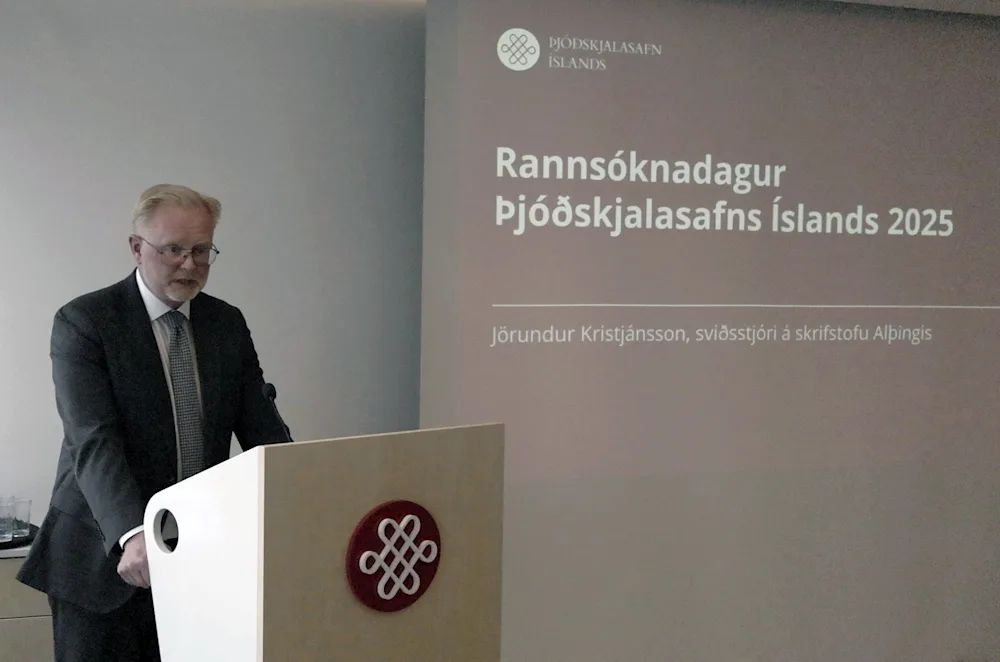
Jörundur Kristjánsson, Director of the Parliamentary Office and a member of the editorial board for the High Court of Iceland
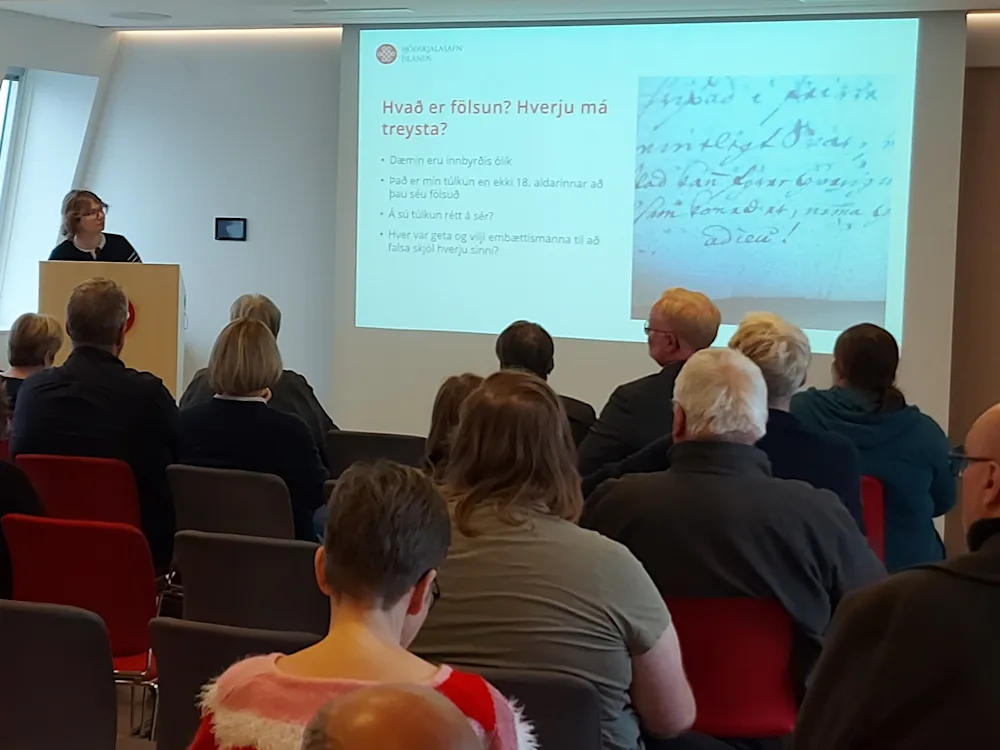
Ragnhildur Hólmgeirsdóttir, Archivist and editor of the High Court of Iceland

Jóhanna Þ. Guðmundsdóttir, Project Manager of Publications and editor of the High Court of Iceland
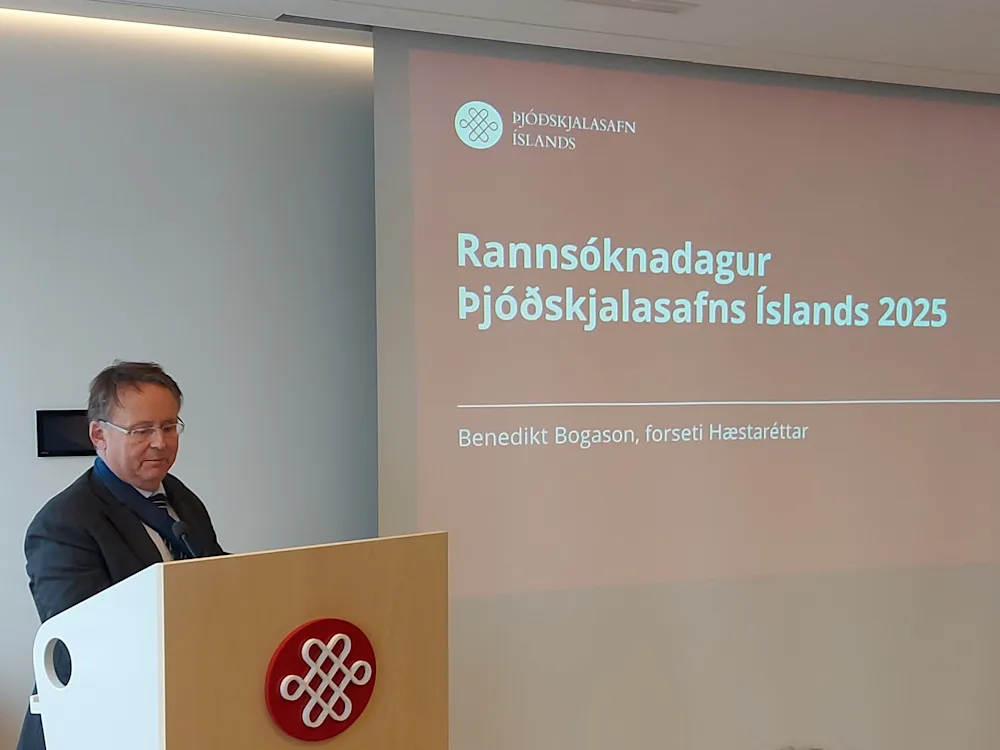
Benedikt Bogason Chief Justice of the Supreme Court