Land and Forest Iceland
The ForestWell Education Project yielded seven training modules
11th November 2025
Land and Forest Iceland took part in the European ForestWell project through collaboration with the Upper Secondary School of East Skaftafell County (FAS). The project focused on developing educational material that explores how forests and woodlands can contribute to human wellbeing, while at the same time supporting sustainable land use and the health of forest ecosystems.
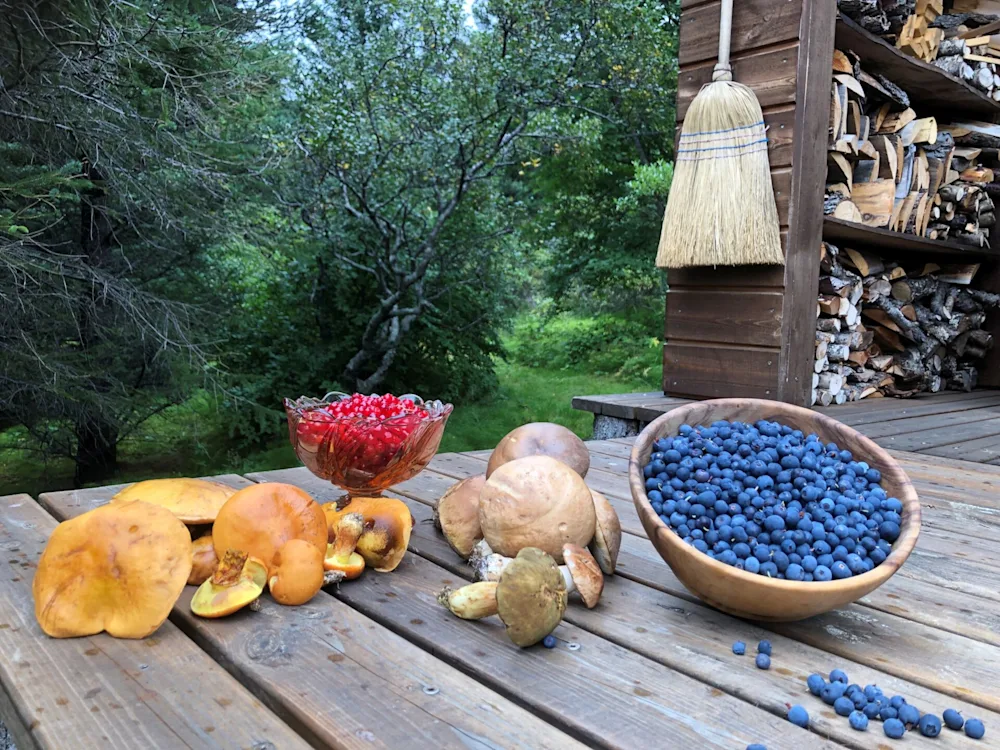
Photo credits: Hulda Laxdal Hauksdóttir
With new educational materials in the form of seven training modules, developed in part by FAS, it is now possible to use the wellbeing benefits of forests and woodlands for job creation and health promotion—while at the same time supporting the wellbeing of forests and vegetated areas.
In the ForestWell project, educational institutions and companies specialising in marketing and digital solutions from Denmark, Finland, Ireland, Iceland, and Slovenia (the project lead) collaborated to develop educational materials. The goal of ForestWell was to create a set of digital learning and training modules for companies in tourism, experience-based services, and health promotion, as well as for educational institutions. The core idea of the materials is to offer ways to use the wellbeing effects of forests and woodlands for job creation and health, while simultaneously enhancing the wellbeing and sustainability of forested and vegetated landscapes. The project also aimed to build a network of actors involved in forestry, nature conservation, health promotion, and education.
The ForestWell materials are published digitally on the project website, freely accessible as a Massive Open Online Course (MOOC) and in Augmented Reality (AR) format.
According to Hulda Laxdal Hauksdóttir, teacher and project manager at FAS, the school has long emphasised strong connections to the local community and the labour market as an essential part of education. FAS has actively participated in European curriculum development projects supporting lifelong learning for professionals across Europe. ForestWell is one of several Erasmus+ projects the school has contributed to. FAS was one of two educational institutions involved in developing the training materials, alongside the Vocational College VSGT in Slovenia. In addition to developing content, the schools contributed pedagogical approaches to the project outputs.
Hulda explains that the result is a digital learning and training package for companies in tourism, experience, and wellbeing sectors, as well as for educational institutions. The material was designed to be freely available to all users.
At the start of the project, information was gathered from organisations involved in forestry and forest management in all partner countries. Collaboration with these partners led to several case studies. Hulda notes that in Iceland there are few tourism companies that directly use forests in their operations, unlike in many of the other participating countries. Therefore, the Icelandic work mainly focused on cooperation with forestry organisations, land users promoting sustainable land use, and educational institutions engaged in outdoor and environmental learning. Land and Forest Iceland was among the Icelandic partners involved, and a map was created showing organisations that could be linked to the project’s aims.
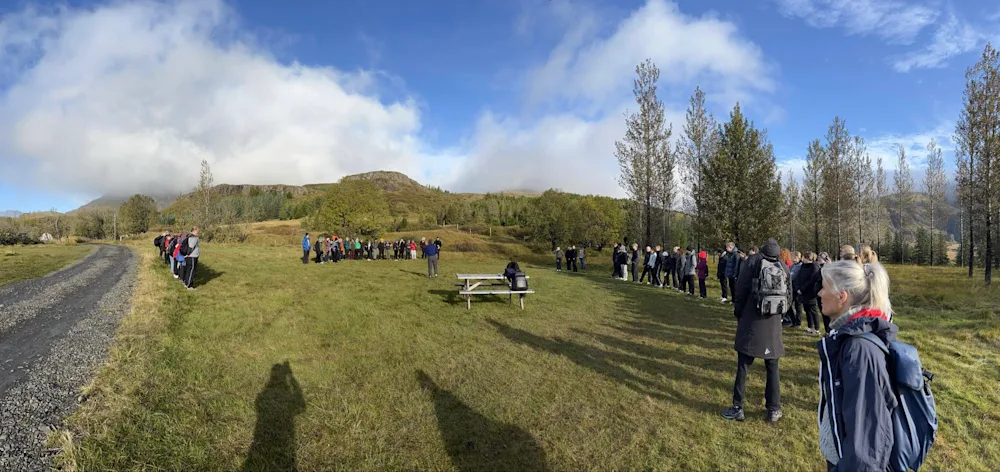
Outdoor activity in Haukafell Forest. Photo credits: Hulda Laxdal Hauksdóttir.
Slovenia led the project, with Denmark, Finland, Ireland, and Iceland as partners. Most of the work was carried out through online collaboration, but meetings were also held in all participating countries except Denmark. Forest areas in each country were used as examples during project development. In Iceland, the forest of the Forestry Association of East Skaftafell County at Haukafell was used. Local students planted trees there and enjoyed the forest for recreation and relaxation.
According to Hulda, seven training modules were produced in total. Each includes a short quiz allowing participants to assess their understanding of the material. Modern digital technology is used throughout the MOOC platform, with interactivity and play as key components. At FAS, the material can be used in courses such as Introduction to Science and Environmental and Resource Studies. Among partner countries, the materials have already been integrated into curricula and continuing education programmes.
Those involved in the project, both in Iceland and abroad, hope the ForestWell materials will benefit anyone wishing to make positive use of forests—whether in tourism, experience-based learning, wellbeing activities, or education.