Land and Forest Iceland
Organic fertiliser on the rise at Land and Forest Iceland
23rd October 2025
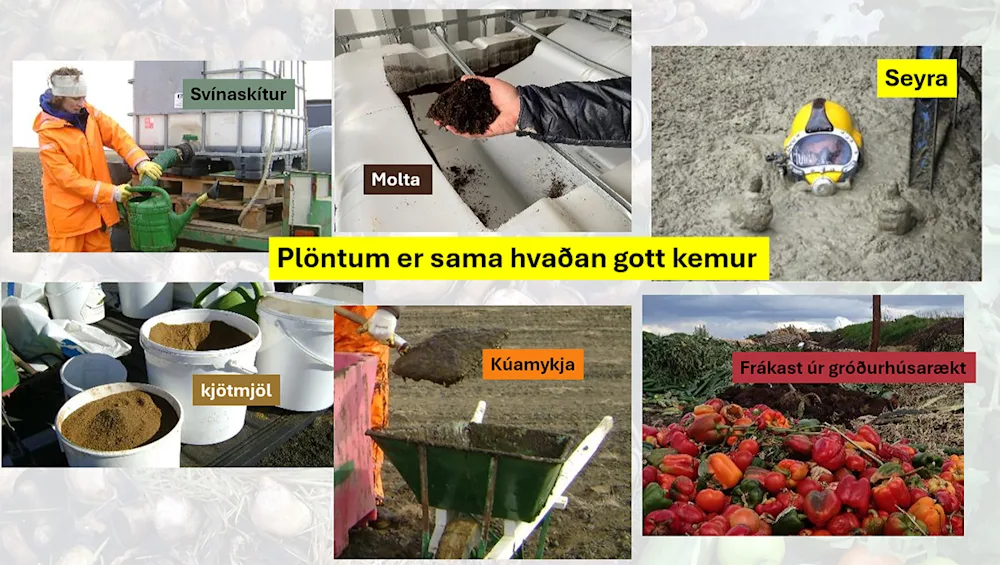
Land and Forest Iceland has made significant progress in reducing the use of imported synthetic fertilisers and replacing them with a range of domestic organic alternatives. Around 25% of the nitrogen applied in the agency’s own projects and collaborative programmes now comes from organic fertilisers. This not only brings considerable cost savings but also has positive climate benefits through reduced use of synthetic fertilisers.
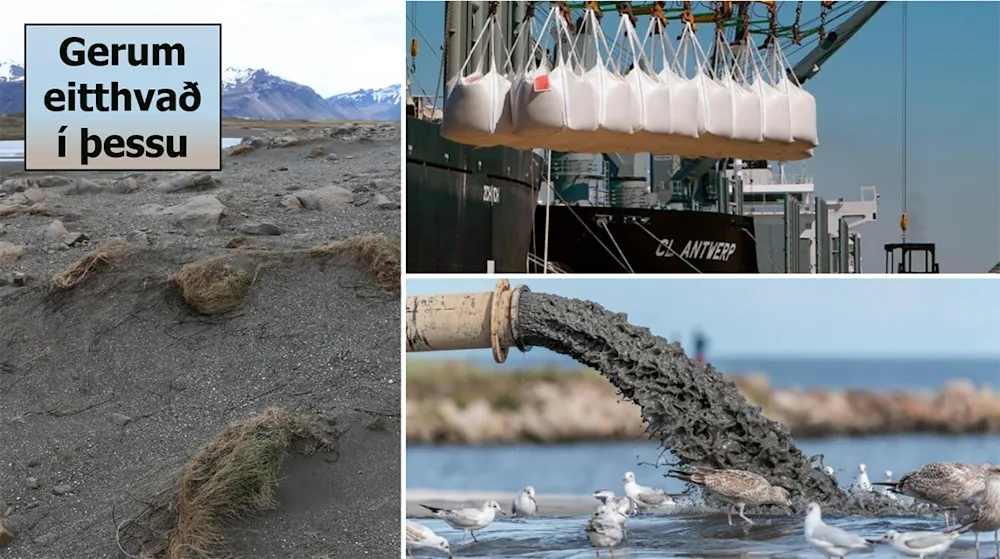
Annually, significant quantities of fertilisers are discarded, concurrently with the import of pre-manufactured fertilisers into the domestic market. Image: Magnús Jóhannsson
Nitrogen is the most important nutrient for cultivation and land restoration in Iceland, as it is the element most lacking in Icelandic soils. In 2009, only about one percent of the nitrogen used for land reclamation came from organic sources. By 2024, this proportion had risen to one quarter—25% of all nitrogen applied to restoration areas. This figure covers all projects carried out by Land and Forest Iceland, including collaborative efforts such as Land Reclamation by Farmers and other similar initiatives. In the agency’s own projects alone, the share is even higher: from 10% in 2009 to roughly 50% in 2024.
According to Dr. Magnús H. Jóhannsson, research and development specialist at Land and Forest Iceland, the use of all types of organic fertilisers has increased—especially sheep manure, sewage sludge, and bone meal—while the use of synthetic fertilisers has declined correspondingly. This development aligns with both government policy and the agency’s own strategy to promote sustainability.
Waking up dormant life in the sand
The availability of organic materials suitable for land improvement is increasing in line with stricter waste management requirements and the ban on landfilling organic waste. Compost has been used in some Land and Forest Iceland projects, particularly in the Hólasandur area, where blackwater, sludge, and abattoir residues (half-digested food from animal innards) have also been applied. The supply of compost in Iceland is expected to rise substantially, though its use has faced challenges such as plastic contamination and high transport costs relative to its nitrogen content. These issues, however, are expected to improve over time. The positive impact of a single distribution of blackwater on a completely bare area of Hólasandur is obvious, as this image shows:
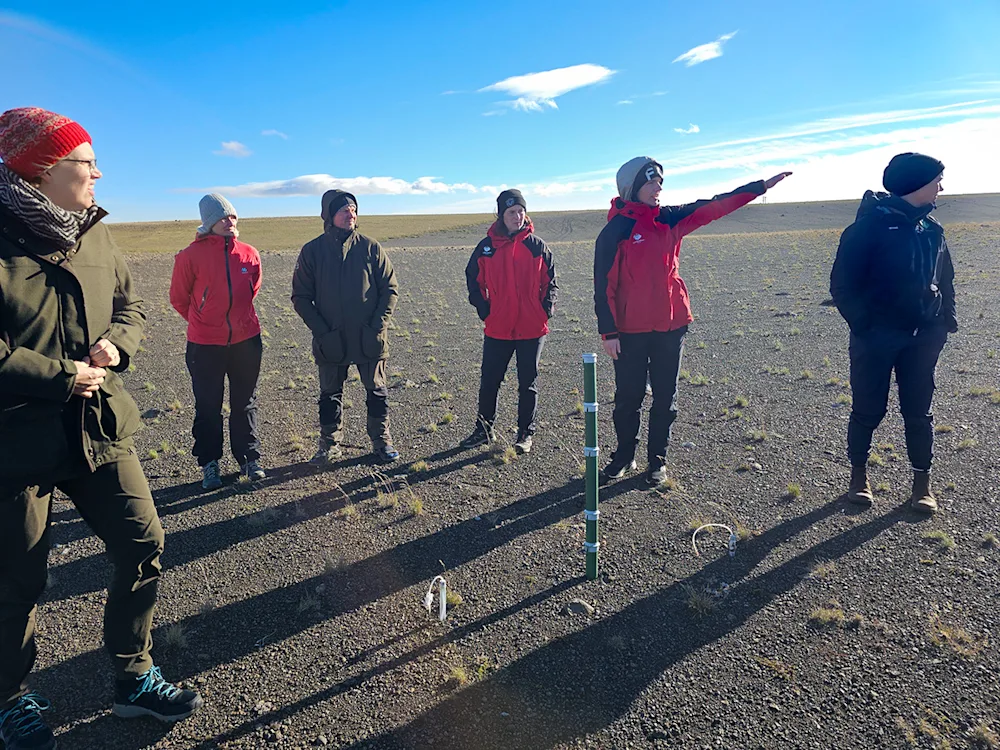
Salbjörg Matthíasdóttir, Regional Representative and Project Manager for Hólasandur, Collaborative Projects, and Organic Fertilisers in Northeastern Iceland, showing an area on Hólasandur where the application of sludge to barren sand resulted in the emergence of vegetation from dormant seeds within the sand. Photo credits: Pétur Halldórsson.
Fish-farm sludge a promising source
Another promising source is sludge from land-based aquaculture. With land-based fish farming expected to grow rapidly in the coming years, large amounts of organic material in the form of fish-farm sludge will become available. Magnús notes that this material could be highly useful for land restoration, provided that methods are developed to reduce its water content and make it more economical to use, as it is naturally quite wet.
Land and Forest Iceland is keen to explore these opportunities further and continue replacing polluting imported fertilisers with sustainable domestic organic materials. In addition to nitrogen, such materials supply plants with other valuable nutrients, helping to accelerate the establishment of healthy, thriving soil organisms in Iceland’s restoration and afforestation areas.