
Land and Forest Iceland
New study shows potential for carbon sequestration on degraded land
27th October 2025
The results of a scientific article recently published in the journal New Forests indicate that the natural regeneration of Lodgepole pine can be a promising option for rehabilitating severely degraded land in Iceland and sequestering carbon. The study shows that the pine can quickly regenerate naturally into barren areas but spreads slowly where there is dense vegetation or moss cover. The article's authors believe that the spread of the pine is easy to control.
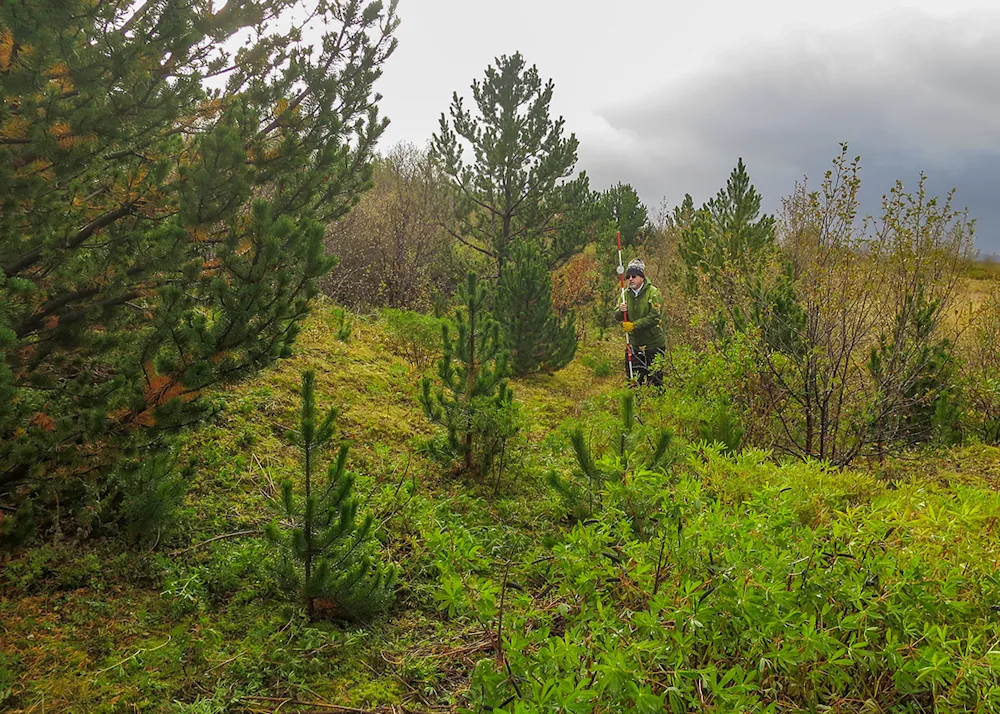
Dr. Dennis Riege gathering field data in Skarfanes
The English title of the article is Pinus contorta colonization and biomass accumulation in lands adjacent to plantations in Iceland. Its lead author is the American ecologist Dr. Dennis A. Riege, who has conducted research in Iceland for many years and leads a long-term study in the country supported by the National Geographic Society. Co-authors are three specialists from Land and Forest Iceland (Land og skógur): Aðalsteinn Sigurgeirsson, Bjarki Þór Kjartansson, and Arnór Snorrason.
The research is based on measurements of the spread and growth of Lodgepole pine (Pinus contorta) from planted forests in five locations in South and Southwest Iceland. The measurements were made in 2015-2017 and repeated in 2021-2022. The locations were Mógilsá, Heiðmörk, Straumur near Hafnarfjörður, Daníelslundur in Borgarfjörður, and Skarfanes in Landsveit. The goal was to assess how quickly the Lodgepole pine spread from older planted areas onto barren or sparse areas. Also, to measure how quickly biomass accumulated during such natural forest succession, and thus how significant the carbon sequestration would be. Knowledge of these factors has been lacking until now in Iceland, as well as elsewhere in northern latitudes.
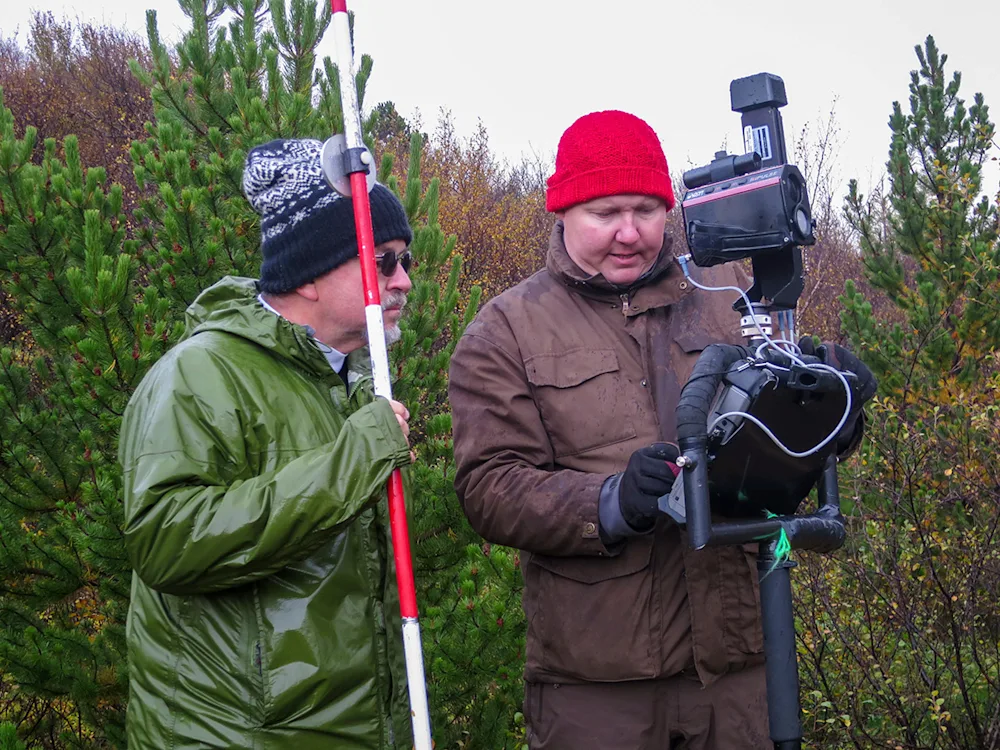
Dr. Dennis A. Riege and forestry specialist Bjarki Þór Kjartansson during fieldwork in Skarfanes in September 2018.
Rapid growth on barren land
The study is based on measurement data from five fixed transects in South and Southwest Iceland where naturally regenerated trees near cultivated forest plots were monitored. It is clear from the results that the Lodgepole pine spreads easily to open gravel plains and sparsely vegetated areas, but a much slower spread is measured where the soil surface has a dense cover of vegetation or Woolly fringe-moss (Racomitrium lanuginosum).
One of the research areas was in the Mógilsá area near Kollafjörður, where the biomass of naturally regenerated trees quadrupled in six growing seasons. A similar increase was seen widely on barren land. In moss and grassland, the spread and thus the biomass growth were smaller. The same applied to dense birch forest, which also seemed to inhibit the natural regeneration of the pine. Some natural regeneration was observed at the edges of the birch woodland but not significantly within it.
Significant carbon sequestration in a short time
The study shows that in areas where the pine is colonizing land, it can sequester an average of more than one tonne of carbon per hectare per year (or 3,7 tonnes CO2 per ha per year) during the first six years, considering only above-ground biomass.
The authors also developed an equation that describes the growth of biomass in the early stages of natural regeneration and can be used in plans for carbon sequestration in areas where the pine is spreading naturally. Such a tool can be useful in all kinds of forestry and land reclamation projects to assess progress and benefits.
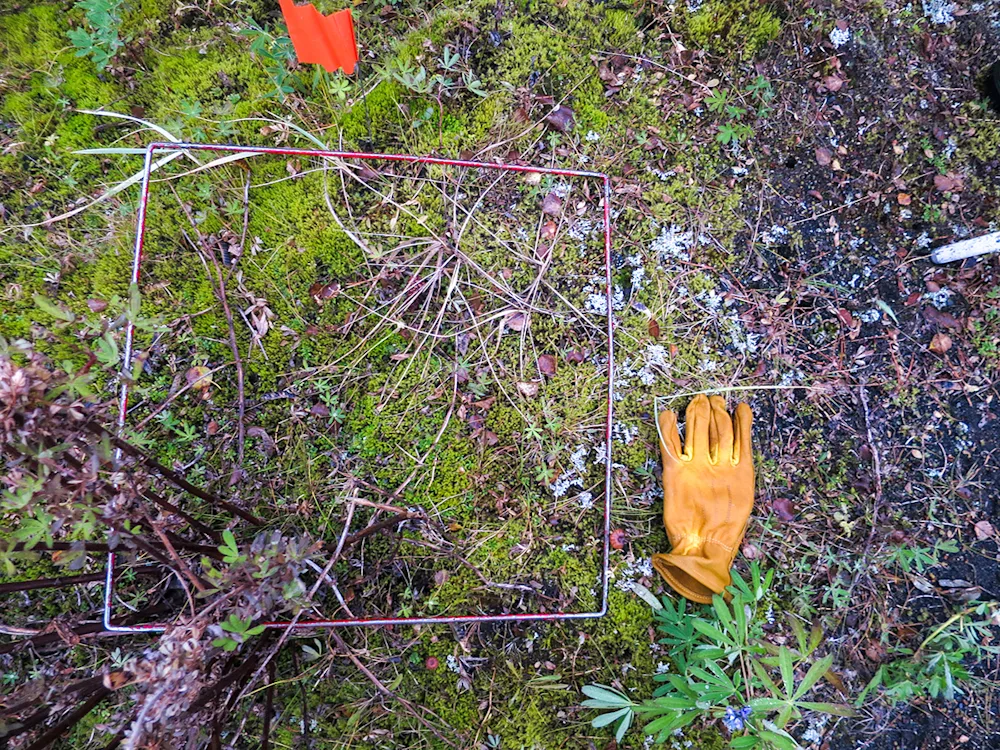
Monitoring of undergrowth in Þjórsárdalur. Photo credits: Dennis A. Riege.
A cost-effective option for improving land quality
Lodgepole pine is one of the tree species that have proven most successful in Icelandic forestry in recent decades. Although the species is considered invasive in parts of the world, the article authors conclude from their results that its spread is easy to control under Icelandic conditions. Furthermore, it can play an important role in rehabilitating degraded land and sequestering carbon.
Moreover, the research results suggest that where Lodgepole pine and birch grow together on barren, unforested land, they directly benefit each other. The pine's characteristic ability to mature seeds early and self-seed enables general vegetation succession to begin more quickly in barren areas than otherwise. This creates soil conditions that eventually promote the spread of native species.
Contribution to climate goals
The results of the study indicate that natural forest succession through the self-seeding of Lodgepole pine can be utilized to increase the area of vegetated land in Iceland and simultaneously increase carbon sequestration. The authors point out that the results align well with the Icelandic government's goals for carbon neutrality by 2040. The natural regeneration of pine offers a cost-effective and sustainable option for the reclamation of degraded land.
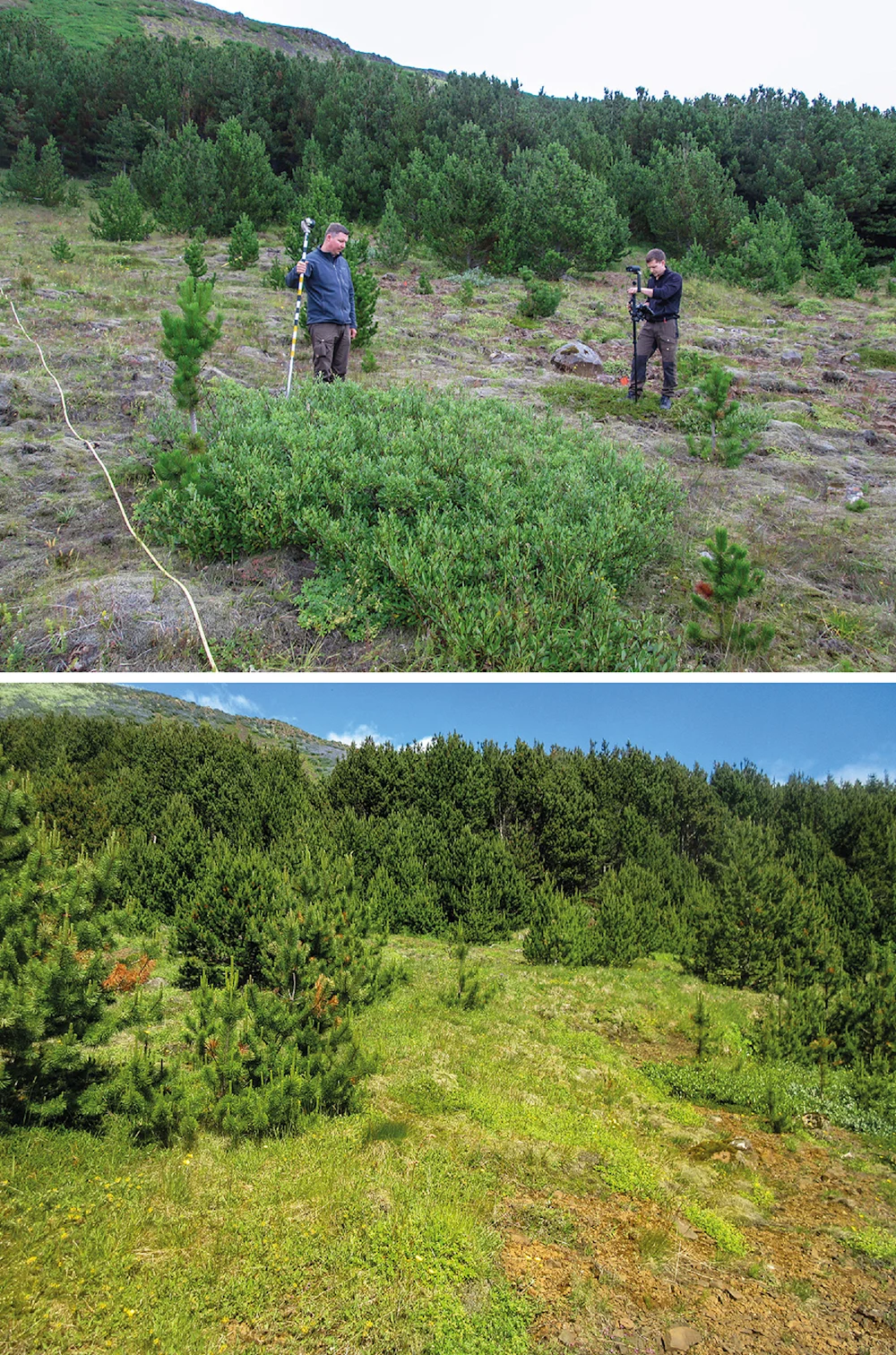
Images of the same spot in Mógilsá in 2015 and 2022. Photo credits: Dennis A. Riege
The article in New Forests:
Pinus contorta colonization and biomass accumulation in lands adjacent to plantations in Iceland