Land and Forest Iceland
Minister Presents Historic Land Reclamation Aircraft to the Icelandic Aviation Museum
3rd November 2026
Jóhann Páll Jóhannsson, Minister for the Environment, Energy and Climate, formally presented the historic Douglas DC-3 aircraft Páll Sveinsson to the Icelandic Aviation Museum during a ceremony at Akureyri Airport on 30 October. The aircraft played a major role in Iceland's land reclamation and ecological restoration efforts for decades, and its transfer to the museum marks an important milestone not only in Icelandic aviation history but also in the history of the nation's long struggle against soil erosion and land degradation.
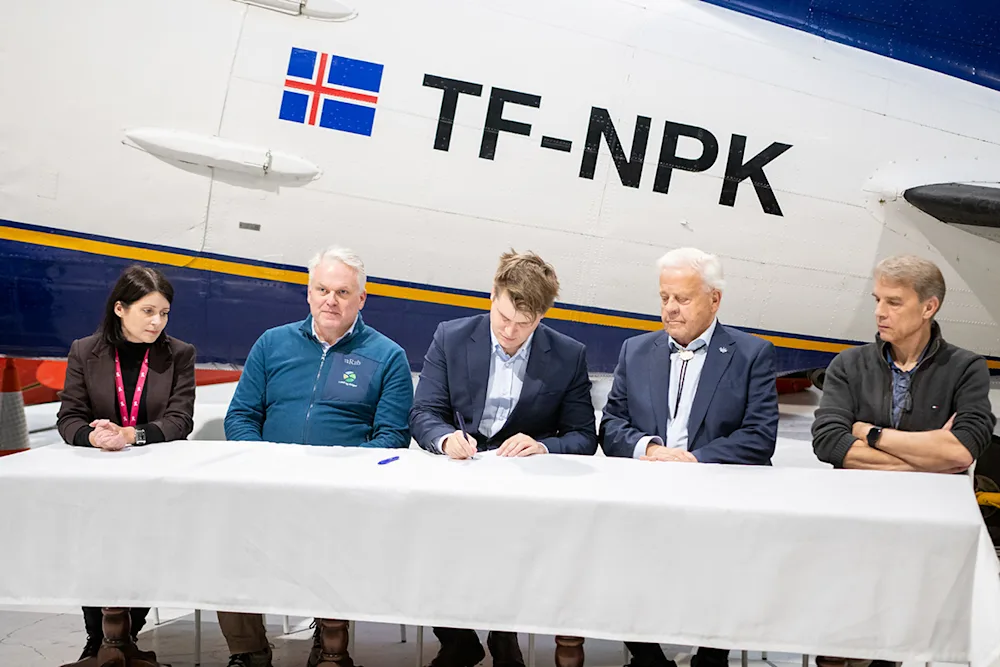
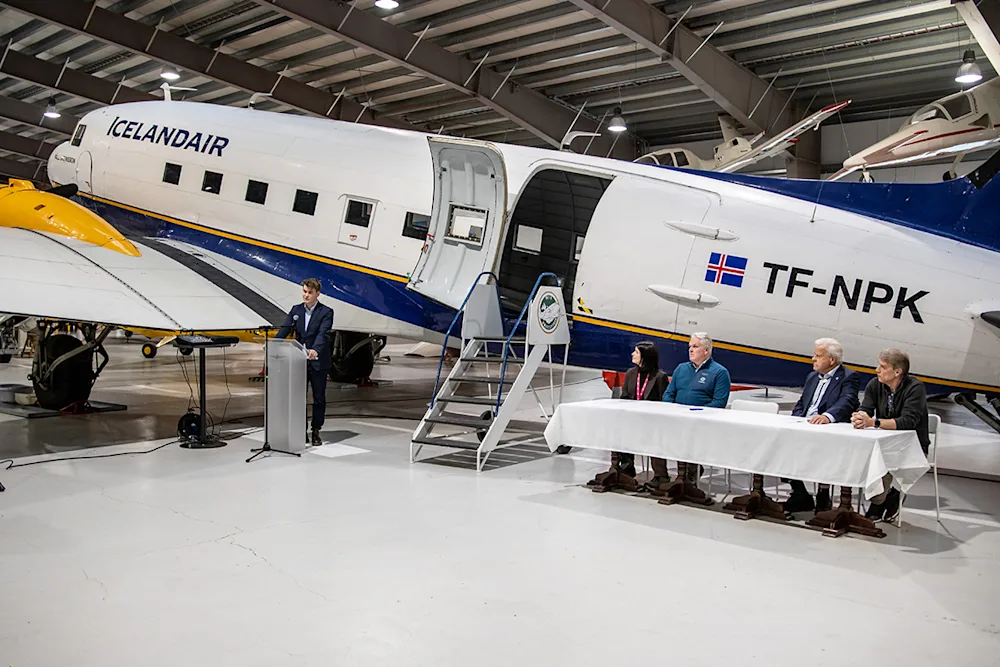
Formal handover of TF-NPK. From right: Steinunn María Sveinsdóttir; Ágúst Sigurðsson; Minister Jóhann Páll Jóhannsson; Sveinn Runólfsson; and Tómas Dagur Helgason.
The aircraft was presented on behalf of the Icelandic state by the Minister, while Land and Forest Iceland was represented by Director Ágúst Sigurðsson. Representing Þristavinir, the DC-3 Friends Association, were Sveinn Runólfsson, former Director of the Soil Conservation Service of Iceland, and Tómas Dagur Helgason, Chairman of the association. Þristavinir has played a vital role in maintaining the aircraft since it was retired from land reclamation work and in preserving its unique history.
The aircraft was named after Páll Sveinsson, a pioneering Director of the Soil Conservation Service who championed innovative approaches to land restoration in Iceland. Among his initiatives was the introduction of aircraft for the aerial distribution of fertilisers and seed over vast degraded areas. The aircraft was also assigned the registration TF-NPK, a reference to the principal nutrients found in fertiliser: nitrogen, phosphorus and potassium.
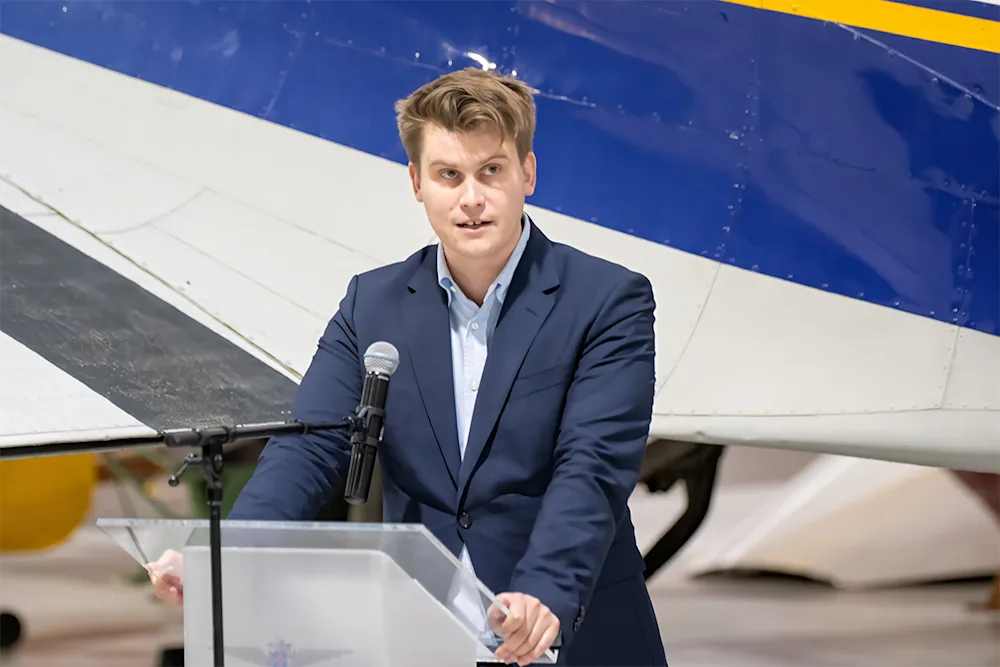
In his address at the ceremony, the Minister described the aircraft as a testament to the vision and determination of earlier generations in tackling severe land degradation and soil erosion. By securing its place in the museum, he said, an important chapter in Iceland's environmental and aviation heritage will be preserved for future generations and made accessible to the public.
The use of aircraft for spreading fertiliser and seed was intended to reach areas that were difficult or impossible to access by other means, particularly remote and extensive areas of the Icelandic highlands. Specially modified for this purpose, TF-NPK became one of the most effective tools available to Iceland's land reclamation authorities in their efforts to combat erosion and restore vegetation cover.
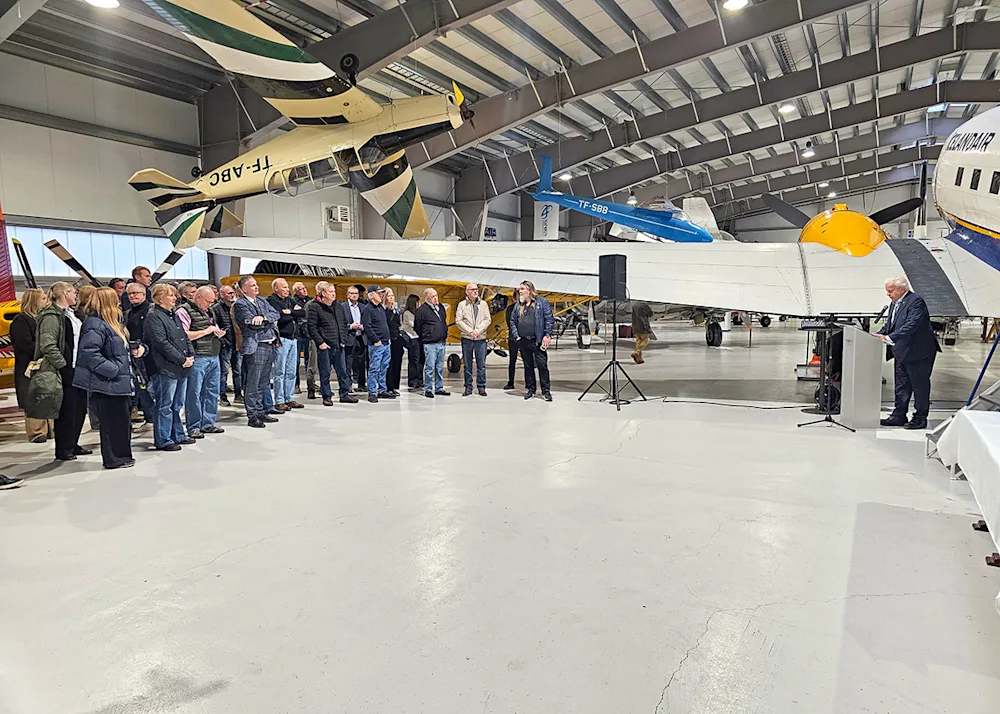
Sveinn Runólfsson also addressed the gathering and recalled how aerial restoration operations marked a turning point in Iceland's land reclamation history. The ability to distribute fertiliser and seed from the air greatly expanded the scale of restoration efforts and contributed to the recovery of vegetation across hundreds of square kilometres of land.
The ceremony also highlighted the strong collaboration that has ensured the preservation of the aircraft over the years. It will now have a permanent home where visitors can learn about its history and significance. Although Páll Sveinsson has not been airworthy for several years, speakers noted that restoring the aircraft to flying condition would require substantial investment, as well as the specialist pilot training and engineering support necessary to operate and maintain such a historic aircraft. While it was acknowledged that the dream of seeing the aircraft fly again remains alive, it was generally regarded as unlikely to be realised.
The Icelandic Aviation Museum preserves numerous aircraft of historical importance to Iceland's transport, economic and social development. With the addition of Páll Sveinsson, the museum gains not only a significant artefact of environmental history but also an aircraft with a distinguished aviation heritage. Before serving in land reclamation projects, the aircraft operated in scheduled passenger service in Iceland with Flugfélag Íslands and originally arrived in the country as a military aircraft during the Second World War.
For many years, Páll Sveinsson has been housed at the Icelandic Aviation Museum, initially during the winter months and, in recent years, throughout the year. It has become one of the museum's most prominent exhibits, and the formal transfer ensures that it will remain a lasting monument to both Iceland's aviation history and the remarkable efforts to reclaim and restore degraded land. Steinunn María Sveinsdóttir, Director of the Icelandic Aviation Museum, accepted the aircraft on behalf of the museum and also addressed the gathering.
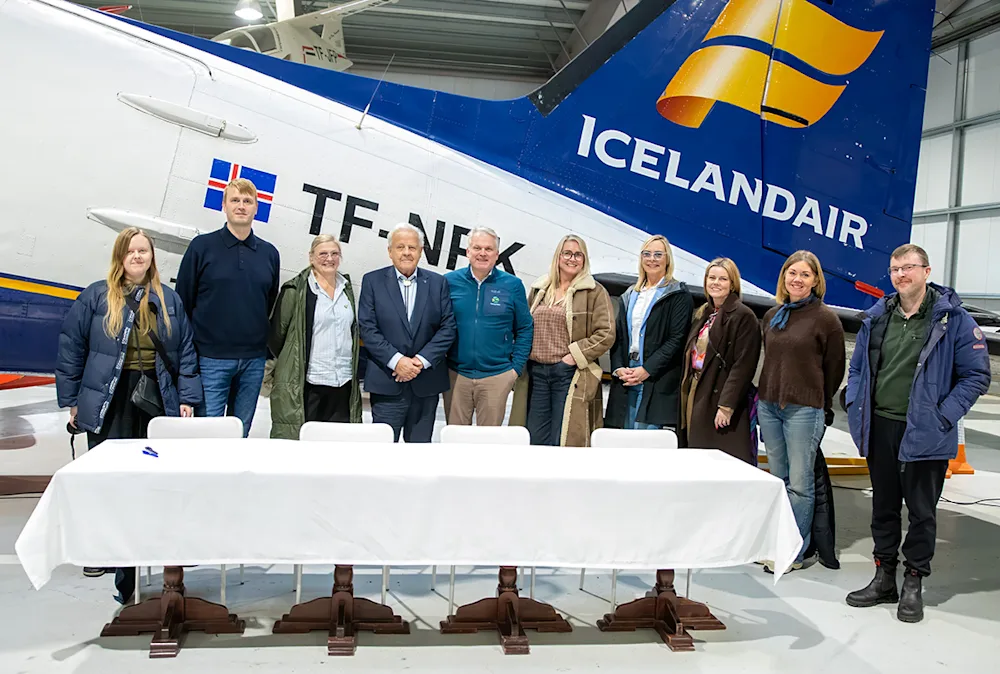
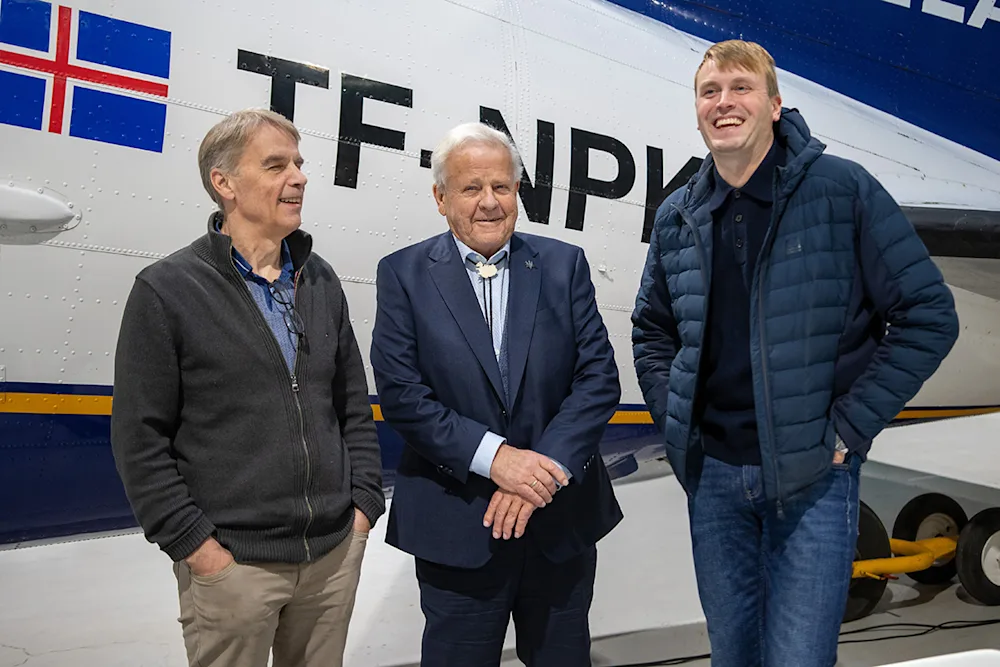
The accompanying photographs were taken by Pétur Halldórsson at the ceremony held at the Icelandic Aviation Museum on 30 October, where a large group of Land and Forest Iceland staff attended and gathered beside the aircraft with Mr. Sveinn Runólfsson.