
Land and Forest Iceland
Minister Marks Formal Handover of New Seed Orchard Facility at Vaglir
5th November 2026
Jóhann Páll Jóhannsson, Iceland’s Minister for the Environment, Energy and Climate, visited the Land and Forest Iceland station at Vaglir in Fnjóskadalur on Friday, 30 October. During the visit, the Minister was introduced to the organisation’s activities at Vaglir. The main purpose of his visit, however, was to inspect the new seed orchard facility that has been constructed there. The facility will make it possible to significantly increase production of the hybrid larch known as Hrymur. The Minister also visited the new forest shelter, which was formally opened in Vaglaskógur earlier this summer.
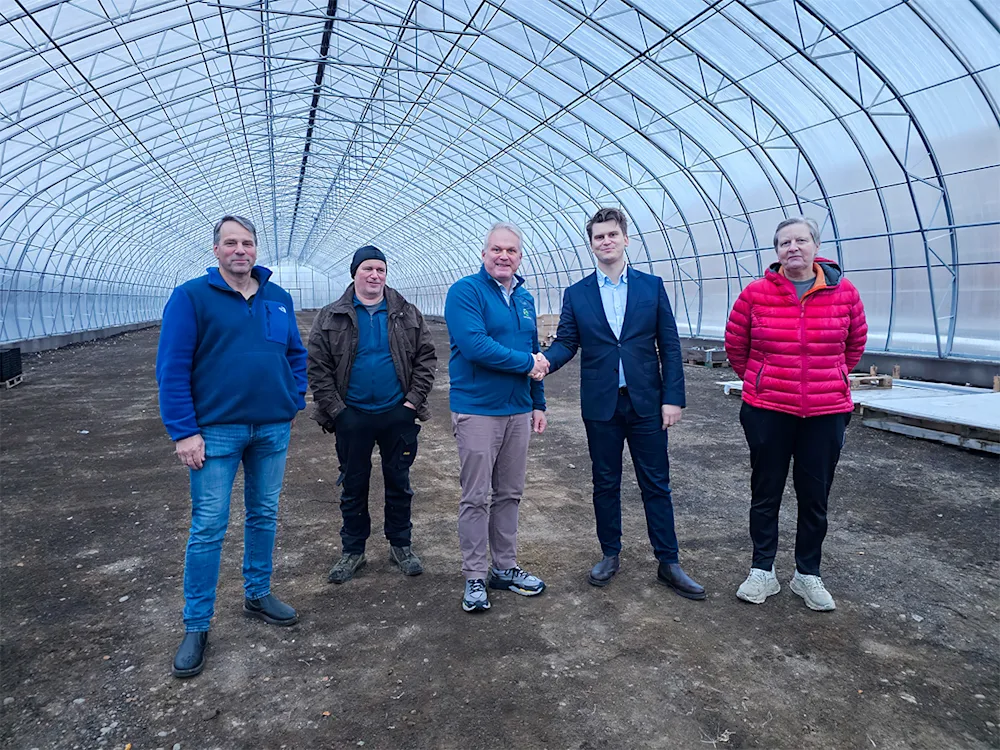
The formal handover of the new seed orchard facility. From left: Brynjar Skúlason, Valgeir Davíðsson, Director Ágúst Sigurðsson, Minister Jóhann Páll Jóhannsson, and Valgerður Jónsdóttir. Photo: PH.
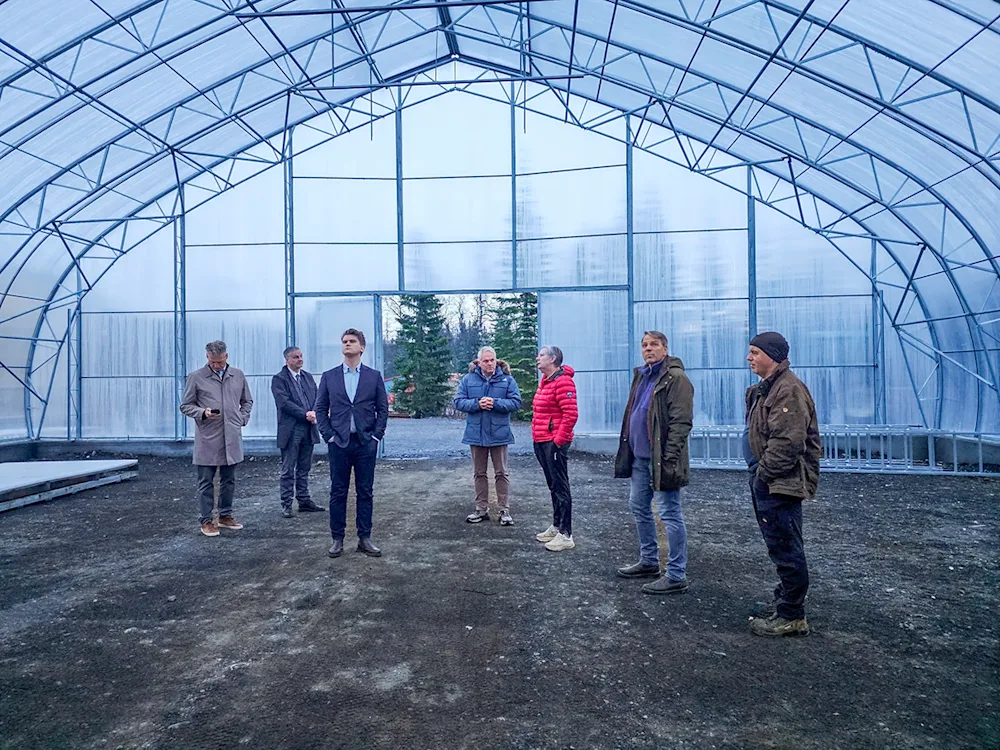
The new seed orchard facility was introduced in a news article published on the Land and Forest Iceland website earlier this autumn while specialists from Estonia were installing the structure. The building has now been completed, although various items of equipment still need to be installed before selected parent trees of Siberian larch (Larix sibirica) and European larch (Larix decidua) can be transferred into the facility. These trees are used in the controlled crosses that produce the outstanding hybrid known as Hrymur.
Replacing Oil Heating with Local Wood Fuel
The building will be equipped with a sophisticated climate control system. Specialists from Estonia are expected to return to install and calibrate the system, inspect the facility and carry out minor adjustments. Heating equipment must also be installed. As winter progresses and solar radiation increases, temperatures inside the greenhouse can rise even when outdoor temperatures remain low. As a result, the trees may begin to emerge from dormancy, making it essential to ensure that temperatures inside the building do not subsequently fall below freezing.
The older seed orchard facility adjacent to the new building is heated using geothermal energy whenever sufficient hot water is available. During periods of peak demand, however, oil-fired heating has sometimes been required because the geothermal supply at Vaglir is limited. The Icelandic government has adopted a policy of phasing out all oil use for space heating as quickly as possible, and the Energy Fund, administered by the National Energy Authority, has supported energy-transition projects of this kind throughout the country.
Plans are now being developed for a wood-fuel heating system at Vaglir to replace oil-fired heating and meet the peak heating requirements of all Land and Forest Iceland buildings on site in a sustainable manner. The system would use thinnings generated locally in the surrounding forests. This material would otherwise remain in the forest and decompose naturally. Consequently, the associated carbon emissions would not constitute additional emissions, making the heating system effectively carbon neutral.
Thinning Becoming an Increasingly Important Activity
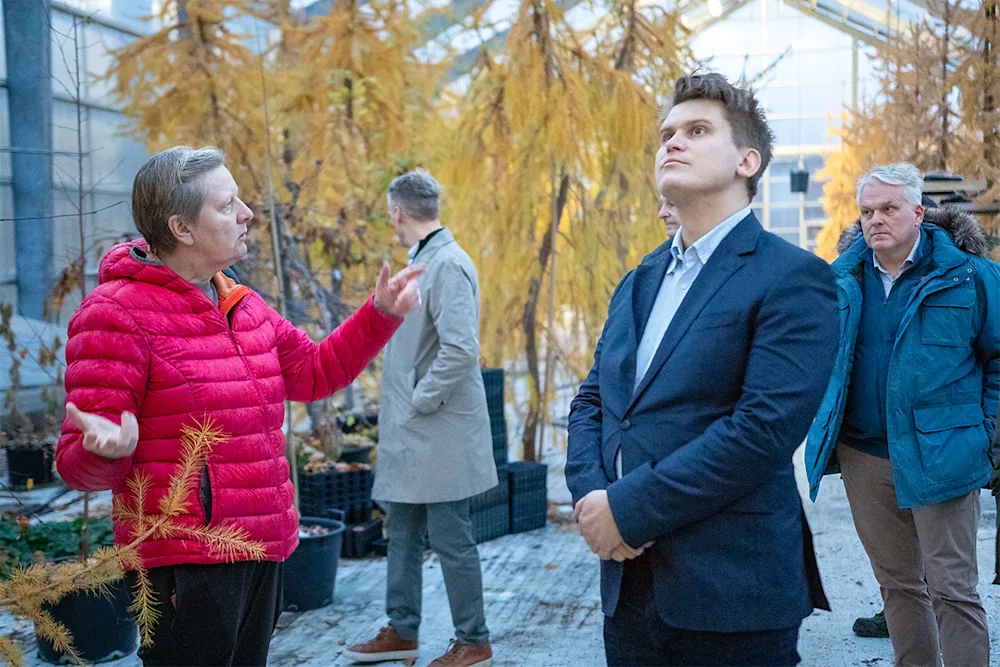
During the visit, the Minister, accompanied by Stefán Guðmundsson, Permanent Secretary, and Lárus Ólafsson, special adviser, received an overview of the activities of Land and Forest Iceland at Vaglir. These activities include management of the national forests in northern Iceland, visitor services, operation of the campsite at Vaglir and a variety of related projects.
Valgerður Jónsdóttir, Team Leader for Plants and Seed Resources, presented the activities in the absence of the local forest ranger. Forest thinning is becoming an increasingly important component of operations, although it has been a part of forest management at Vaglir ever since the first forest ranger was appointed there in 1908.
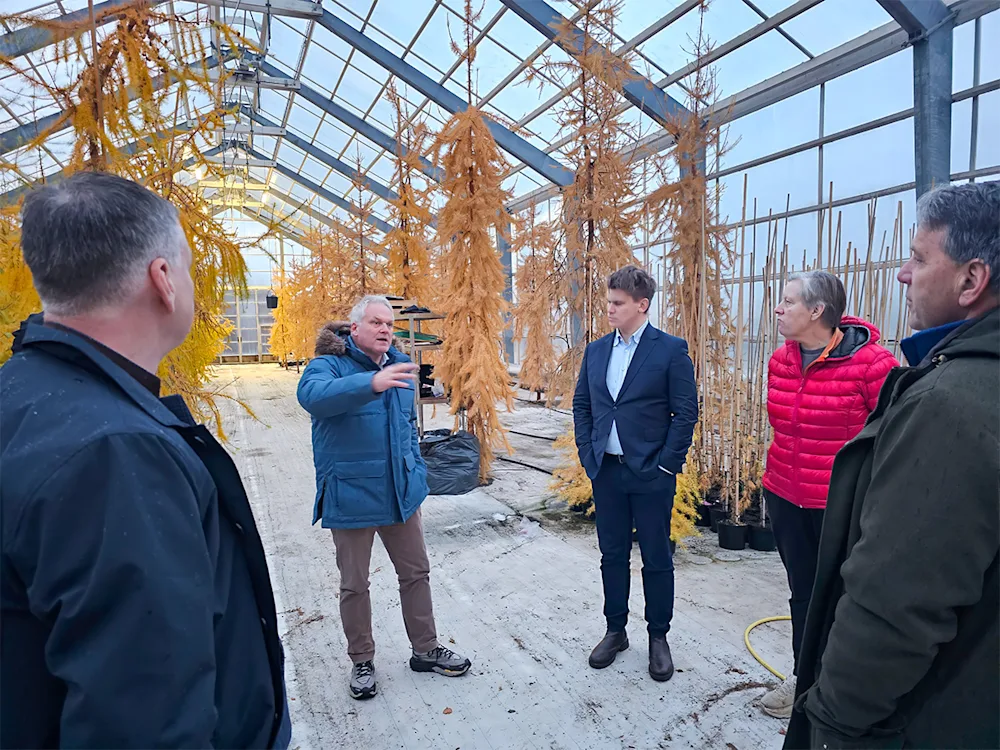
The birch forest is now taller and straighter than it was at that time, reflecting the long-standing practice of retaining the best trees during thinning operations. Birch has traditionally been used as firewood and for smoking food products, while the utilisation of timber from larger exotic tree species is also increasing as planted forests mature.Research is also carried out at Vaglir in a specialised container facility with controlled growing conditions, in addition to the tree-seed production activities already mentioned.
Cultivation to Begin Next Summer
In addition to Hrymur, the expanded facilities at Vaglir are intended to support breeding programmes for other tree species, helping to improve the quality of forestry in Iceland through the development of superior reproductive material.
Forest geneticist Brynjar Skúlason described this work and referred in particular to plans for breeding improved material of downy birch (Betula pubescens). Tree breeding is an essential component of modern forestry and is arguably more important than ever in an era of climate change. It plays a key role in ensuring that both wild and cultivated tree populations can tolerate changing environmental conditions and continue to thrive.
Cultivation within the new seed orchard facility is expected to begin next summer, although several years will pass before the trees start producing seed. The new facility covers nearly 1,700 square metres, compared with around 1,000 square metres for the existing building.
According to Valgerður Jónsdóttir, this increase in capacity should allow annual production to double to at least two million viable Hrymur seeds. Continued breeding work is expected to improve both seed quality and productivity still further. If successful, annual production could eventually reach as many as three million seeds.
Hrymur is well suited for planting on infertile land throughout Iceland. Seed years occur at relatively long intervals, and natural regeneration is easy to control. The hybrid grows at least twice as fast as Siberian larch and consequently stores large amounts of carbon. Larch forests are also characteristically open and support a rich ground flora.
Forester's Coffee in the New Forest Shelter
After inspecting the new seed orchard facility, the Minister and Ágúst Sigurðsson, Director General of Land and Forest Iceland, shook hands to mark the formal handover of the new building to the organisation. The facility was constructed using a dedicated appropriation from the Althingi, Iceland’s Parliament.
The project was budgeted at approximately ISK 100 million and has been completed within budget.
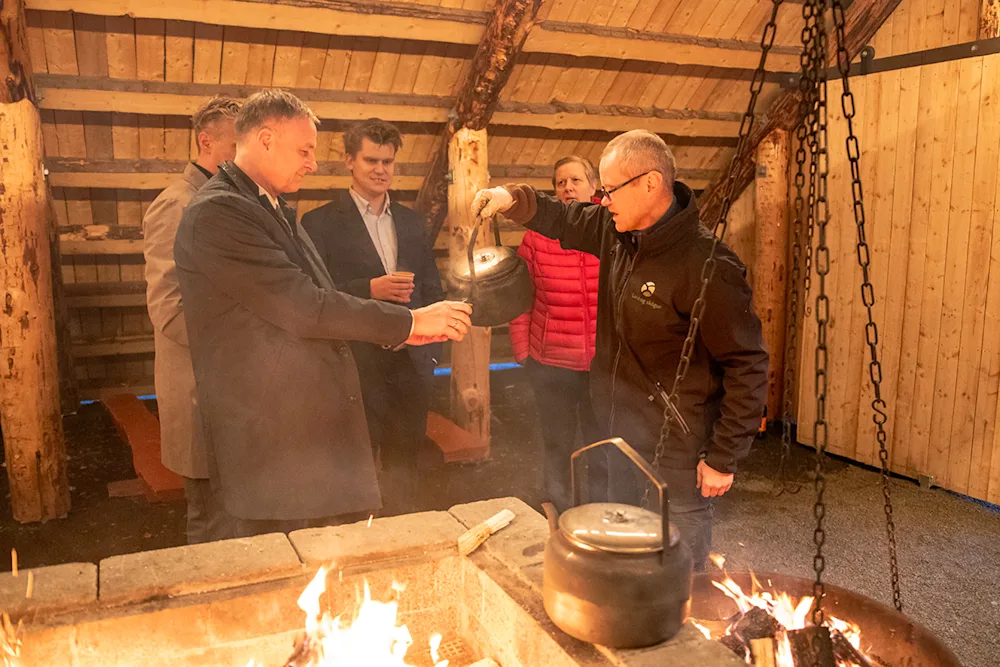
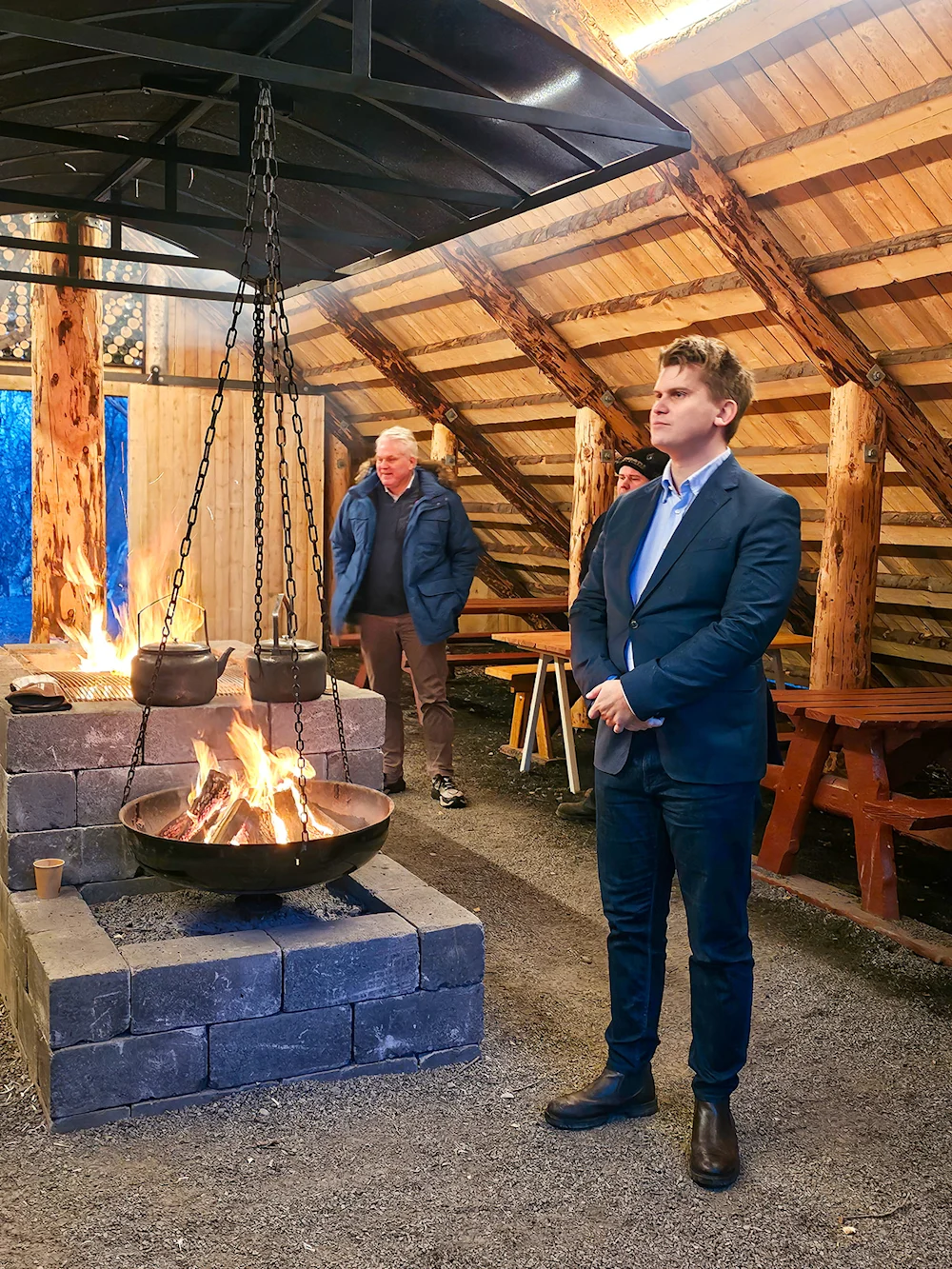
The Minister concluded his visit by touring the new forest shelter in Vaglaskógur, which was formally opened this summer. The shelter was financed through grants from the Tourist Site Protection Fund. Naturally, visitors were treated to traditional foresters' coffee brewed over an open fire.
Related news stories: