Land and Forest Iceland
Land Restoration Work at Vaðalda and Surrounding Areas
15th October 2026
Wind power development and land restoration can go hand in hand. Land and Forest Iceland has enjoyed a long-standing and productive partnership with Landsvirkjun, the National Power Company of Iceland, on restoration work at Vaðalda, where construction is currently underway on Iceland’s first wind farm. The area was once severely degraded, but the vegetation now becoming established helps protect the wind turbines from wind-blown sand. The long-term ambition is for the area to develop into birch woodland and willow scrub, providing the most effective protection against harsh weather conditions and, in particular, against land degradation following ash fall from eruptions of Hekla and other nearby volcanoes.
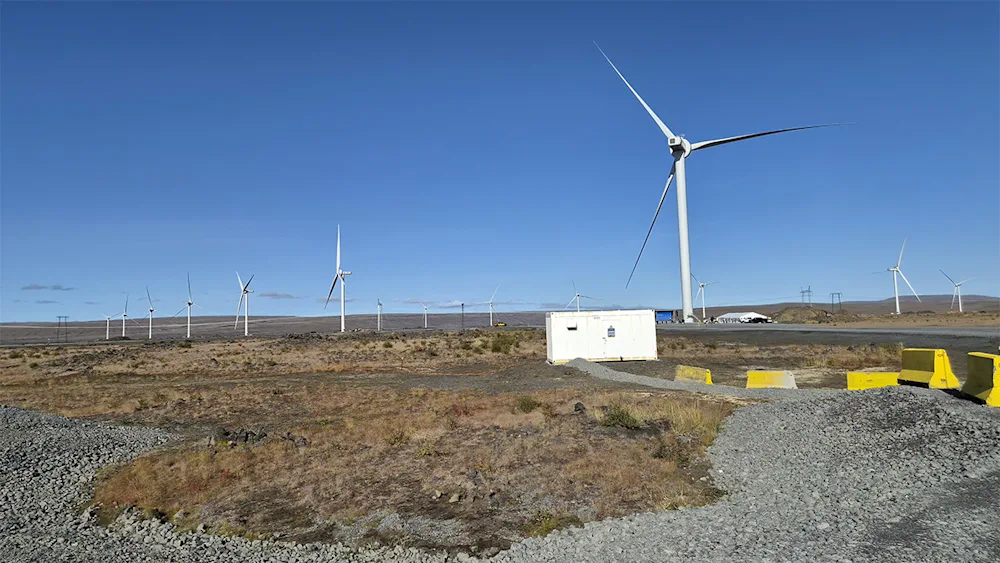
Young birch trees emerging among the wind turbines at Vaðalda. Photo: Hreinn Óskarsson
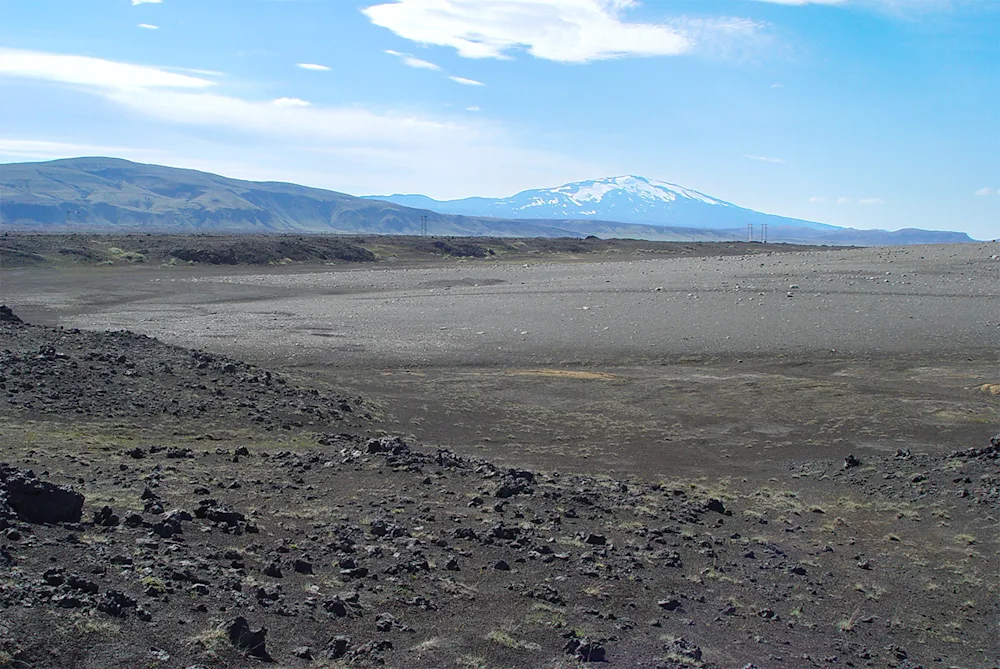
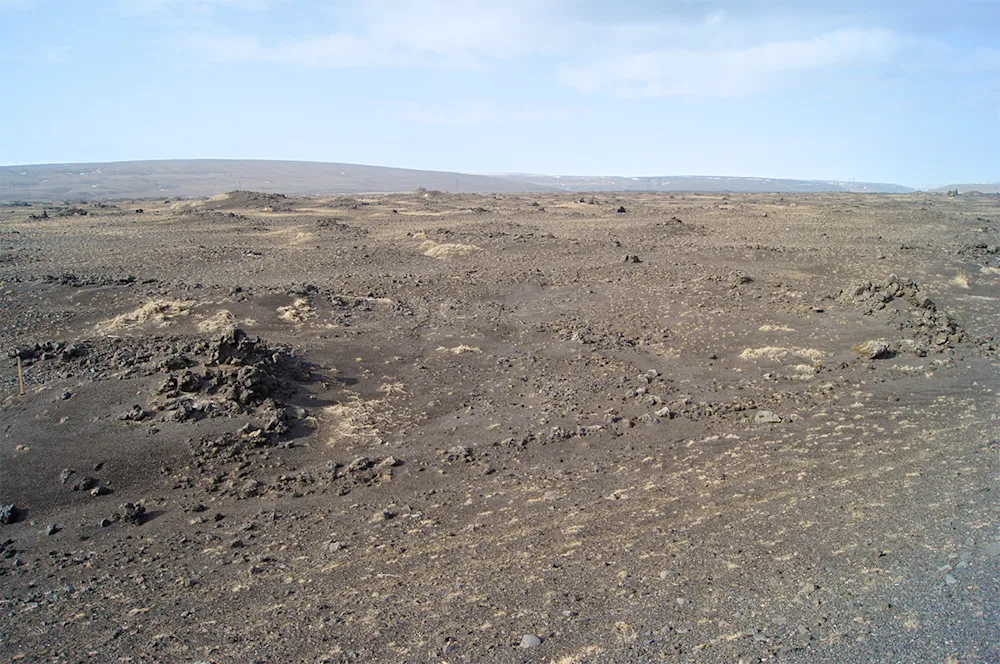
The Vaðalda Wind Farm is being developed in the northern part of a large area that was fenced off following the Skjólkví eruption in 1970. This protected area lies north of a fence stretching from Hald by the Tungnaá River southwards to the Þjórsá River west of Sölvahraun. In total, more than 200 square kilometres have been protected from grazing. The area formerly formed part of the Landmanna highland commons. Extensive restoration work has been carried out there over recent decades. When these efforts began, however, the land had become severely eroded and consisted largely of barren lava fields, sandy expanses and volcanic pumice.
During the first years after grazing was excluded, the former Soil Conservation Service of Iceland sowed lyme grass across the area, while fertiliser was distributed from agricultural aircraft over large tracts of land. Restoration work has continued ever since, despite several setbacks, including the eruptions of Hekla in 1980, 1981, 1990 and 2000, which deposited volcanic ash across parts of the area.
When protection measures were first introduced, several patches of vegetation still remained, including sites at Hrauneyjar, Ferjufit near Hald and Vaðfit south of Sultartangi. Birch trees also continued to grow on four islands in the rivers Þjórsá and Tungnaá. Cooperation with Landsvirkjun has been strong throughout the protection period, during which the company developed several hydropower stations in the area: Sigalda Power Station, commissioned in 1978; Hrauneyjafoss Power Station, commissioned in 1981; and Sultartangi Power Station, commissioned in 1999. Since 2007, the Hekluskógar (Hekla Forests) project has carried out restoration work and established birch woodlands throughout the region.
Significant restoration efforts have also taken place at Vaðalda itself, where the wind farm is now being constructed. Parts of the area have become well vegetated, and the incidence of wind-blown sand has declined markedly. Initial efforts focused on aerial fertilisation to encourage plant growth, but restoration activities were considerably intensified after 2010. Birch woodlands have been planted across many parts of the area through the Hekla Forests project, while artificial fertiliser and meat-and-bone meal have been applied in close cooperation with the Soil Conservation Service and, more recently, Land and Forest Iceland.
A collaborative project involving several off-road motorcycle clubs began around 2011. Their members have made a valuable voluntary contribution by restoring degraded land and planting birch in designated restoration plots. These activities are currently on hold while construction of the Vaðalda Wind Farm is underway, but the intention is to resume them once the project has been completed.
Land and Forest Iceland and Landsvirkjun plan to continue their collaboration on restoring the land surrounding the wind turbines. Reducing wind erosion and establishing birch woodland and willow scrub remain important long-term objectives. Such vegetation is considerably more resilient to the environmental challenges that can be expected in the coming decades, particularly volcanic ash fall from Hekla and other volcanoes. Woodland and scrub also help reduce wind-blown material affecting infrastructure in the area.
Restoring the land and harnessing wind power are therefore highly compatible goals, each reinforcing the long-term sustainability of the other.
Below are two photographs taken by Hreinn Óskarsson in 2008 and 2012, illustrating the progress of land restoration in the area where the Vaðalda Wind Farm is now being developed.