
Land and Forest Iceland
Land and Forest Iceland at the Icelandic Biology Conference 2025
17th October 2025
The Icelandic Biology Conference, the main event organised by the Icelandic Biological Society, took place at the University of Iceland from 9 to 11 October. Held every other year, the conference is a lively celebration of new scientific research in Iceland. Staff from Land and Forest Iceland were active participants and made a strong contribution to the programme.
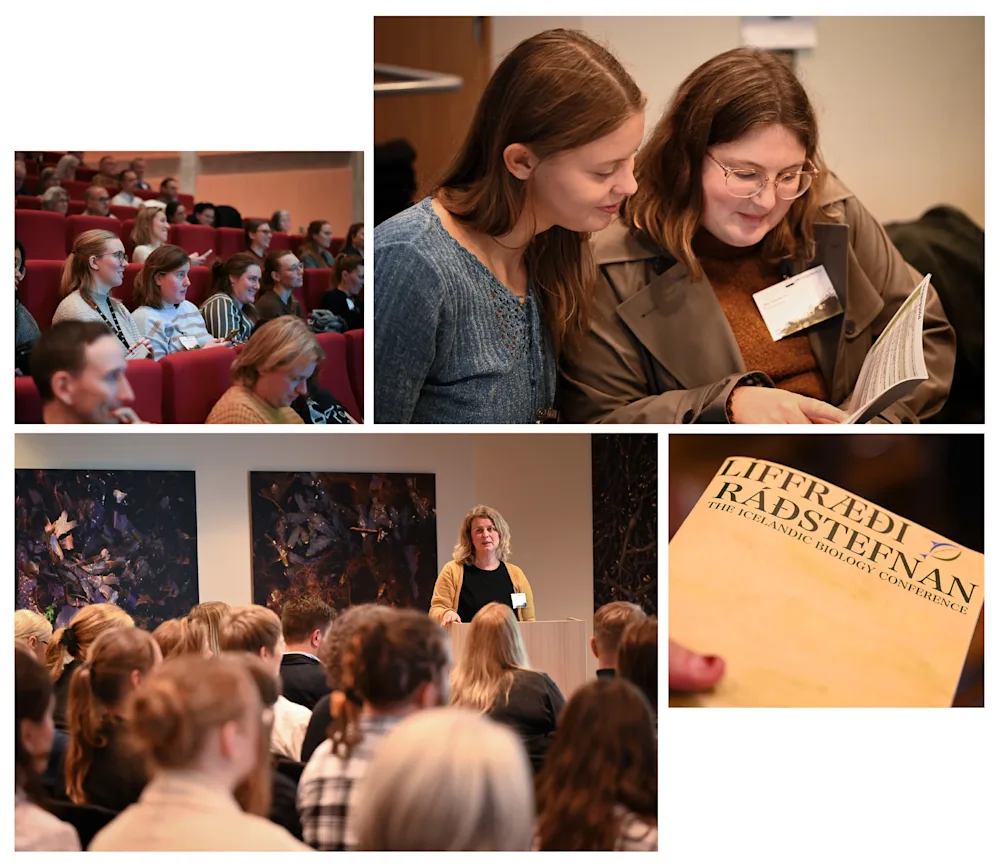
Portraits of representatives from Land and Forest Iceland at the 2025 Biology Conference. Photo credits: Fífa Jónsdóttir
Participation and presentations from staff members
Two oral presentations were delivered on behalf of Land and Forest Iceland, both focusing on the agency’s peatland monitoring projects, which have expanded rapidly in recent years. In addition, staff members contributed to several posters presented at the conference, strengthening ties within the scientific community.
Sunna Áskelsdóttir, project manager for peatland projects, gave the first presentation, highlighting Mýrgas – a project measuring greenhouse gas fluxes in peatlands of different types and conditions. The project also records related ecosystem variables such as weather, vegetation, and soil characteristics. For instance, groundwater level has a strong influence on greenhouse gas emissions from peatlands, and clear relationships have been observed between vegetation and other parameters. The Mýrgas project has been running since 2023 in southwest Iceland, and monitoring was extended to East Iceland this spring in collaboration with the East Iceland Nature Research Centre. The growing dataset is well suited for use in student research projects.
The second presentation was delivered by Ágústa Helgadóttir, project manager for a new pilot project exploring nature-based solutions in agriculture. The project aims to involve landowners in assessing and monitoring the progress of peatland restoration on their own land by compensating them for submitting data. Fixed monitoring points are established and revisited regularly before, during and after restoration work. This approach reduces the need for frequent site visits by specialists and allows earlier intervention if issues arise. Ágústa shared a successful example from Borgarfjörður eystri, where drainage had previously affected the biodiversity of peatlands now being restored.
The posters presented at the conference included:
Peatland LIFEline: Restoring Iceland’s Lowland Peatlands for Biodiversity, Climate, and Community – Sunna Áskelsdóttir.
Exploring Belowground Biodiversity and Taxonomic Composition in an Icelandic Restoration Site – Jóhann Þórsson.
Knowledge and Research on Biodiversity in Iceland. Results from the Biodice Session on the Importance of Knowledge and Research for Implementing Iceland’s Biodiversity Policy – Álfur Birkir Bjarnason and Fífa Jónsdóttir.
Presentations included:
Monitoring of Bryophyte-Blanket Vegetation at the Hellisheiði and Nesjavellir Geothermal Power Plants – Járngerður Grétarsdóttir (1), Ágústa Helgadóttir, and Rannveig Thoroddsen
As always, the conference offered a wealth of other inspiring presentations and engaging discussions. It provided an excellent opportunity to gain insight into ongoing research by institutions collaborating with Land and Forest Iceland.
Land and Forest Iceland thanks the organisers for an inspiring conference and looks forward to the next one.