
Land and Forest Iceland
Iceland Hosts Side Event at COP17 in Mongolia
11th September 2026
Iceland hosted a side event at the recently concluded Conference of the Parties to the United Nations Convention to Combat Desertification (UNCCD). The event highlighted how collaboration, knowledge sharing, training and professional networks can strengthen the resilience of communities and ecosystems while supporting lasting success in land restoration. Iceland’s role is not only to share its expertise and experience in this field, but also to learn from the experiences of others.
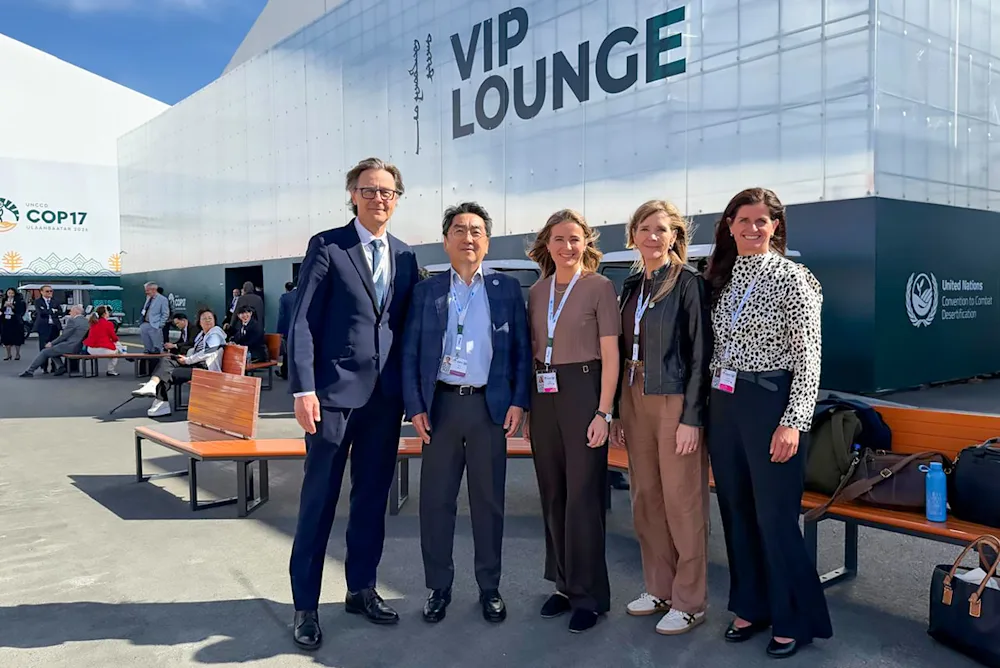
Iceland’s representatives at COP17. From left: Jón Erlingur Jónasson, Boldoo Magvan, Honorary Consul of Iceland in Mongolia, Þórunn W. Pétursdóttir and Guðrún Guðjónsdóttir. Photo: Boldoo Magvan
The seventeenth session of the Conference of the Parties to the United Nations Convention to Combat Desertification (UNCCD COP17) took place in Ulaanbaatar, Mongolia, from 17 to 28 August. Particular emphasis was placed on the sustainable management of rangelands. Icelandic representatives played an active role in the conference, not least because the GRÓ Land Restoration Training Programme is based in Iceland and focuses on building capacity in ecosystem restoration and sustainable land management.
Rangelands are important ecosystems in Mongolia and many other parts of the world. Few environments depend more heavily on sustainable management practices, and issues relating to rangelands are closely linked to land degradation, desertification and broader challenges associated with sustainable land use. According to Guðrún Guðjónsdóttir, Acting Director of the GRÓ Land Restoration Training Programme, the programme’s work therefore aligns directly with the objectives of the UNCCD. Guðrún attended the conference alongside Boldoo Magvan, Honorary Consul of Iceland in Mongolia; Þórunn Wolfram Pétursdóttir, Head of the Global Soil Partnership Office at the Food and Agriculture Organization of the United Nations (FAO) in Rome; Salóme Hallfreðsdóttir, Specialist at the Ministry for the Environment, Energy and Climate; and Jón Erlingur Jónasson, Special Envoy at the Ministry for Foreign Affairs.
Guðrún explained that the side event organised by the GRÓ Land Restoration Training Programme focused on how collaboration, knowledge, training and professional networks can contribute to lasting achievements in land restoration while strengthening the resilience of both communities and ecosystems. The event was organised jointly with the Green Gold Mongolian Rangeland Research Centre, with support from the Ministry for Foreign Affairs and the Ministry for the Environment, Energy and Climate.
The image below shows the two graduates from the GRÓ Land Restoration Training Programme who gave talks at the side event in Ulaanbataar; Burmaa Dashbal and Sumjidmaa Sainnemekh.
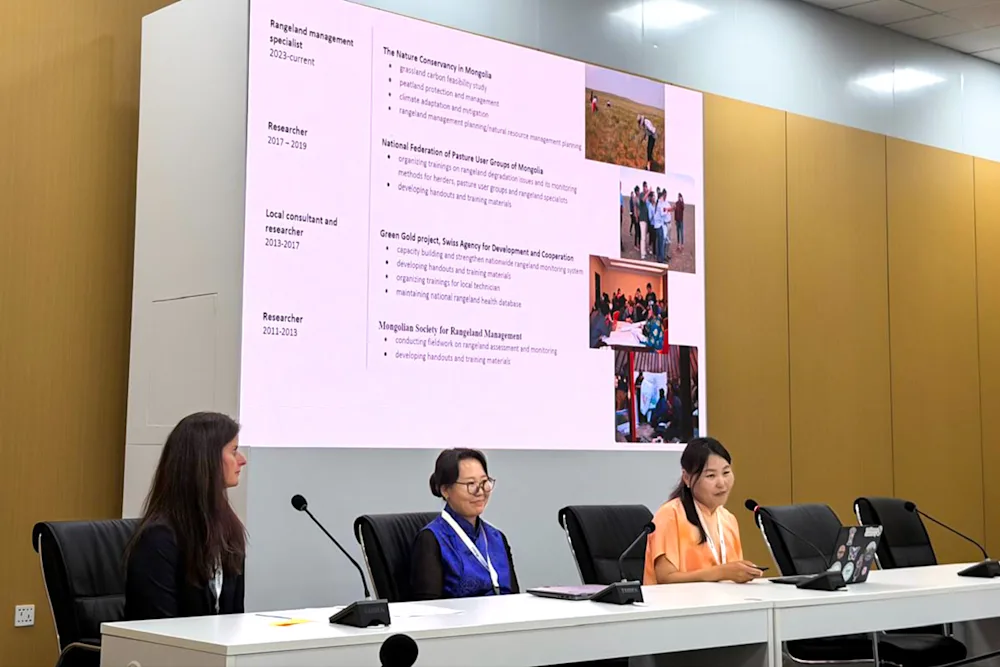
The event reflected the long-standing and successful partnership between Iceland and Mongolia in this field. According to Guðrún, Mongolia is one of the programme’s most important partner countries, and the cooperation has spanned nearly two decades. To date, 44 Mongolian specialists have completed the programme and have gone on to apply and share their expertise in their home country. Guðrún noted that this demonstrates how Icelandic knowledge has not simply been “exported”, but has evolved through long-term cooperation, mutual learning and the shared development of expertise and capacity.
Presentations delivered during the side event by two former participants of the programme highlighted the importance of the social dimension of ecosystem restoration. Restoring ecosystems requires consideration of the communities whose livelihoods depend on the land and who maintain close connections with it. Restoration is not simply about planting trees; it is about creating the social and ecological conditions that allow ecosystems to recover and thrive. Long-term research and monitoring are also essential for assessing outcomes, supporting informed decision-making and strengthening the resilience of both ecosystems and communities.
Guðrún emphasised that although Iceland plays an important role in sharing its experience and expertise in land restoration, it also has much to learn from other countries. This includes Mongolia’s experience of sustainable land management and its understanding of the relationship between ecosystems and communities. Long-term partnerships of this kind, she notes, can therefore generate mutual benefits and strengthen both professional capacity and the effectiveness of ecosystem restoration efforts.
On the final day of COP17 in Ulaanbaatar, it was unanimously agreed that Egypt would assume the role of host country for the next conference. The next session of the Conference of the Parties to the United Nations Convention to Combat Desertification (UNCCD COP18) will be held in Sharm El-Sheikh, Egypt, in 2028. Exact dates will be announced at a later stage.
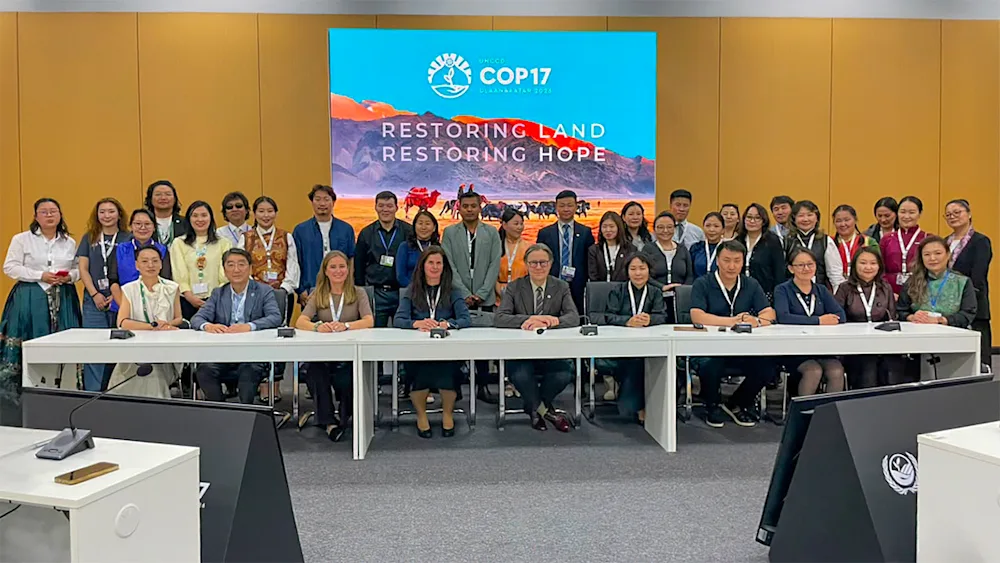
Organisers of the side event at COP17 together with graduates of the GRÓ Land Restoration Training Programme. Photo: Boldoo Magvan.