
Land and Forest Iceland
Greater genetic diversity could strengthen forests’ resilience for the future
28th August 2026
Forests across Europe are showing clear signs of increasing pressure from drought, wildfires and outbreaks of pests and diseases. Finding ways to adapt forests to new conditions in a changing climate is becoming an increasingly important area of forest research. Researchers are now suggesting that greater diversity of tree species, together with greater genetic diversity within individual species, could prove decisive in determining whether forests are resilient enough to cope with the changes ahead. A major European research project is seeking ways to strengthen the long-term resilience of forests in a changing climate.
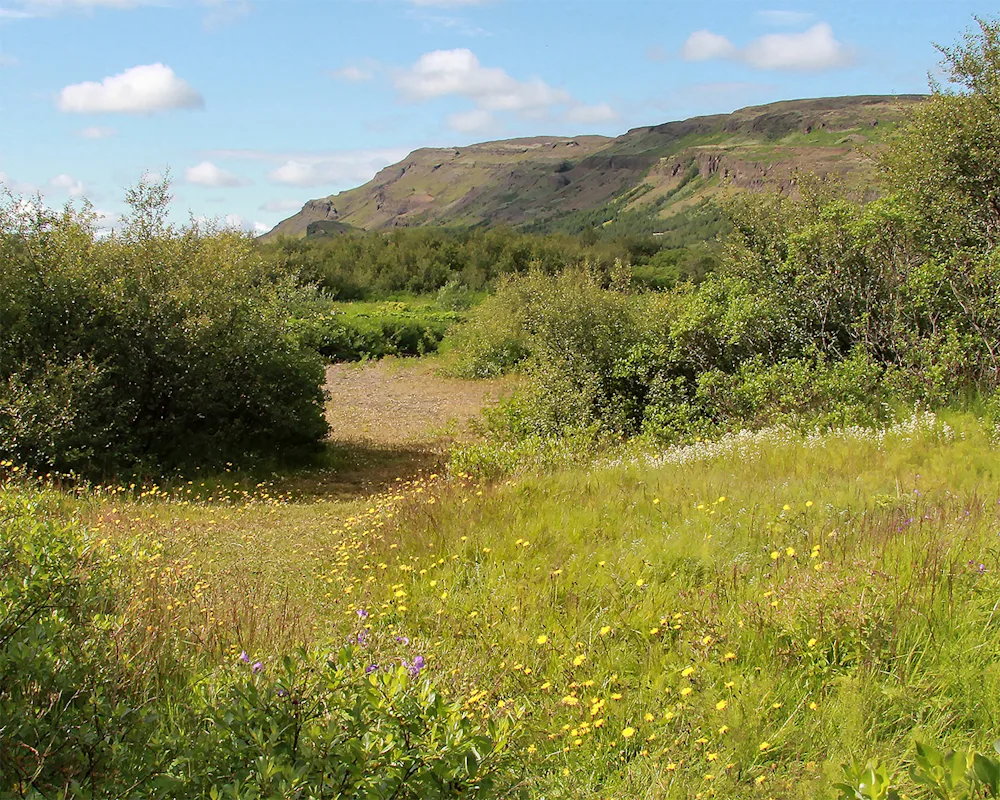
From the Þjórsárdalur National Forest. Photo: Pétur Halldórsson
This was reported in an article published on 11 June by Horizon, the European Union’s research and innovation magazine. The article notes that forests, covering around 43% of the EU’s land area, support a significant share of its biodiversity and play an important role in climate regulation and carbon storage. In many places, forests have already been severely affected by climate change. In Germany, Czechia and Austria, for example, prolonged droughts and heatwaves have left Norway spruce forests badly damaged by bark beetle outbreaks for almost a decade. In Iceland, the effects of newly arrived insect species are increasingly evident in birch woodlands, while certain inland provenances of Siberian larch have also shown signs of stress as the climate has warmed.
The European research project OptFORESTS is exploring ways to strengthen the future resilience of forests. Funded by the EU’s Horizon research programme, the project is examining, among other things, how the potential contained in tree genetic resources can be put to better use.
Twelve tree species being tested
One example of the work being carried out under OptFORESTS can be found at the Suonenjoki research station of the Natural Resources Institute Finland, Luke. European larch, wild cherry and Scots pine are being raised there from genetic material originating in different parts of Europe. The seedlings will be planted in experimental plots at 28 locations across the continent. These three species are among a total of 12 tree species being tested by the project.
Alongside species traditionally used in forestry, researchers are considering others that have so far been little used in forestry on the European mainland. They are studying how different species, provenances and genetic mixtures perform under varying environmental conditions and how they might respond to future climate change.
Genetic diversity is described as a kind of biological safety net. The greater the diversity, the more likely it is that the overall population will contain individuals capable of withstanding new threats such as drought, disease or pest attacks.
Genetic diversity alone may not, however, be sufficient to meet the challenges ahead. Researchers believe that, in addition to maintaining genetic diversity within individual tree species, it will be necessary to ensure a diversity and mixture of species in forest stands, across landscapes and regions, and at national level.
One example concerns the risk of fire. Fires in pine forests can become particularly intense because of the large quantity of flammable material they contain. Where oaks grow alongside pines, they can reduce the amount of fuel available, resulting in less intense fires and less damage. Diversity can therefore provide benefits in many different ways.
Planting material is crucial
Forestry on the European mainland has long relied on a relatively small number of commercial tree species about which considerable knowledge has been gained through research and experience. Single-species forests are generally simpler and more economical to establish and manage than more diverse forests, whether in terms of cultivation, tending, harvesting or the eventual processing of timber.
In some areas, natural conditions also allow only a small number of tree species to thrive. Whether the lack of diversity is natural or the result of forest management, there is always a risk that forests with low diversity will prove more vulnerable to disturbance.
The Horizon article points out that increasing diversity will require a sufficient supply of seed and other reproductive material from a wider range of tree species than has previously been available. Nursery production will have to be adapted to the differing needs of these species, and new knowledge will have to be developed.
With this in mind, researchers involved in OptFORESTS are assessing the production capacity of forest nurseries across Europe, forecasting future demand for forest reproductive material and helping producers expand their capacity to raise a broader range of species and provenances.
Practical results from the project are already beginning to emerge. In Norway, ash seedlings with resistance to ash dieback are now available for planting. In Slovenia, seed sources and seedlings developed through the project have been used to restock experimental plantations.
Researchers are also developing data and methods to help forest managers select the tree species, seed sources and management practices best suited to the conditions at each location.
Planning for a century
This research is necessarily a long-term undertaking, as is forestry in general when compared with the cultivation of most other commercial crops. A decision to plant a forest is also a decision about the genetic characteristics of the forest that will grow at that location for many decades – perhaps even a full century.
In keeping with this timescale, the project includes long-term trials in which experimental plots across Europe are monitored to determine how genetically diverse forests grow and respond to the changes taking place around them.
The aim is not to preserve Europe’s forests in precisely the same form in which they have existed until now, but to prepare them for a new future that will differ from the past. This will require long-term monitoring, a wider range of seeds and seedlings, better knowledge of tree genetics and close cooperation between countries.
Diversity is an important form of insurance to help ensure that the forests of the future can continue to provide both ecosystem services and economic benefits.
Further information about the research is available in the Horizon article.