
Land and Forest Iceland
This news article is more than a year old
Fewer trees – a warmer Oslo
6th August 2025
It is hypothesised that the recent heatwave in Oslo, Norway, may have been intensified by the decrease in the city's tree population in recent years, potentially increasing the effects of solar radiation. As a result, city officials are focusing on projects aimed at improving urban vegetation and expanding green spaces.
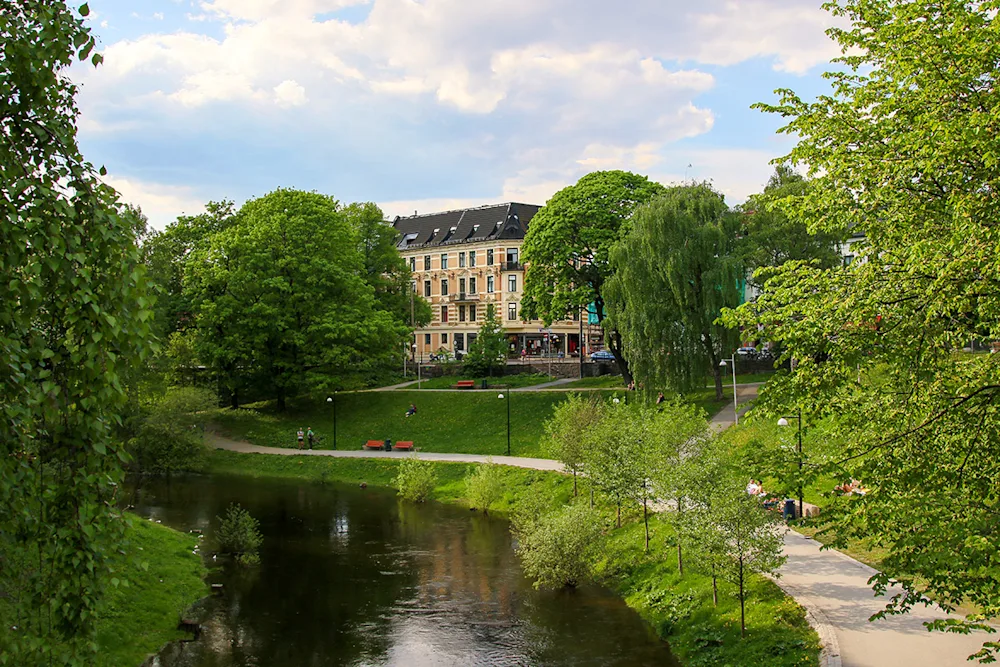
According to a news report published on the Norwegian public broadcaster NRK's website on July 31st, data indicates that between 2017 and 2021, Oslo experienced the removal of 1.5 square kilometers of tree canopy, equivalent to over 200 football fields. Furthermore, the Norwegian Meteorological Institute's measurements revealed a peak temperature of 32.9 degrees Celsius in the city during the forenoon of July. Håkon Mjelstad, a meteorologist at the institute, noted that such conditions could pose a health risk, as the temperature in direct sunlight could be approximately ten degrees higher than in shaded areas, potentially reaching around 43 degrees Celsius.
Dr. Sourangsu Chowdhury, a researcher specialising in urban temperature dynamics, was also interviewed. His studies in Oslo revealed that average summer temperatures are 1.6 degrees higher in areas devoid of vegetation compared to vegetated zones. Dr. Chowdhury emphasises that the cooling effect is not solely due to shade; soil moisture plays a critical role. In dry environments, solar energy primarily heats the atmosphere, whereas in areas with vegetation and moist soil, some energy is utilised to convert moisture into vapor. Consequently, urban areas with vegetation and moist soil exhibit lower temperatures than dry, exposed areas.
A comprehensive analysis of the world's three thousand most populous cities, conducted by Chowdhury, reveals a comparable decline in vegetation within several other northern European urban centers, including Stockholm, Copenhagen, Helsinki, and Gothenburg. Concurrently, these cities are experiencing rising temperatures in their respective hotspots. Southern Europe presents a nuanced scenario; for instance, cities like Barcelona, Porto, and Athens exhibit warming hotspots despite increased vegetation cover and soil moisture, a phenomenon potentially attributable to urban design elements. Conversely, in cities such as Rome, Turin, and Milan, increased vegetation and soil moisture correlate with a reduction in average temperatures within the hottest areas.
Considering the projected increase in temperatures over the coming years and decades, meteorologist Håkon Mjelstad emphasises the critical importance of addressing this issue. Urban greening initiatives represent a viable strategy for mitigating the effects of climate change. Specifically, the cooling effect generated by green spaces, such as parks, extends beyond their immediate boundaries due to the circulation of cooler air.
In an interview with NRK news, City Councillor Marit Kristine Vea confirms that this trend is already being addressed. She highlights that increasing the number of trees and promoting nature within the city is a straightforward and cost-effective approach to combatting issues such as heat waves and managing surface water runoff. The city authorities have already established a policy for eco-streets, which will incorporate increased greenery within streetscapes and expand the overall number of green spaces.