
Land and Forest Iceland
This news article is more than a year old
Dialogue on knowledge and action key to sustainable rangeland use
15th September 2025
Broad and meaningful participation of diverse stakeholders, combined with informed collaboration, can deliver progress toward sustainability in rangeland management. It is essential to continue interdisciplinary research and knowledge exchange, with monitoring and assessment of both social and ecological dimensions. At the same time, governance structures and management approaches must evolve in parallel if such efforts are to succeed.
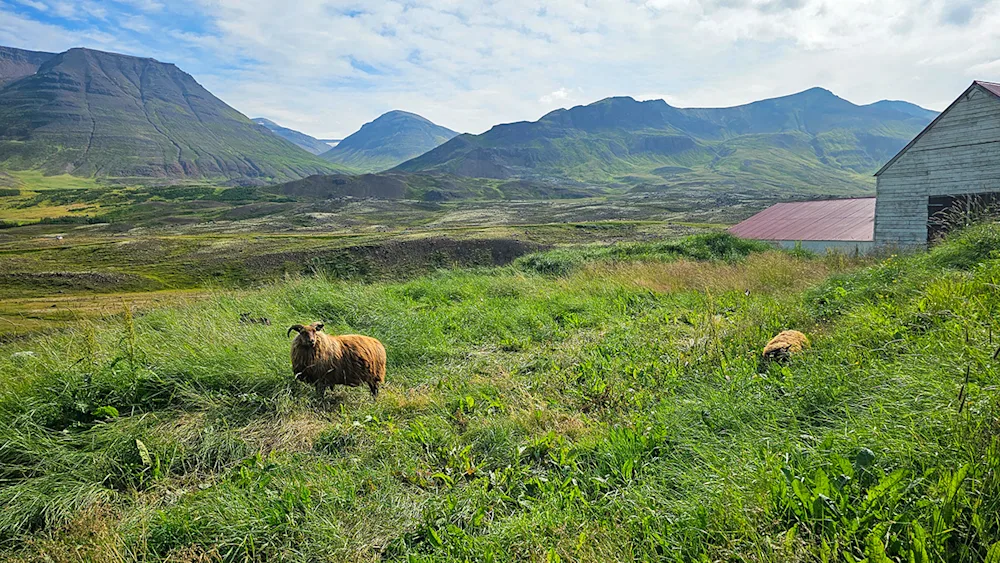
These are among the findings of a study published in the journal Environmental Science and Policy by Jónína S. Thorlaksdottir, Annemarie van Paassen, Bryndís Marteinsdóttir, division head at Land and Forest, Isabel C. Barrio, and Ása L. Aradóttir.
The article, titled Negotiating knowledge and action for sustainable rangeland management: Successes and failures of boundary work at the science-policy-society interface in Iceland, notes that rangeland degradation caused by unsustainable land use is a widespread global challenge. In Iceland, overgrazing has been one of the main drivers of land degradation and desertification. Government policies and instruments designed to align farming practices with sustainability goals have so far failed to deliver the intended social and ecological outcomes.
The study examines how different factors—scientific, administrative, and societal—shape policy and decision-making in relation to rangeland use. It explores the connections, cooperation, and conflicts among scientists, administrators, and farmers: how they negotiate the meaning of sustainability in rangeland use, how sustainability goals should be implemented, and how relationships between stakeholders, the evolution of governance, and the circulation of knowledge have influenced the pathway toward sustainability.
Four distinct periods of collaboration and conflict are identified:
1997–2003: Sustainability enters the agenda through initiatives by scientists who, in cooperation with other actors, develop new standards and quality schemes for sheep farming. With farmer participation and official support, a shared understanding and credible pathway emerge for adjusting land use practices to new goals.
2006–2009: Disputes intensify over the definition of sustainable land use. Farmers criticize a lack of transparency and objective monitoring, undermining their trust in scientific assessments. Confidence in the evaluations provided by the Soil Conservation Service begins to erode.
2012–2015: Conflicts escalate. Farmers’ associations argue that the prevailing definitions of sustainable use are unrealistic and push for changes. Scientists warn that revised rules could undermine ecosystem restoration. Disagreements over data, interpretation, and the very concept of sustainability deepen.
2016–2021: The monitoring project GróLind is launched in an attempt to rebuild trust through joint data collection and improved knowledge. While the project generally earns trust and credibility among farmers, many feel their role remains too limited and that data are misused in governance. This leads to renewed disputes over the legitimacy and usefulness of the information produced.
The authors conclude that participation alone is not sufficient to achieve sustainability. Broad involvement in knowledge production must be ensured, with balanced influence, values, roles, and responsibilities among stakeholders from the outset. Transparency in the flow of information across groups is critical. Governance must be both stable and flexible, while at the same time responsive to pressures for change. Supporting scientific work is also vital, so that interdisciplinary research and knowledge exchange continue. Ongoing monitoring and assessment of both social and ecological aspects are needed to improve overall governance and strengthen sustainability outcomes.
Online link to the article: Negotiating knowledge and action for sustainable rangeland management: Successes and failures of boundary work at the science-policy-society interface in Iceland