Land and Forest Iceland
A New Chapter for Vaglaskógur Forest
1st July 2026
A new forest shelter was officially opened at Vaglaskógur on 26 June, marking an important milestone for one of Iceland's best-known national forests. The occasion also celebrated a change of leadership, as Rúnar Ísleifsson stepped down after more than a decade as District Forest Manager for North Iceland and Helga Ösp Jónsdóttir took over the role. With her appointment, Helga becomes the first woman to serve as a District Forest Manager in Iceland's public forestry service.
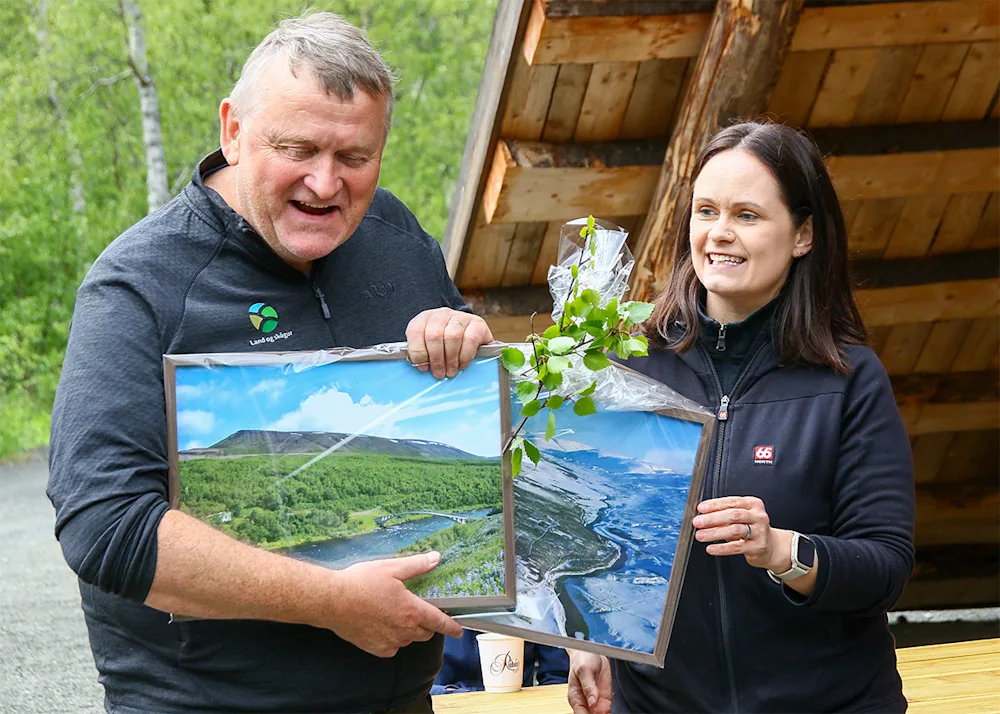
Outgoing District Forest Manager Rúnar Ísleifsson accepts a gift of appreciation from his successor, Helga Ösp Jónsdóttir. Photo: Pétur Halldórsson
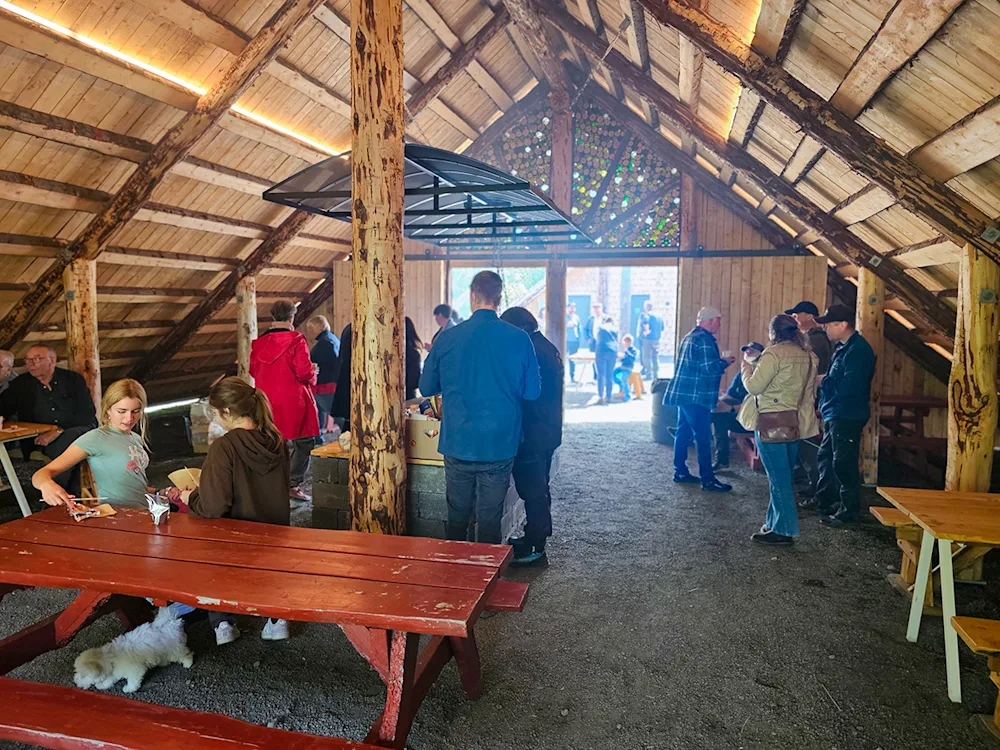
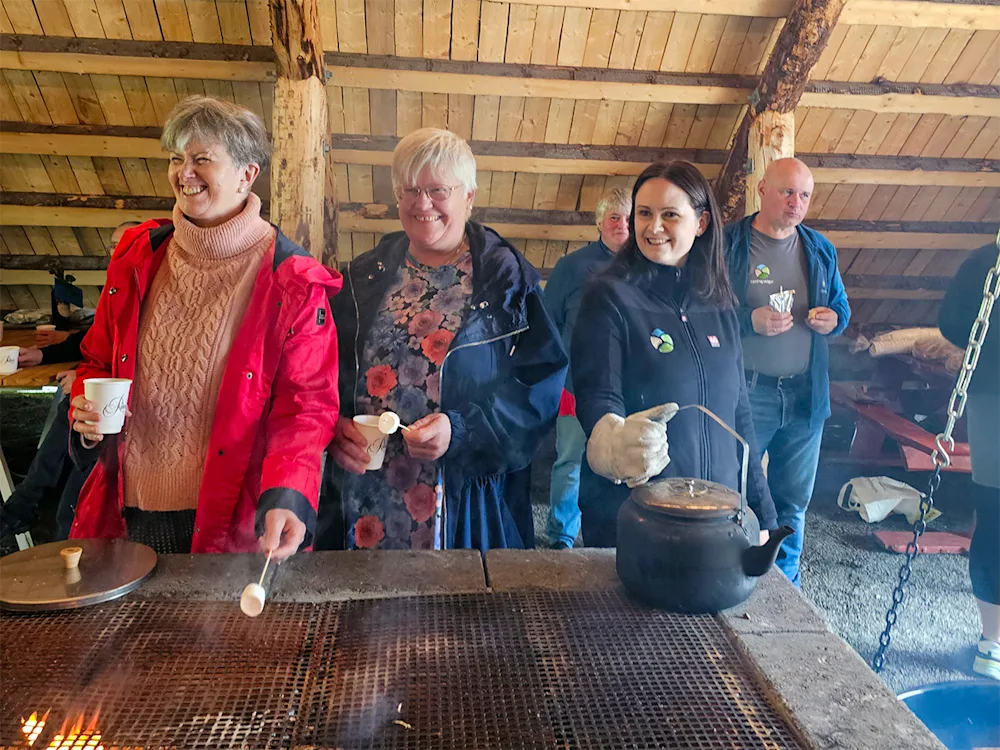
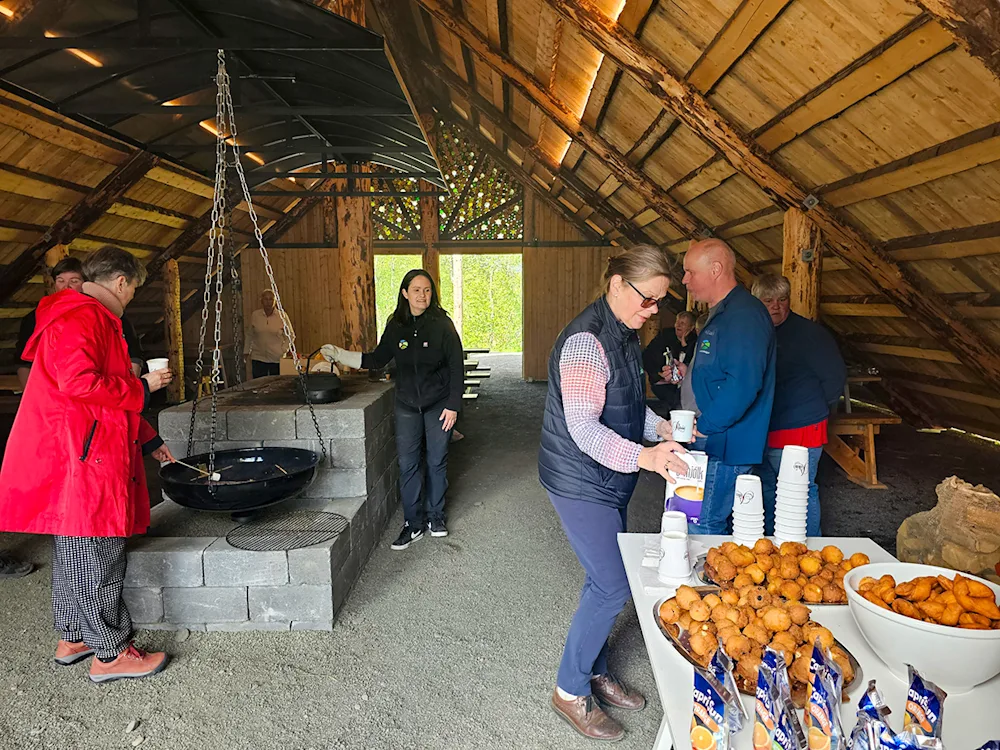
Visitors gathered at Vaglaskógur throughout the afternoon to celebrate the occasion. A fire was lit in the new shelter, inviting guests to experience the building as it was intended to be used – as a welcoming place to gather, rest and enjoy the forest in every season.
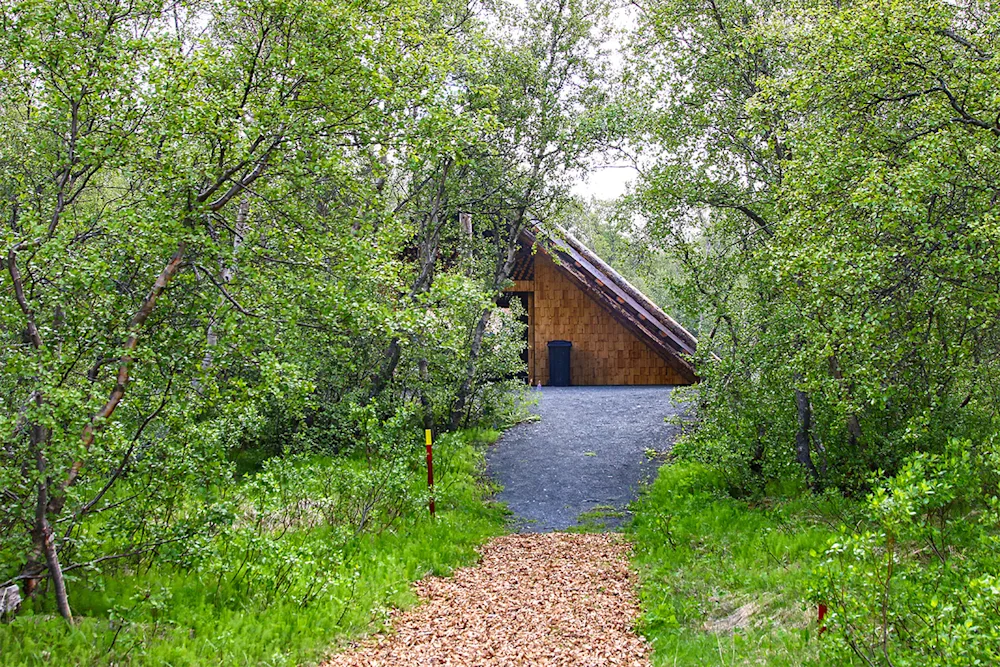
Designed by Arkís Architects, the shelter is based on the winning entry in a design competition for visitor facilities in Iceland's national forests held in 2013. Construction has taken place over the past five years, and the completed building provides a valuable new facility for everyone who visits Vaglaskógur, whether for camping, hiking or simply spending time in the forest.
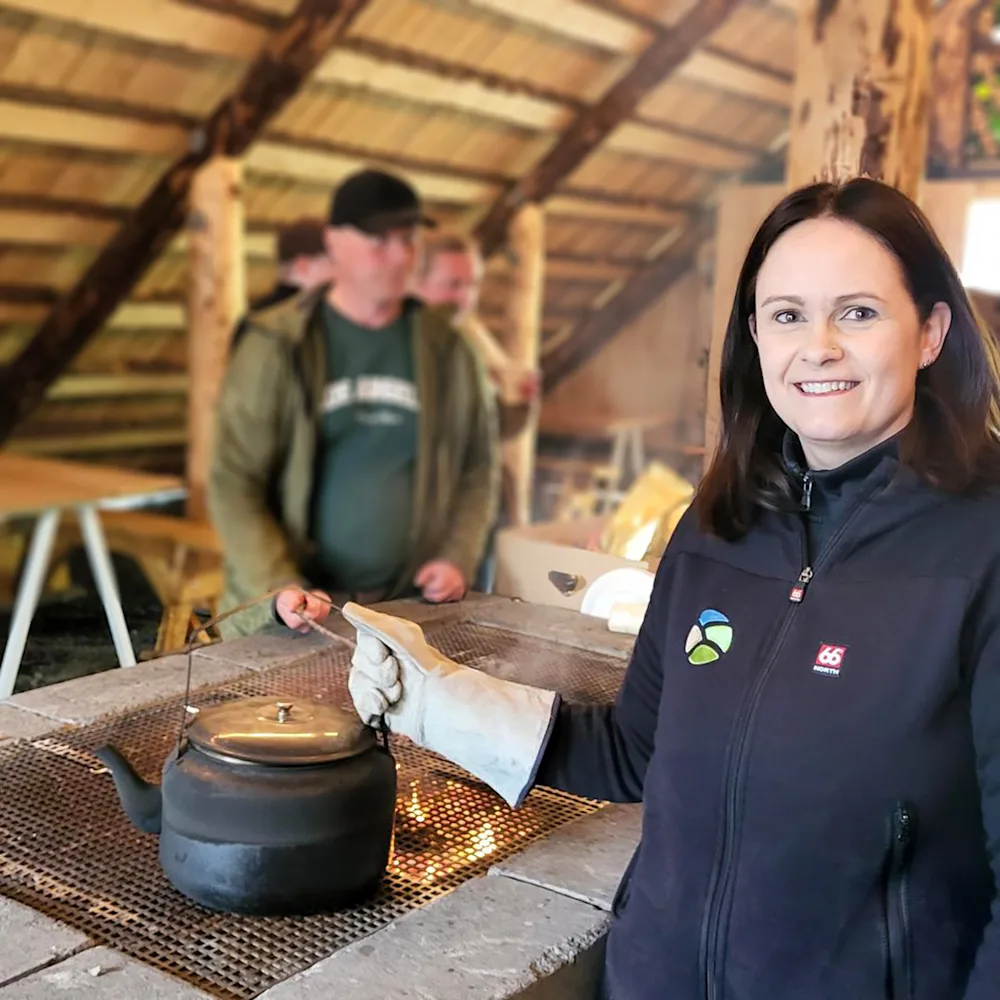
"The new shelter opens up many new possibilities," says Helga. "It isn't just for campers – it's for everyone who comes to enjoy Vaglaskógur. It gives us a sheltered place where people can meet, spend time together and experience the forest in a different way."
Helga officially took up the position on 1 May, succeeding Rúnar Ísleifsson, who had served as District Forest Manager since 2014. Rúnar will continue working for Land and Forest, focusing on forest inventory and management planning.
The opening ceremony also provided an opportunity to recognise Rúnar's contribution over the past eleven years. Colleagues from Land and Forest's North Iceland team, together with staff from elsewhere in the organisation, presented him with gifts and thanked him for his years of dedicated service. Representatives of local forestry societies and forest owners from the Þingeyjar district also expressed their appreciation.
At the same time, guests warmly welcomed Helga to her new position before gathering around the fire to enjoy freshly brewed coffee prepared over the open flames, toasted marshmallows and traditional Icelandic pastries while exploring the new facilities.
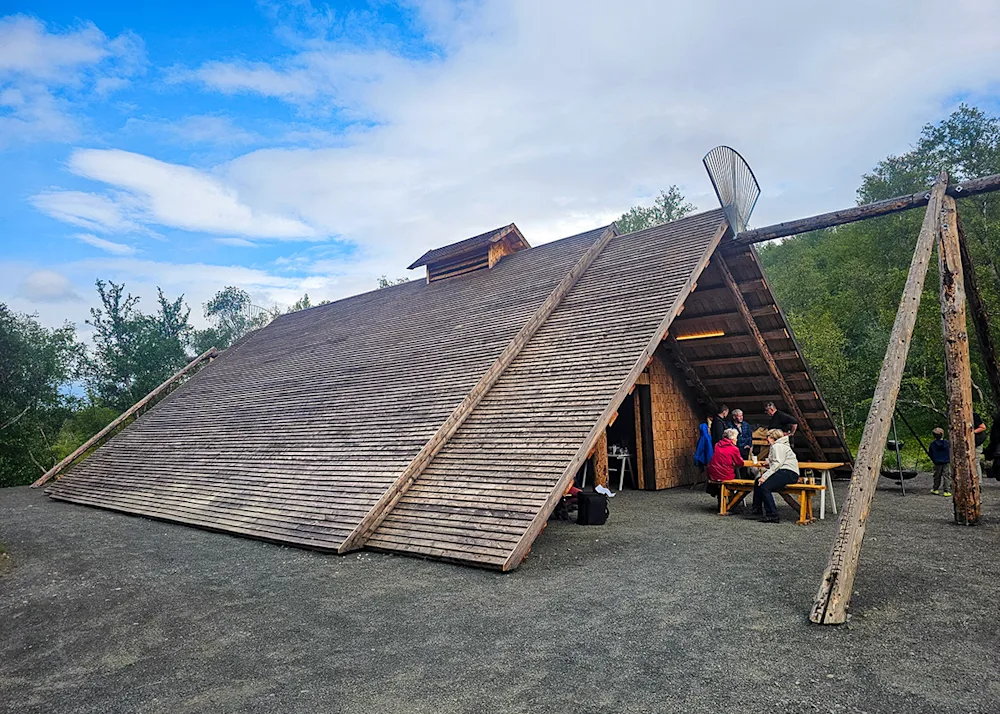
Built from Icelandic timber
The new shelter showcases the growing potential of Icelandic timber. Every part of the building has been constructed using wood grown in Iceland. Most of the structural timber is Sitka spruce from Haukadalur, while the roof is clad with Norway spruce from the same forest. Larch from Fnjóskadalur has been used for the exterior cladding of both the shelter and the adjoining toilet building, with the interiors of the facilities also finished in larch.
"The shelter demonstrates what can be achieved with Icelandic timber," says Helga. "It's a practical example of how our forests can provide high-quality building materials as well as beautiful places for people to enjoy."
The new facilities significantly improve year-round access for visitors, offering shelter from the weather, modern toilet facilities and an attractive place to gather. Helga believes they will encourage even more people to make use of Vaglaskógur throughout the year while highlighting the growing value of Iceland's forest resource.
"Our forests are now beginning to produce a valuable timber resource," she says. "Helping to bring that resource into wider use, while ensuring that it is managed sustainably, is one of the exciting opportunities that lies ahead."
Looking after forests – and the people who enjoy them
Asked what attracted her to the position, Helga says it was the variety of the work.
"Every day is different," she says. "You're responsible not only for the forests themselves, but also for ensuring that people can enjoy them safely and that they're managed in a way that protects them for future generations."
The role of District Forest Manager extends far beyond woodland management. Recreation areas, campsites, roads, buildings and visitor facilities all require ongoing care, while forest management, planning and conservation remain at the heart of the work.
"It's also a wonderful job because of the people," Helga adds. "The team here is outstanding. I've taken over a well-run operation and everyone has been incredibly supportive. People have gone out of their way to help me settle into the role."
Taking up the post at the height of the spring season was, she admits, a challenge.
"I knew the job would be demanding," she says, "but I don't think I realised quite how varied it would be. There are always new things to deal with."
Fortunately, the forests are in good condition. A relatively mild winter, with little snow until late in the season, meant that both the forests and the campsites have emerged from winter looking well, although the late snowfall did delay some of the spring work.
The national forests managed by the North Iceland district cover a vast area, stretching from Spákonufell near Skagaströnd in the west to Ásbyrgi in the east. Caring for such a diverse network of forests means balancing conservation, timber production, recreation and visitor services across very different landscapes.
Helga trained as a plant pathologist and worked in that field before becoming District Forest Manager. Although her new responsibilities leave less time for specialist work, her interest in forest health remains as strong as ever.
"Tree health will always be close to my heart," she says. "The question is simply how much time I'll have to devote to it alongside everything else."
This summer, visitors may notice a brownish tinge developing on some of the birch trees in Vaglaskógur. The cause is the birch leaf miner, an insect whose larvae feed inside birch leaves during early summer.
"It's something we see most years," Helga explains. "At the moment it doesn't appear to be any worse than in recent summers."
For Helga, maintaining healthy forests while making them welcoming places for people to visit goes hand in hand. She sees both as part of the same responsibility: ensuring that Iceland's national forests continue to thrive and to be enjoyed for generations to come.
Investing in the future
While the new shelter is the most visible addition to Vaglaskógur this summer, another important project is already taking shape nearby. Preparatory work began last autumn on a new seed facility at Vaglir, next to the existing seed house. The foundations will be poured in the coming days, and a specialist construction team will arrive in August to erect the building.
Once completed, the new facility will significantly expand the production of seed from Hrymur, a hybrid larch that has performed exceptionally well in afforestation projects throughout Iceland. Fast-growing, hardy and remarkably straight-stemmed, Hrymur has become one of the country's most promising forestry trees. The new building will also provide much-needed space for tree breeding, opening up new opportunities to improve the quality and resilience of future forests.
"It's an exciting development," says Helga. "We'll be able to increase seed production while also strengthening our breeding programme. Vaglir is already an important centre for research and field trials, and these new facilities will complement that work perfectly."
For Helga, the project reflects the changing role of Icelandic forestry.
"Our forests are maturing," she says. "We're no longer only planting trees – we're beginning to harvest the benefits of decades of work. That means producing improved seed, developing high-quality timber and making sure both are managed responsibly for future generations."
Although her work now centres on managing North Iceland's national forests, Helga has no plans to leave her home in Akureyri for the time being.
"Perhaps one day I'll move into the forest," she says with a laugh.
Her appointment marks an important milestone for Iceland's public forestry service. As the first woman to serve as District Forest Manager, she represents a new generation of leadership at a time when Iceland's forests themselves are entering a new phase of development.
With a new visitor shelter welcoming guests to Vaglaskógur, a new seed facility set to strengthen forestry research and tree breeding, and Icelandic timber increasingly finding its place in construction, the future looks bright for one of the country's best-loved national forests.
Land and Forest warmly welcomes Helga Ösp Jónsdóttir to her new role and wishes her every success in the years ahead.