
Land and Forest Iceland
Þingvellir Pine Grove
The forest in general
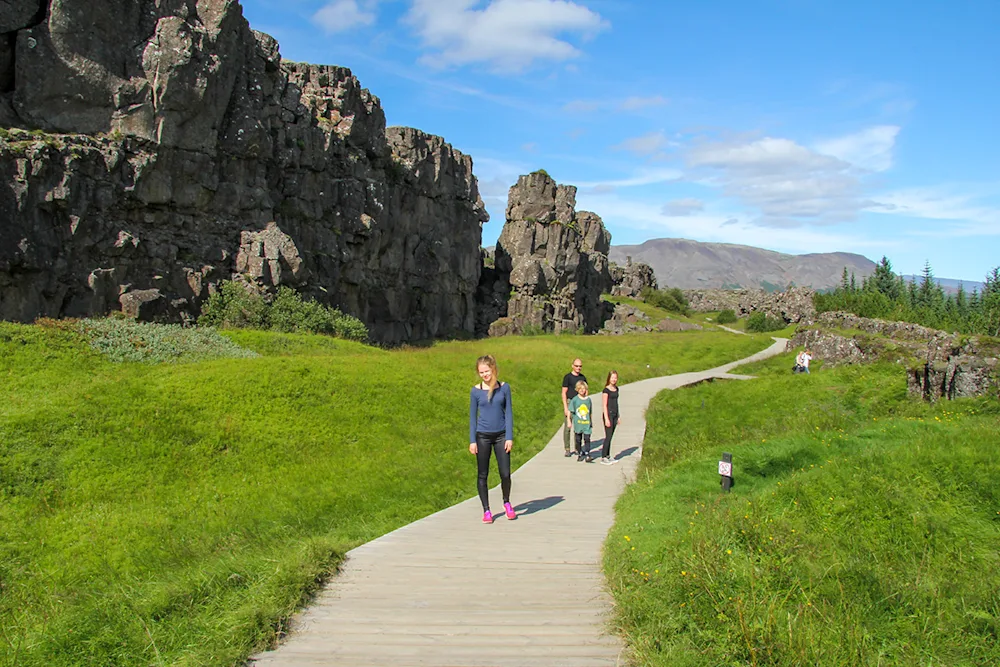
Þingvellir National Park (pron. Thin-gwe-dler) features prominent birch thickets and cultivated forest groves, most notably the Almannagjá Pine Grove, established in 1899 as one of Iceland's earliest cultivated forests. Additional groves, such as those donated by Norway and West Icelanders (honouring Icelandic emigrants to America), were planted by various groups for diverse reasons. Land and Forest Iceland, in collaboration with the National Park, manages these forests.
Location and access
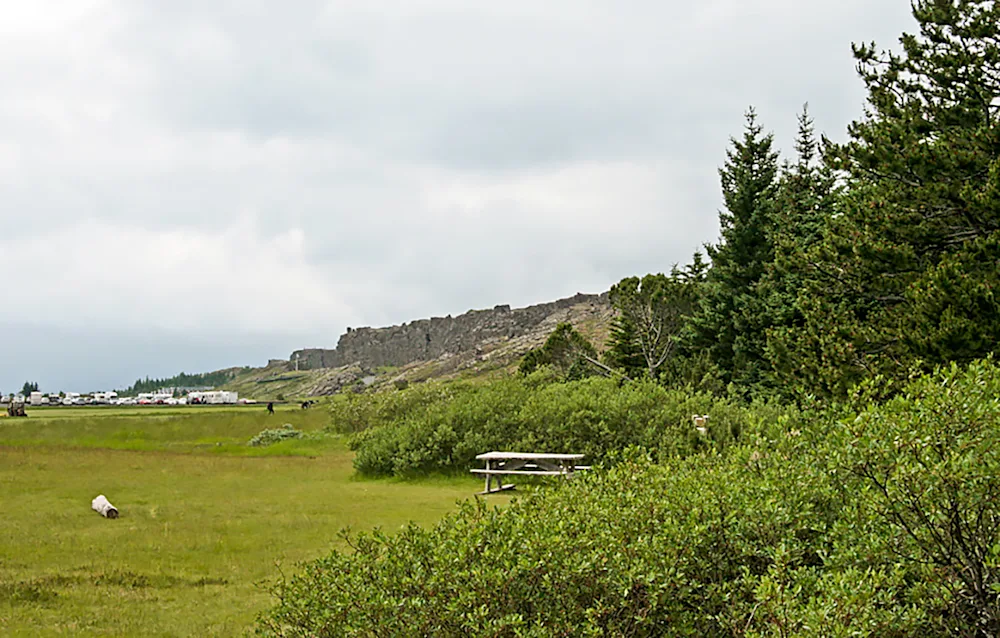
Þingvellir, situated within Þingvellir National Park, lies north of Lake Þingvallavatn, adjacent to the Öxará River, which meanders through the fields before emptying into the lake. The site is clearly marked and readily accessible.
History
Þingvellir holds significant cultural importance for Icelanders, serving as the location for numerous pivotal historical events. Specifically, the Alþingi parliament was established there in 930, and Iceland's independence was declared there in 1944. Currently designated a protected national area, Þingvellir is a major tourist destination, attracting a substantial number of visitors annually.
Forestry
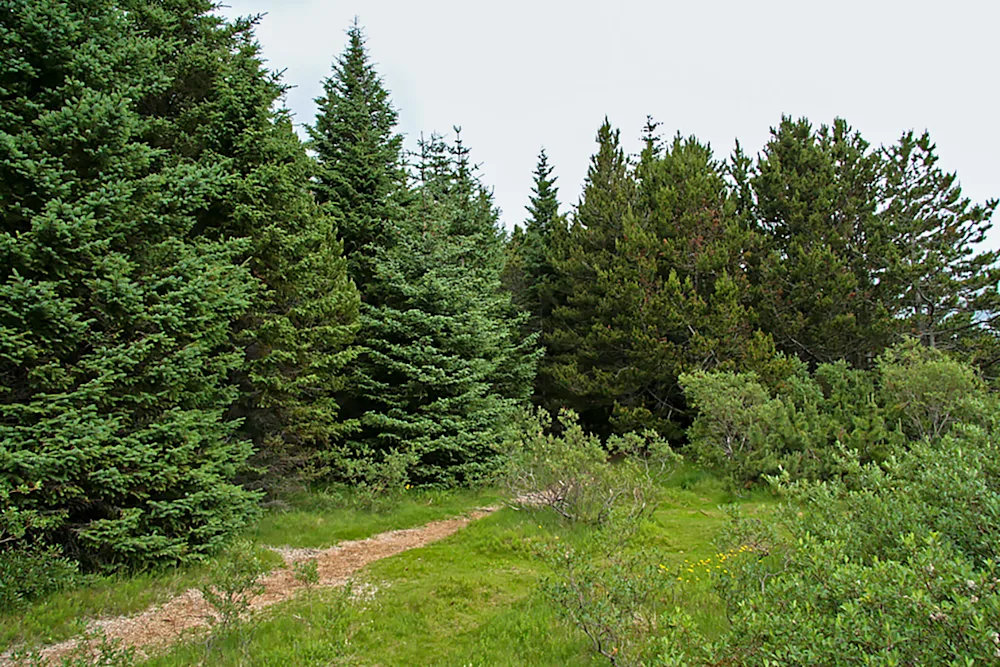
Þingvellir's landscape is characterised by low-growing birch woodlands. A total of 172 vascular plant species have been documented within the area. The Almannagjá Pine Grove represents Iceland's first successful forestry initiative (1899). The grove's centennial in 1999 marked the beginning of organised forestry in Iceland, culminating in an agreement between the Þingvellir Committee and the former Forest Service regarding the ongoing management and preservation of the national park's woodlands.
Between 1899 and 1906, Icelandic horticulturist Einar Helgason and Danish forester Christian Flensborg of the Jutland Heath Society established the grove. The primary species planted was dwarf mountain pine (Pinus mugo subsp. mugo), supplemented by native downy birch (Betula pubescens), rowan (Sorbus aucuparia), alder (Alnus ssp.), white spruce (Picea glauca), Norway spruce (Picea abies), Scots pine (Pinus sylvestris), European aspen (Populus tremula), Siberian fir (Abies sibirica), Siberian spruce (Pinus sibirica), and various willow species (Salix ssp.). While not documented, a review of the planting reveals the presence of upright mountain pines (Pinus mugo subsp. uncinata) interspersed among the dwarf mountain pines. Flensborg's Islands Skovsag reports detail the substantial quantity of plants, all sourced from Denmark, explaining the high density of over 10,000 plants within the single-hectare site.
According to forester Hákon Bjarnason's recollection, a knee-high dwarf mountain pine stand with 10-year-old shoots existed at the site in 1917. By 1930, these trees had grown to 3-4 meters in height but were exhibiting signs of decline due to snow damage. Subsequently, due to the unsatisfactory condition and aesthetic appeal of the grove, extensive thinning was undertaken, primarily removing dwarf mountain pine. This facilitated the growth of other species, mainly Scots pine, Siberian pine, white spruce, Siberian larch, and rowan. Furthermore, the thinning created clearings where Sitka spruce was planted in the summers of 1953 and 1954.
The Þingvellir Pine Grove derives its name from the Siberian dwarf pines that predominated there during the first half of the 20th century. While the original specimens are now scarce, natural reseeding has resulted in a scattering of young dwarf pines throughout the grove. The majority of the century-old trees are mountain pine, complemented by notable Siberian pines and rare species including Siberian larch, Swedish whitebeam (Scandosorbus intermedia), and European aspen. However, the Sitka spruce, though younger, exhibits the greatest size and vigor. This biodiversity has established the Pine Grove as a diverse mixed forest, demonstrating the dynamic and evolving nature of forest ecosystems.
Other points of interest
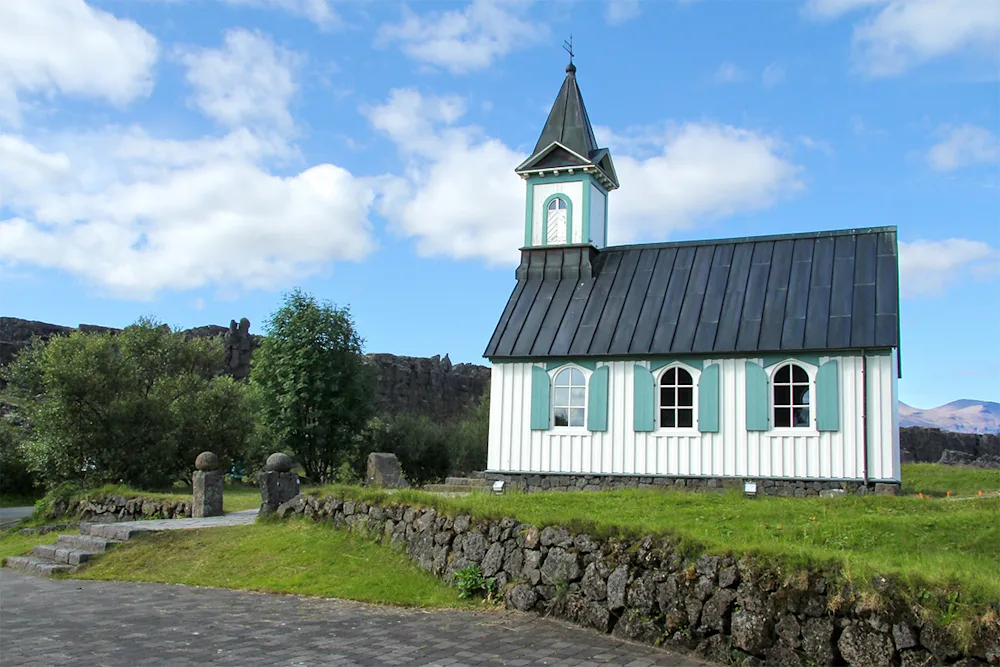
The Þingvellir region boasts numerous significant natural landmarks. Þingvellir achieved UNESCO World Heritage status in 2004, joining approximately 800 (at that time) cultural and natural sites recognised for their global importance. Geological features such as the visible effects of the Mid-Atlantic Ridge, formed by tectonic plate movement, are prominent. The area also exhibits notable biodiversity, including the diverse flora and fauna of Lake Þingvellir and a rich avian population.
Maps
Further information about Þingvellir National Park can be found on the website thingvellir.is and maps can be found on the website's web coverage server.
See also: Grundarreitur