11th May 2026
11th May 2026
Respiratory infections – Weeks 17 and 18 2026
Cases of influenza continue to be diagnosed, but diagnoses have been decreasing.

- Automatic translation
The status in Iceland
An average of 4–5 cases of influenza were diagnosed over the past three weeks, of which 4 cases were type B. It can therefore be considered that the annual epidemic has ended this winter.
In week 17, the number of diagnosed cases of respiratory syncytial virus infection (RSV) was nine, and in week 18, the number of diagnosed cases was three. RSV vaccinations have now been discontinued for this season.
The Chief Epidemiologist’s dashboard on respiratory infections has been updated with data for weeks 17 and 18 (April 20–May 3, 2026). The number of diagnoses is based on laboratory results, with most samples coming from hospitals and fewer from primary healthcare clinics.
Influenza
Influenza arrived earlier than in recent winters. The peak was reached in the first week of December 2025. The number of influenza diagnoses has been decreasing over the past three weeks.
This winter, influenza type A has accounted for the vast majority of diagnosed cases, but of the five cases diagnosed over the past two weeks, four were type B. Type B often appears later than type A; however, the number of cases remains low. See Figure 1 and the dashboard.
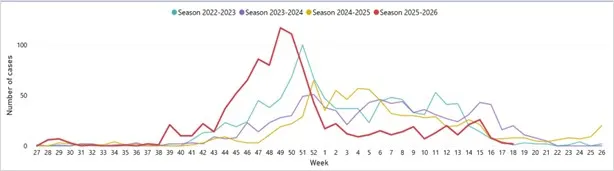
Figure 1: Number of influenza diagnoses in recent weeks (red line) compared with previous winters by week of the year (see the Chief Epidemiologist’s dashboard).
In week 17, three cases of influenza were diagnosed: two cases of type B and one case of type A, subtype A(pdm09). The individuals diagnosed belonged to the following age groups: one aged 15–64 years and two aged 5–14 years.
In week 18, two cases of influenza were diagnosed: one case of type B and one case of type A, subtype A(H3). The individuals diagnosed included one person aged 65 years or older and one child under 5 years of age.
In week 17, no individuals were hospitalized at Landspítali with influenza. In week 18, one individual aged 65 years or older was hospitalized at Landspítali with influenza. See Figure 2.
The two main strains of influenza that can infect humans are type A (which causes annual epidemics) and type B (which causes regular outbreaks, mainly in children). Only eight cases of type B have been diagnosed here so far during this influenza season. See Figure 2.
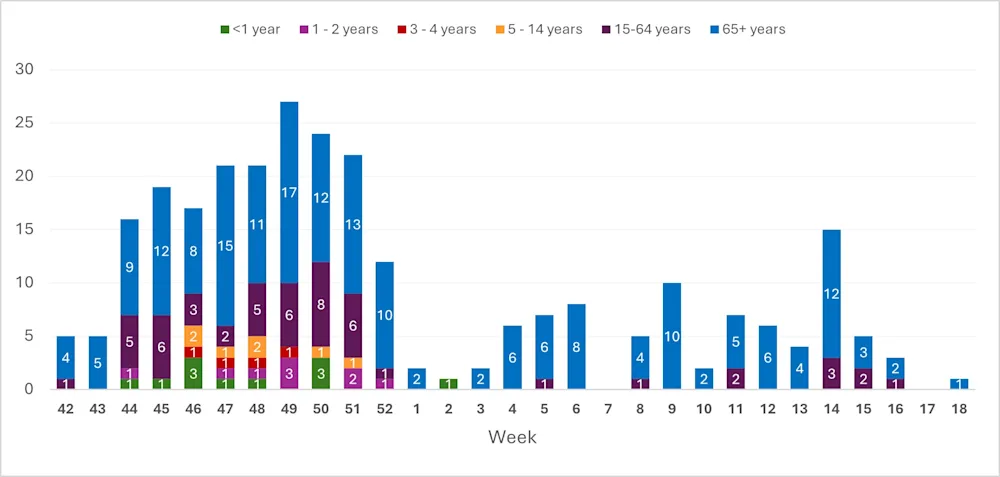
Figure 2: Number and age of individuals hospitalized with influenza at Landspítali from week 42 of 2025 to week 18 of 2026.
Antiviral medication against influenza (Tamiflu) may be used for individuals at increased risk of severe illness. The medication is prescribed by a physician and should be administered early in the course of illness, even before laboratory confirmation is available.
Further information about influenza can be found on the Directorate of Health’s website.
RS Virus Infections
An average of seven RSV cases have been diagnosed per week over the past four weeks. In week 17, nine cases of RSV were diagnosed: six individuals aged 65 years or older, one aged 15–64 years, one child aged 3–4 years, and one infant under 1 year of age.
In week 18, three cases of RSV were diagnosed: two individuals aged 65 years or older and one aged 15–64 years. See Figure 3.
Two individuals were hospitalized at Landspítali with RSV in week 17: one aged 65 years or older and one aged 15–64 years. Three individuals were hospitalized at Landspítali with RSV in week 18: two aged 65 years or older and one aged 15–64 years.
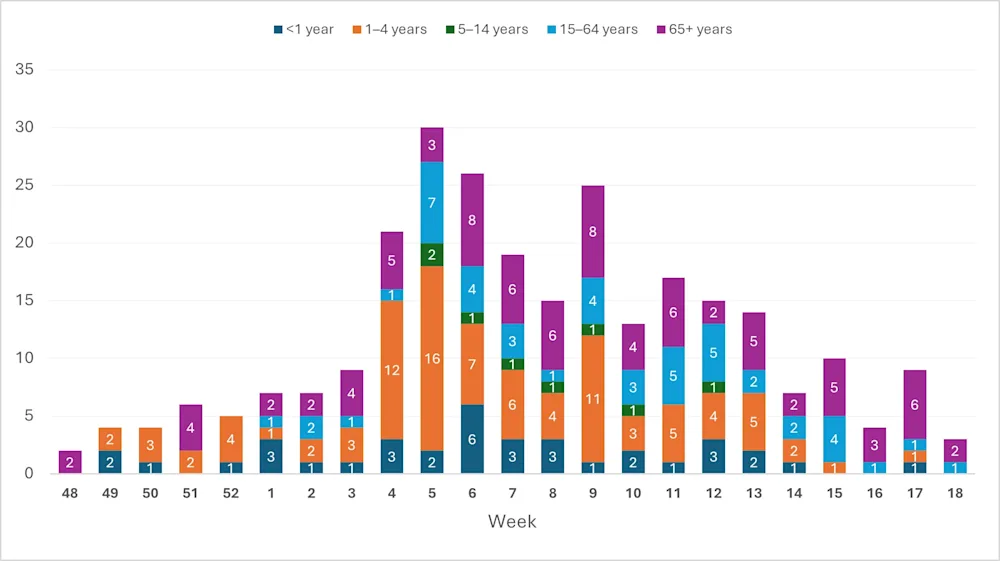
Figure 3: Number of RSV diagnoses and age distribution of individuals with RSV per week from week 48 of 2025 to week 18 of 2026 (see also the Chief Epidemiologist’s dashboard)
More information about RSV infections and RSV immunization can be found on the website of the Directorate of Health.
COVID-19
The number of COVID-19 cases has remained relatively stable this winter. In week 17, one individual aged 15–64 years was diagnosed. In week 18, three individuals were diagnosed: one aged 15–64 years and two aged 0–4 years. Over the past four weeks, an average of four COVID-19 cases have been diagnosed per week.
In weeks 17 and 18, no individuals were hospitalized at Landspítali with COVID-19.
Other Respiratory Infections
Of the respiratory viruses other than those mentioned above, rhinovirus is currently being detected most frequently at the Department of Clinical Microbiology and Virology at Landspítali. In week 17, 15 individuals were diagnosed with rhinovirus, and in week 18, 28 individuals were diagnosed.
Situation in Europe
In most EU/EEA countries, the number of people seeking primary healthcare for symptoms of respiratory illness has recently been at a minimum and continues to decline, indicating low circulation of respiratory infections.
Influenza activity is low in nearly all countries, with limited spread and few hospital admissions across all age groups.
RSV remains the dominant respiratory virus, although activity is now decreasing after reaching the seasonal peak. The highest activity is seen among children aged 0–4 years and adults aged 60 years and older, but trends indicate declining case numbers across all age groups.
The spread of COVID-19 (SARS-CoV-2) remains low across all age groups in all countries.
Further information is available on the website of the European Centre for Disease Prevention and Control (ECDC).
The Chief Epidemiologist reminds people to:
Stay at home while experiencing symptoms and until you are well on the way to recovery and fever-free for 24 hours.
Take special care around vulnerable individuals if you have symptoms of infection.
Minimize contact with others who show symptoms of infection.
Cover your mouth and nose when coughing or sneezing.
Wash your hands frequently and thoroughly.
Clean shared surfaces and ventilate shared spaces as much as possible.
Consider wearing a face mask depending on the situation.
If current trends continue unchanged, these will be the final respiratory disease updates of this influenza season.
The Chief Epidemiologist