24th March 2026
24th March 2026
World Tuberculosis Day 2026
March 24th is World Tuberculosis Day, commemorating the day in 1882 when Dr. Robert Koch announced that he had discovered the cause of tuberculosis, the bacterium Mycobacterium tuberculosis.
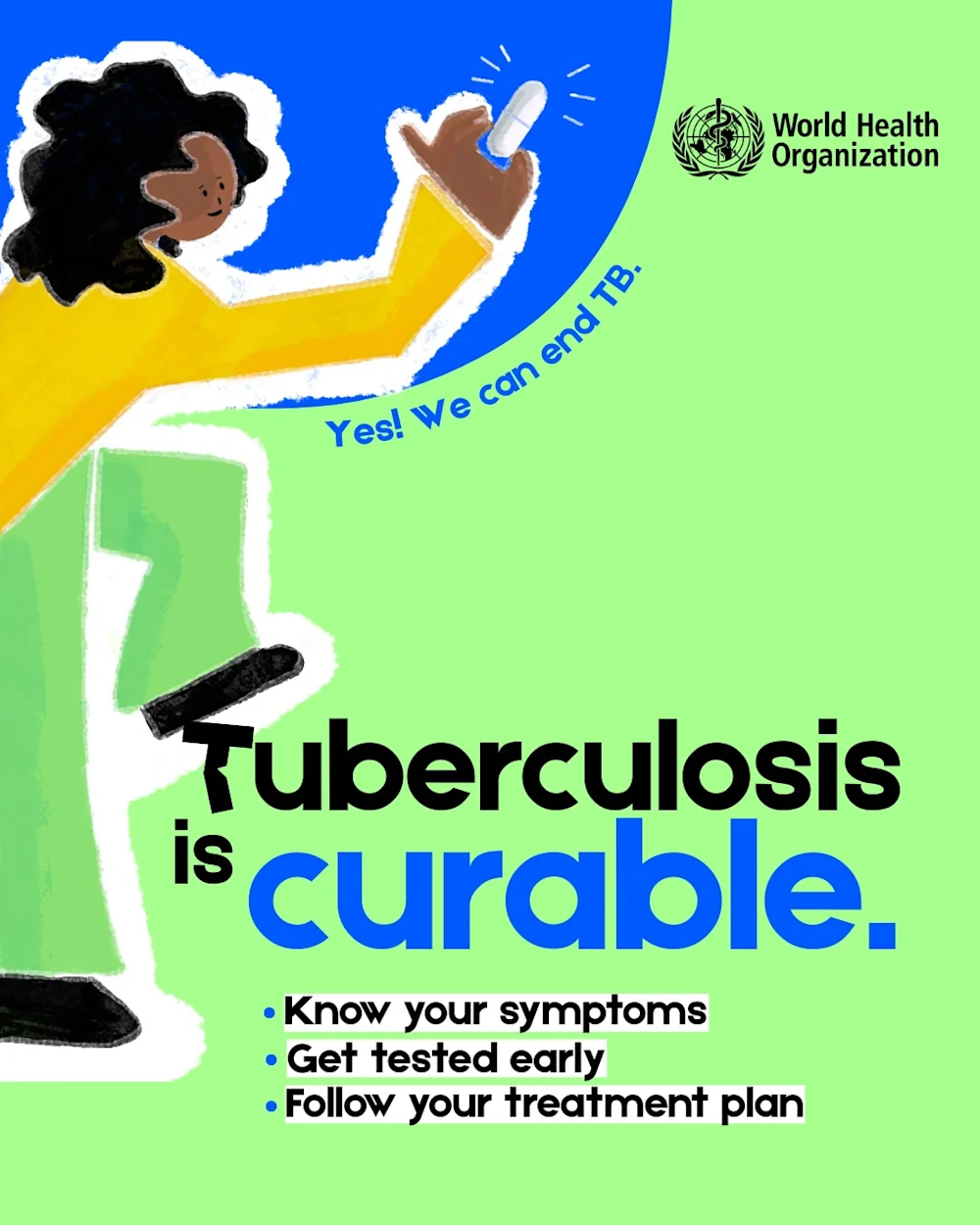
Figure: WHO
- Automatic translation
The World Health Organization (WHO) chooses the theme for the day. In 2026, the theme is: “Yes! We can end TB! – Led by countries, powered by countries,” highlighting the United Nations’ goal to end the public health threat of tuberculosis by 2030.
World Tuberculosis Day serves as a reminder that, despite the low incidence of TB in Iceland, new cases are still diagnosed annually, often linked to travel or originating from regions with high TB prevalence. Challenges include delayed diagnosis, complex contact tracing, and treatment of vulnerable populations. It is essential to maintain vigilance, strengthen surveillance, and ensure access to diagnosis and treatment to keep the disease under control.

Tuberculosis in Iceland and Its Treatment
Tuberculosis (TB) is relatively rare in Iceland, with 6–20 cases diagnosed annually in recent years, averaging fewer than 2 cases per month. Between 2016 and 2025, a total of 119 TB cases were reported in the country. In 2025, there were approximately 20 cases, a number similar to both 2022 and 2023. Most cases were confirmed by culture, providing susceptibility information to guide treatment.
Treatment of TB is complex. Due to the characteristics of the bacterium, special anti-TB drugs are required, with multi-drug therapy for at least six months for pulmonary TB. If resistance to common TB drugs is detected, treatment is usually extended, and longer therapy may also be needed for infections outside the lungs, e.g., in bones or the brain. Susceptibility information is especially important when dealing with infectious TB, as preventive treatment for those exposed to TB generally involves a single drug, but the choice must align with the bacterial susceptibility of the individual who likely transmitted the infection. It is important to distinguish between TB disease and TB infection, as those with infection are asymptomatic and not contagious.
Epidemiology
Most people diagnosed with TB in Iceland are residents. The majority are of foreign origin, and in recent years, cases have repeatedly been linked to travel to visit relatives in countries with high TB prevalence, which has increased in some areas following the recent global pandemic. Historically, domestic transmission primarily involved individuals infected in early childhood before 1960, with reactivation of old infections due to weakened immunity with age or immunosuppressive treatment. In the past 3–5 years, new infections acquired within Iceland have become more prominent.
Homeless populations are particularly vulnerable to TB worldwide, due to insecure access to healthcare and often poor nutritional status. Delayed diagnosis, reduced resistance to infection despite treatment, and increased risk of treatment failure—due to side effects or limited ability to adhere to treatment—make TB especially dangerous in socially vulnerable populations, particularly when mental health issues, such as substance use disorders, are present.
In 2025, at least one person was diagnosed with infectious TB, believed to have been transmitted in Iceland in connection with TB cases among homeless individuals in 2024. Follow-up of those linked to the 2024 TB cases is ongoing, and new infections have been identified in relation to the 2025 case, including among healthcare workers. The TB outbreak that began in 2024 remains a threat to vulnerable populations and those caring for acutely ill patients in Iceland.
Diagnosis and Contact Tracing
It is relatively common for people diagnosed with infectious TB in Iceland to have had symptoms for three months or longer, increasing the likelihood of transmission before diagnosis. At least three individuals diagnosed with TB over the past five years were likely infected in Iceland within a few years without known links to other cases. At least two others were linked to known cases but were not reached during tracing, did not participate, or declined preventive treatment. Effective follow-up, surveillance, and access to TB screening are critical, yet currently there are no standardized guidelines or protocols in medical records for marking TB infection or risk that all acute care institutions can access.
Follow-Up
Most people requiring TB medication—whether for infection or active disease—receive treatment from the infectious disease specialists at Landspítali hospital. Most are treated primarily through outpatient clinics. Some patients are too ill and require hospitalization or treatment with drugs for resistant TB that are difficult to administer outside a hospital. Part of the hospitalization may be due to a lack of suitable isolation facilities in the community. Landspítali hospital has arranged housing for isolation outside hospital wards for some individuals in recent years, but when safe housing is not available—even if isolation is not medically required—treatment adherence may be compromised, requiring innovative approaches to ensure continued access and proper management.
Directly observed therapy (DOT) is widely used internationally, though experience with it in Iceland is limited, even though it has recently been available. Reliable supervision and treatment within a patient’s community environment is highly beneficial, both for TB infection and TB disease, due to cost, adherence, and willingness to report any issues during treatment. Failure to ensure adherence and appropriate support carries a high risk for transmission and some risk for drug resistance.
Role of the Chief Epidemiologist
The Chief Epidemiologist is involved in developing guidelines for prevention, contact tracing, etc., and ensures access to essential TB medications through agreements guaranteeing minimum stock levels according to regulations.
Currently, the Chief Epidemiologist does not have full oversight of TB infections and contact tracing, e.g., the number of people exposed per case of infectious TB, how many are offered treatment, how many accept, etc. This limits insight into the burden of TB infection, drug selection, and how many do not receive preventive treatment, increasing the risk of progression to active TB among untreated contacts.
TB Notification Requirements
Regulation No. 221 on Communicable Disease Reporting (2012) specifies that “tuberculosis” refers to TB disease, not TB infection. This interpretation arises because only a minority of those infected develop disease; TB infections are asymptomatic and non-contagious, unlike other notifiable diseases such as syphilis, hepatitis B, or HIV.
Notifications involve sending laboratory results or clinical reports to the Chief Epidemiologist at the Directorate of Health. Reporting of TB infection has been difficult with automated electronic systems, as there are no well-defined diagnostic codes for TB infection in the international system used for surveillance. Blood tests for TB infection are increasingly used, and results could be reported electronically if notification were mandated. A new electronic clinical reporting system, supported by the European Union, would also facilitate reporting of TB infection.
Conclusion
Iceland is in a privileged position regarding TB, with low incidence and very low rates of drug resistance. It is crucial to continue diligent TB management to maintain this success. Healthcare workers need training, guidance, and support to assess when to exclude TB in patients of diverse origins and risk backgrounds. Education on infection control for healthcare personnel and TB patients, as well as safe treatment environments in the community, are essential to reduce transmission risk.
See also:
World TB Day 2026, World Health Organization (WHO)
Cost-effectiveness of active tuberculosis screening among high-risk populations in low TB incidence countries: a systematic review, 2008–2023. Eurosurveillance article for World TB Day 2023
TB diagnoses in Europe, available via the European Centre for Disease Prevention and Control (ECDC)
Use of TB tests (Icelandic)
Guidelines for TB screening and contact tracing (Icelandic)
TB: Guidelines for healthcare, social services, and cleaning personnel.
Chief Epidemiologist