-Automatic translation
What is mental well-being promotion?
Mental well-being promotion encompasses all actions we take to enhance mental health and well-being, whether undertaken by individuals, public bodies, the business community, non-governmental organizations, or other parties.
Mental health promotion can therefore include creating and building:
conditions that support mental balance and well-being in daily life
lifestyle habits that have a positive effect on mental health and well-being
knowledge and skills for nurturing our own mental health and that of others
Good mental health includes, among other things:
Feeling generally well and able to enjoy life, while recognising that it is normal to have difficult days.
Being able to manage daily activities and challenges, adapt to change, and show resilience when faced with adversity.
Being aware of and accepting one’s emotions, strengths, and limitations—and using that insight to foster growth and development.
Building and maintaining positive relationships with others and showing empathy and understanding.
Feeling at ease with ourselves, experiencing a sense of safety, balance, and purpose.
Being able to calm the body and nervous system during times of stress and to return to a state of balance and ease.
Good mental health does not mean never feeling unwell. Experiencing distress is part of being human. However, when our mental health is strong, we tend to have more good days than bad, cope with challenges constructively, and continue to grow and thrive—even when life is not always easy.
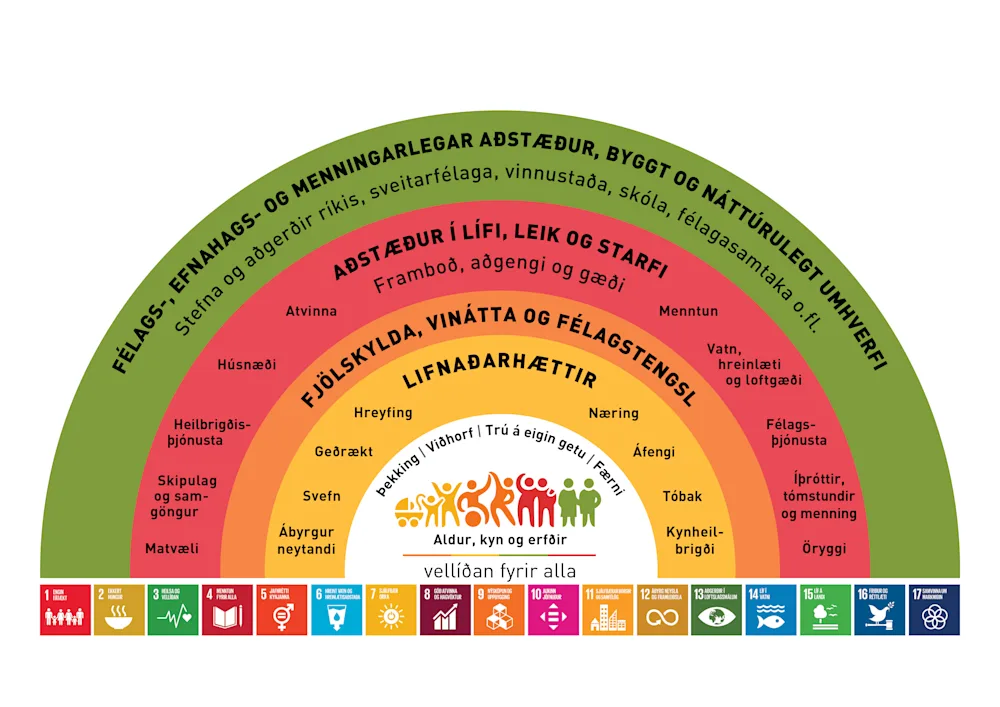
Lifestyle – such as sleep, physical activity, nutrition, and avoiding substance use.
Balance in the nervous system – how the body responds to stress affects wellbeing, sleep, concentration, and energy levels.
Social connections and interactions – relationships with friends, family, neighbours, and colleagues matter, as do everyday friendly interactions with strangers (e.g. in a shop, on public transport, or at the swimming pool).
Access to opportunities – for education, employment, housing, leisure, sport, and social participation.
Financial security and social justice – a sense of belonging, respect, and stability in one’s financial situation influences both safety and outlook for the future.
Local environment – safety, access to healthcare, infrastructure, transport, and access to clean, attractive surroundings and nature.
Policies and societal support – laws, policies, and actions by government, municipalities, workplaces, and schools significantly influence people’s wellbeing and their opportunities to maintain good mental health.
Just like overall health, mental health is shaped in our daily lives—where we live, learn, work, and play. One of the most important things we can do is to build habits and routines that support overall well-being.
How is your sleep routine?
How do you nourish your body?
How often do you move and connect with people you enjoy being with?
Do you notice what is going well in your life and what you can feel grateful for?
How do you cope with stress?
Do you use effective ways to calm your body and nervous system when pressure increases?
All of these factors influence how we feel from day to day.
Social relationships—both their quality and quantity—affect health, well-being, and even life expectancy. Feeling connected to others and to our surroundings is essential to quality of life. Loneliness is the experience of lacking meaningful social connections. Humans are inherently social, and most of us have a strong need for connection. Loneliness is not only painful—it can also harm health and well-being. It is therefore important to strengthen community connections, reduce social isolation, and create opportunities for people to come together.
For example, you can make a list of people in your social network and reach out to one person each week to suggest spending time together, such as inviting them for a meal or coffee, going for a walk, swimming, or going to the cinema. What matters most is spending time together.
More information
Loneliness and ways to strengthen social connections
Social isolation: What can I do? Video (Icelandic)
Physical activity is a powerful way to support both mental and physical health.
Research shows that it:
improves mental wellbeing
improves sleep
enhances cognitive function
increases fitness and strength
helps regulate blood sugar
supports bone health
reduces the risk of cardiovascular disease
lowers the risk of many types of cancer
reduces the risk of premature death
Good sleep is essential for managing daily life and supports mental wellbeing, stress management, resilience, the immune system, concentration, and learning. It is also crucial for children’s growth and development.
You can support good sleep by spending time outdoors in daylight (preferably early in the day), using daylight lamps during the darkest winter months, exercising regularly, eating well, reducing stress, and establishing a calming evening routine. For example, dim indoor lighting before bedtime, avoid screens, read, do crafts, take a warm bath or shower, and prepare your body for sleep.
More information
Sleep and rest. Recommendations from the Directorate of Health
Want to improve your sleep? Heilsuvera (Icelandic)
The state of the nervous system has a major impact on how we feel. The body constantly works with two systems: an activation system that prepares us for stress, and a calming system that helps us relax and recover.
It is natural to move between activation and relaxation. Stress is not necessarily harmful—as long as we also have time to rest and recover. Problems may arise when stress is intense and prolonged, and the body does not get enough recovery time.
A simple and effective way to calm the nervous system is to breathe. Slow, steady breathing—where the exhalation is longer than the inhalation—activates the body’s calming system and helps restore balance.
Simple ways to support nervous system balance
Breathe slowly and steadily for a few minutes
Make the exhale slightly longer than the inhale (e.g. inhale for 4, exhale for 6)
Take short breathing breaks regularly throughout the day
Practice relaxation, mindfulness, or short daily meditations
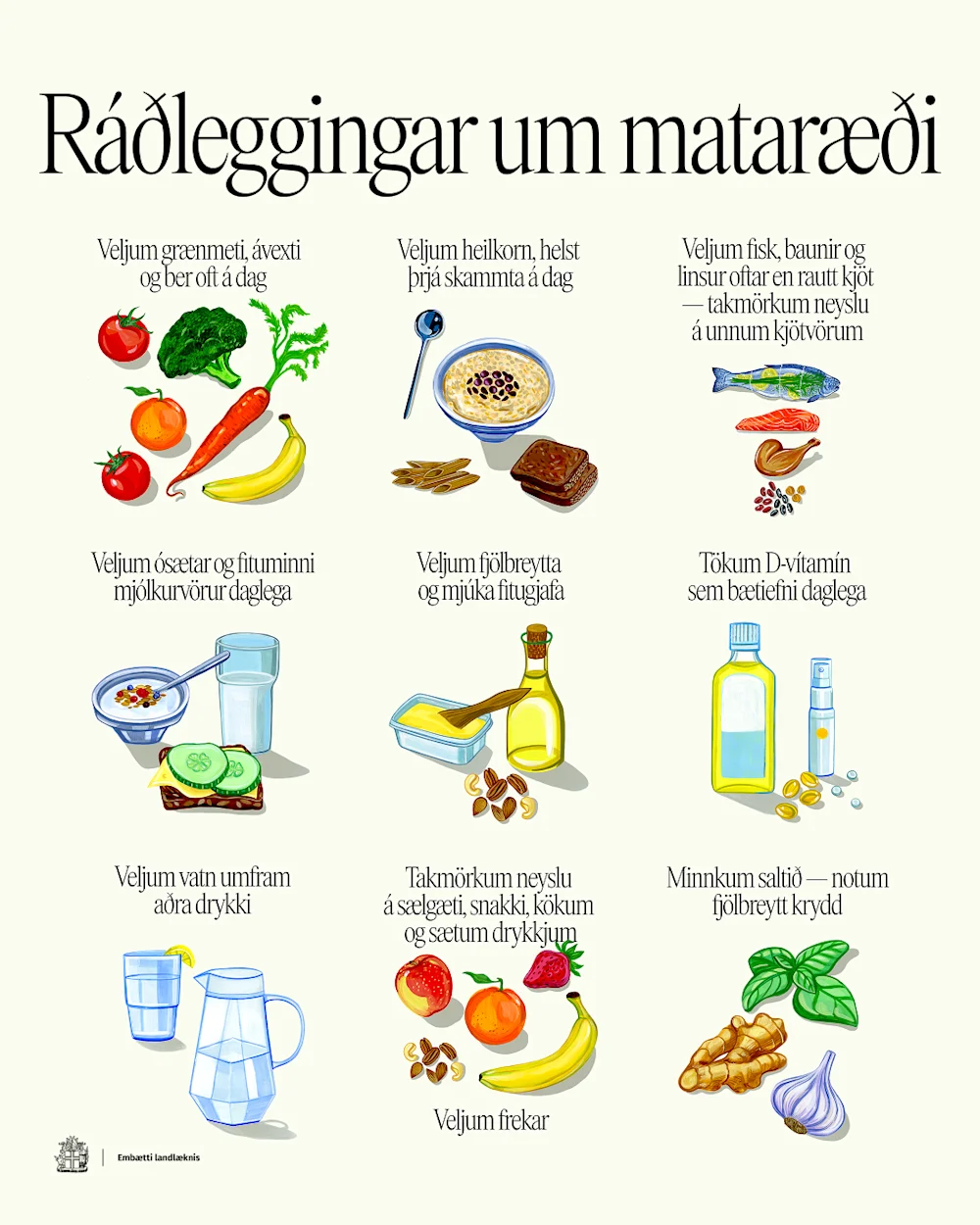
A healthy and varied diet is important for health and well-being. Dietary recommendations emphasise increasing the intake of vegetables, fruits, fish, and whole grains, and reducing the intake of sugar, saturated fat, salt, and highly processed foods.
The Five Ways to Well-being describe simple actions that individuals can adopt to support mental health and well-being in daily life. These are based on scientific evidence about lifestyle factors that most strongly influence mental well-being.
More information
Five Ways to Well-being
More information
The 10 Well-being messages. Heilsuvera (Icelandic)
The 10 Well-being messages. Directorate of Health (Icelandic)
More information
HappApp
Stronger for life
Create opportunities for positive social interaction, both formal and informal
Encourage regular physical activity, for example, through access to outdoor areas or through exercise and transport subsidies
Reduce excessive stress through realistic expectations, clarity, and support
Promote autonomy and appropriate challenges so individuals feel a sense of influence and growth
Adapt services and environments to individual needs, with flexibility and a human-centred approach
Collaborate with the Directorate of Health on Health Promoting Schools, Workplaces, or Communities, gaining guidance and tools to support the health and well-being of students, staff, service users, and the wider community

Service provider
Directorate of Health