Akureyri Hospital
This news article is more than a year old
World Conference on Palliative Care – Key Challenges and Positive Developments in Europe
23rd June 2025
“Listen, listen, listen! Let the patient tell their story.” With these words, the 19th World Congress on Palliative Care opened in Helsinki, Finland, in May 2025. These are the words of Dr. Robert Twycross, one of the world’s most respected experts in pain and palliative care, who passed away in October 2024.
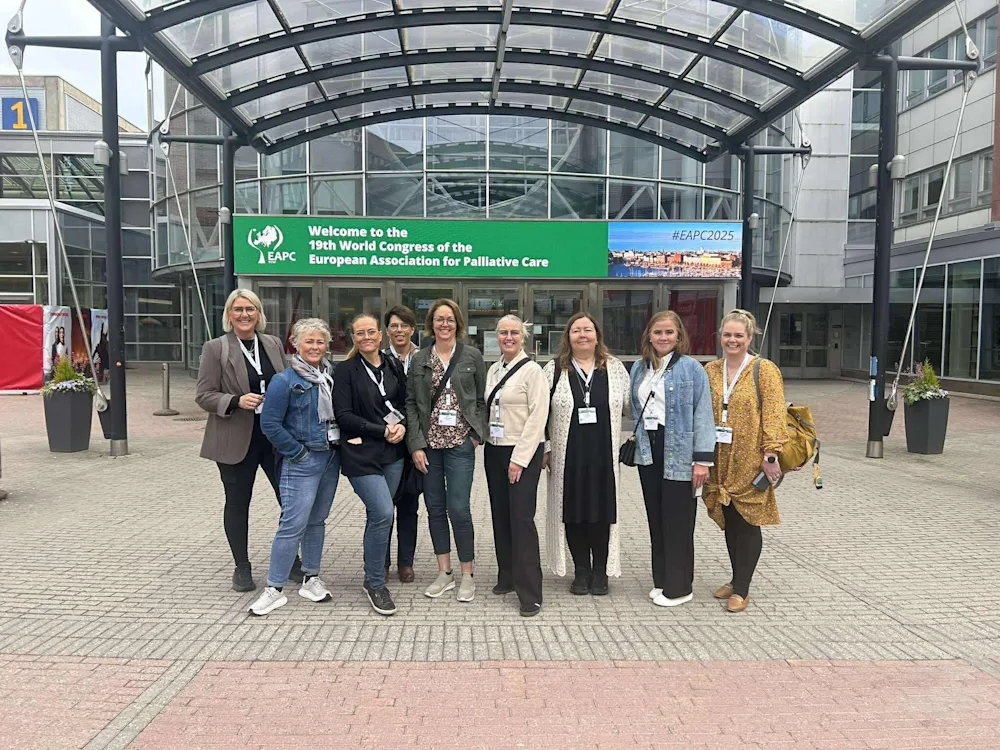
Nurses from the Home-Based Palliative Care Team in Akureyri Among the Participants
Representatives from Iceland attended the conference, including all nurses from the Home-Based Palliative Care Team in Akureyri. We had the opportunity to attend a variety of presentations and learn about the state and development of palliative care on the global stage.
Inequality in Access to Palliative Care
One of the conference’s key themes was the significant inequality in access to palliative care services between countries. Although treatments, knowledge, and pain relief medications are widely available, many individuals around the world—including in some European countries—still lack the palliative care they need. In certain areas, essential medications are simply unavailable or not authorized, leading to unnecessary suffering.
Building Services Under Challenging Conditions
Dr. Daniela Mosoiu from Romania described how she and her team built up palliative care services in her country from the ground up, facing many challenges along the way. She emphasized that services must be shaped by each country's cultural values, circumstances, and social needs, and highlighted the importance of using existing local resources in a cost-effective and adaptable manner.
Global Impact and New Role at the WHO
Nurse Dr. Julie Ling, who has played a key role in the development of palliative care in Europe, led the European Association for Palliative Care (EAPC) for nearly a decade. She has now taken on a new position as a technical advisor on palliative care at the World Health Organization (WHO) in Europe. She has had significant influence on global policy and the development of palliative care, and at the conference, she spoke on the importance of interdisciplinary collaboration, research, and education in the field.
Overview of Developments and Challenges – Atlas of Palliative Care in Europe 2025
The latest edition of the Atlas of Palliative Care in Europe 2025 reveals that over 7,000 specialized palliative care services are now operating across Europe, marking a 10% increase since 2019. The report highlights positive progress but also identifies the following key challenges:
More than half of European countries do not include palliative care in university-level education for healthcare professionals.
Access to essential pain medications remains highly uneven depending on country and region.
Only 15 countries in Europe—around a quarter—have updated their national palliative care strategies in the past five years.
Key Takeaways from the Conference
Several important themes emerged from the conference:
Palliative care must be an integral part of the healthcare system and accessible to all, regardless of residence or financial status.
University-level education is fundamental to improving professional expertise and ensuring the quality of care.
The new edition of the Atlas of Palliative Care in Europe shows encouraging development but calls for continued reform.
Major disparities in access to palliative care and pain medications persist between and within countries.
Interdisciplinary and international collaboration is key to success.
Conversations about advanced care planning need to be strengthened and initiated earlier in the disease trajectory.
The ethics section of the conference emphasized the importance of respecting cultural diversity in multicultural societies and combating racism and discrimination.
Strong Position of Palliative Care in Akureyri
Despite these global challenges, it is encouraging to report that palliative care in Akureyri is on a strong path. We are fortunate to have well-educated staff who together form a strong professional team with deep knowledge and broad experience. Professional work is carried out with integrity, compassion, and respect for individuals and their families during sensitive times.
Final Words
“At the end of life, it’s not just what we say, but how we connect that matters. Time, understanding, and clarity are not secondary — they are the bridge to palliative care.”
– Robert Staeck