
Akureyri Hospital
The Laboratory Department at SAk introduces new MALDI-TOF instrument
30th April 2026
The Laboratory Department at the Akureyri Hospital (SAk) has introduced a new and advanced analytical instrument, a MALDI-TOF mass spectrometer, the VITEK® MS Prime from bioMérieux.
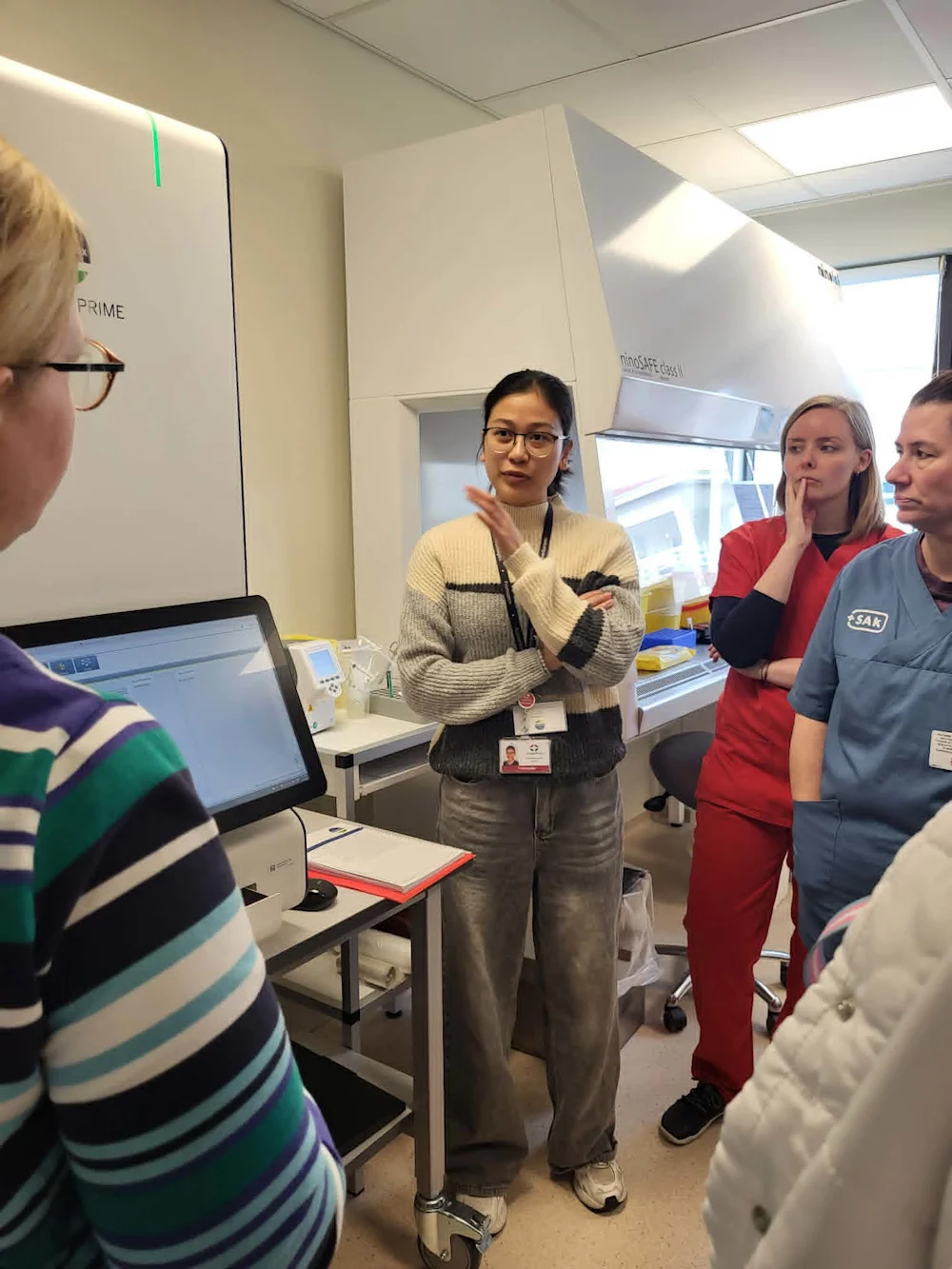
The instrument was brought into use this week and marks a major milestone in the department’s operations, both in terms of speed, accuracy, and the future of microbiological diagnostics at SAk.
The implementation of this instrument is highly significant for the department. Until now, the laboratory has largely relied on manual diagnostic tests for the identification of pathogens—methods that have proven highly limiting and are gradually disappearing from the market. The Head of the Department of Laboratory Medicine notes that this situation has had a considerable impact on workflow: “Manual diagnostic tests have been very limiting, and as a result we have often had to send samples to Landspítali – The National University Hospital of Iceland for final identification. With the introduction of MALDI-TOF technology, this changes dramatically, and we can now perform far more and more complex analyses here in Akureyri,” says Inga Stella Pétursdóttir, Head of the Department of Laboratory Medicine at SAk.
The department has long awaited a MALDI-TOF instrument to strengthen its laboratory and align with developments already adopted as standard practice in most microbiology laboratories both domestically and internationally. With the new instrument, the department’s independence increases, as does the level of service to clinical departments, while species identification is obtained much more rapidly.
The MALDI-TOF methodology (Matrix-Assisted Laser Desorption/Ionization – Time of Flight) is based on analyzing protein patterns from microorganisms. A small sample from a culture is placed on a target plate, where a laser is used to release and ionize proteins, and their time of flight is measured. The result is a kind of “protein fingerprint” that is compared against a database, enabling highly accurate identification of bacteria and fungi within a very short time. The method is both faster and more reliable than conventional techniques and provides stronger support for clinical decision-making.Earlier this year, the Department of Laboratory Medicine at SAk also introduced the Mini Amplex® Genie II diagnostic instrument.
This device is used for rapid detection of specific antimicrobial resistance mechanisms by measuring the activity of enzymes that break down beta-lactam antibiotics. Currently, the AMP-C kit is in use, which detects AmpC β-lactamase, an important resistance enzyme in many Gram-negative bacteria. Such analyses previously had to be sent to Landspítali, but with the introduction of the Genie II, facilities for these tests at SAk have improved significantly and results are now delivered much faster.
The potential use of additional diagnostic kits on the Genie II is also under evaluation.The implementation of these new diagnostic instruments will also facilitate the department’s ongoing accreditation process. The instruments support standardized, traceable, and well-documented workflows that meet accreditation requirements and further strengthen the quality and safety of laboratory results.
With these important investments, the Department of Laboratory Medicine at SAk is taking a major step toward a more modern and robust microbiology service, in line with international developments and recognized best practices