Akureyri Hospital
Regarding the discussion on rehabilitation services and the patient-flow challenges at SAk
3rd December 2025
Since the beginning of the pandemic in 2020, rehabilitation services at Kristnes have had to be reduced, mainly due to staff shortages. At the same time, the growing patient-flow problem in the emergency departments at SAk has increasingly led to patients being directed to the rehabilitation unit at Kristnes.
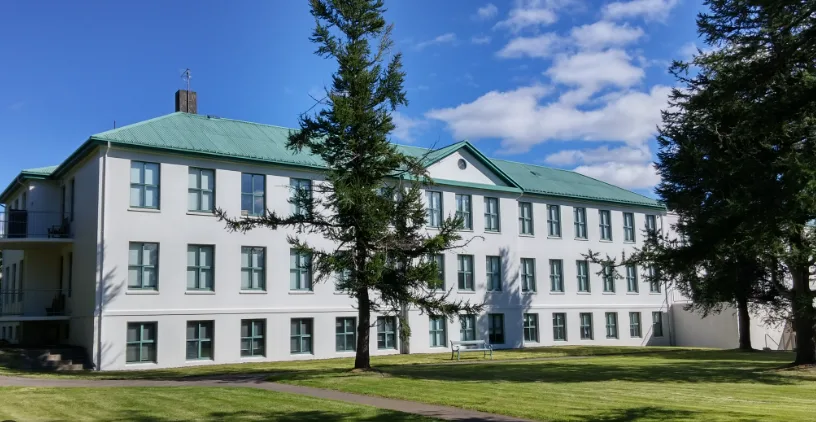
This autumn, it became clear that changes to the service would be necessary due to staffing challenges. The conclusion was to discontinue the 7-day rehabilitation program at Kristnes and instead strengthen 5-day and day-unit services for people of all ages.
Since the decision was made, work has been underway on a range of solutions, such as establishing a specialized rehabilitation team closer to the emergency departments. To that end, it was decided to increase the number of physiotherapists, occupational therapists, social workers, and speech therapists. A geriatric team has also been established with the aim of placing greater emphasis on comprehensive geriatric assessments for older individuals and easing the workload of internal medicine physicians. Collaboration has been sought with, among others, Landspítali Grensás, the Primary Health Care of North Iceland (HSN), the Health Institution of East Iceland (HSA), Heilsuvernd nursing homes, and patient hotels. However, the project is extensive and complex, and substantial work is required to achieve the goals—something that the staff of the internal medicine ward has pointed out in their open letter.
The hospital faces many challenges. The facilities at SAk on Eyrarlandsvegur are limited, and renovations of about 4,000 m² are underway due to moisture damage. A shortage of nursing-home beds in Akureyri also hinders necessary solutions, as their expansion has been delayed and, in some cases, beds have even been lost. A new nursing home and the new SAk building extension will not be completed until 2028, which will further increase patient-flow challenges.
Long-term solutions lie in increasing nursing-home and rehabilitation capacity, improving facilities, and expanding the number of specialized staff. Until an acceptable long-term solution is in place, temporary measures must be sought to bridge the gap. During this period, cooperation and collaboration are essential, and the obvious priority must be to ensure patient safety.