Akureyri Hospital
This news article is more than a year old
New Digital System Enhances Safety and Quality of Cancer Drug Therapy
23rd June 2025
Akureyri Hospital (SAk) has implemented a new digital medication prescribing system for cancer treatments, known as the Cato system, which significantly improves the safety and efficiency of treatment for patients receiving chemotherapy. The system was first adopted at Landspítali (the National University Hospital of Iceland) at the end of 2022 and has now been introduced at SAk.
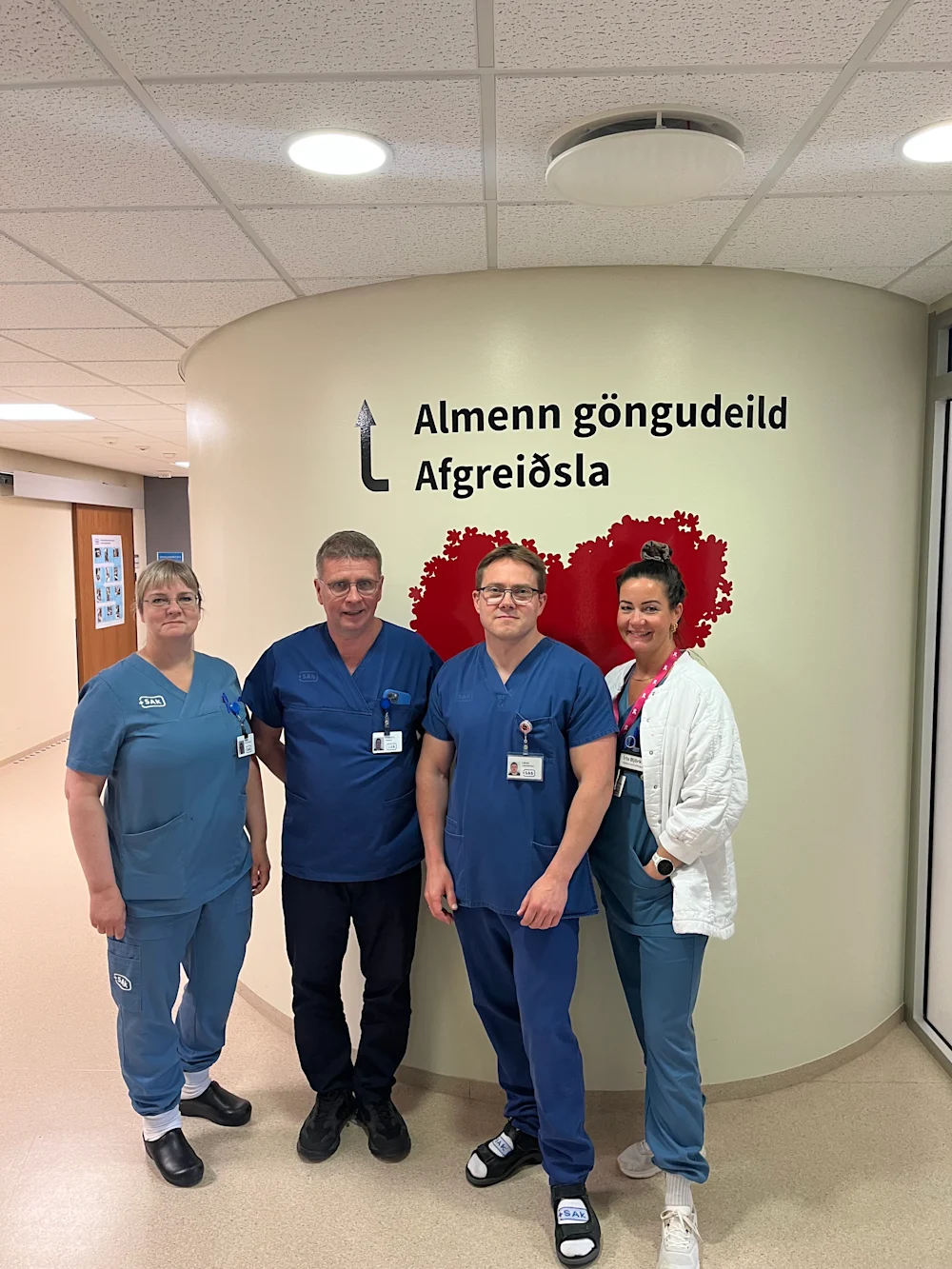
Akureyri Hospital (SAk) has implemented a new digital medication prescribing system for cancer treatments, known as the Cato system, which significantly improves the safety and efficiency of treatment for patients receiving chemotherapy. The system was first adopted at Landspítali (the National University Hospital of Iceland) at the end of 2022 and has now been introduced at SAk.
Cato is a specially designed closed medication system that covers the entire process—from the physician's treatment decision, to drug preparation, and administration to the patient. A "closed medication system" means that information is no longer transferred manually between different systems; instead, the entire chemotherapy process is handled within a single integrated system. It relies on barcodes and scanning to ensure that patients receive the correct medication, in the correct dose, at the correct time. This is especially important in cancer treatment, where medication administration can be complex, the drugs are often high-risk, and dosing must be precise. By implementing a secure digital system like Cato, the risk of errors is reduced, traceability is improved, and the workload on healthcare staff is eased.
A multidisciplinary team of doctors, nurses, pharmacists, and IT specialists has worked on the implementation at SAk for about a year and a half.
Lárus Freyr Þórhallsson, pharmacist and project manager for the implementation, says:
"The introduction of the Cato system is a major step forward in services for cancer patients at SAk, where safety, standardization, transparency, and professional collaboration are paramount — all guided by the best interests of the patient."