
Akureyri Hospital
“Human resources are an asset that must be nurtured.”
6th January 2026
Guðni Arnar Guðnason, a specialist in internal medicine and endocrinology, has been appointed on a temporary basis as Acting Head Physician of the Department of Internal Medicine at Akureyri Hospital during the absence of Guðjón Kristjánsson. According to Guðni, there are many opportunities for the further development of internal medicine services at Akureyri Hospital (SAk), but also challenges that primarily relate to staffing and ensuring the preservation of expertise for the future.
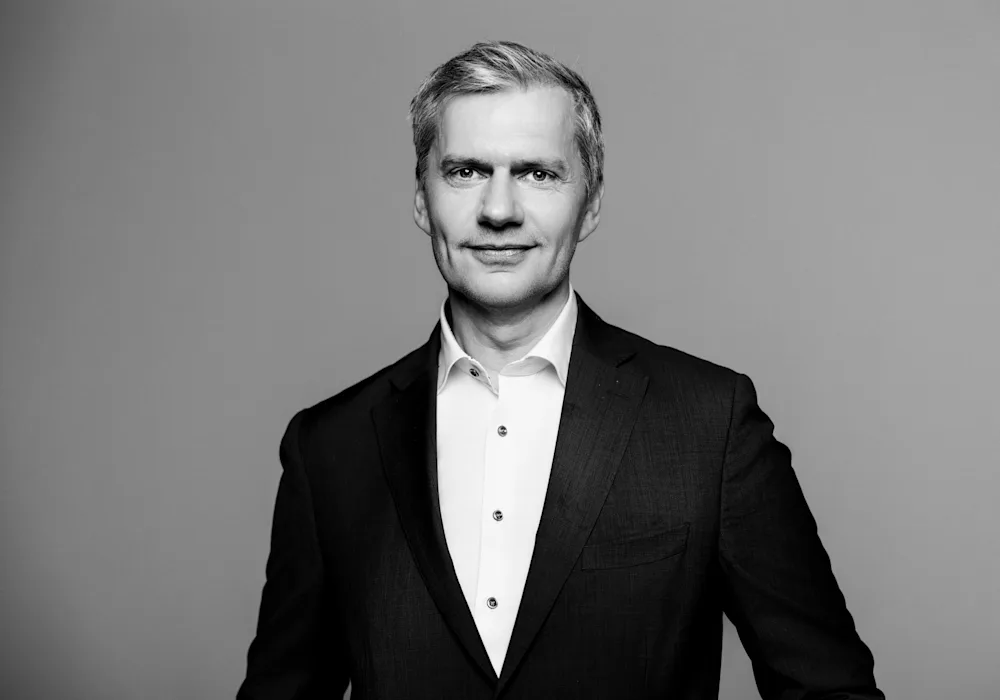
“There are numerous opportunities to build strong and outstanding services in general internal medicine and its main subspecialties, both in inpatient care as well as in day-care and outpatient services.”
Over the past year and the beginning of this one, new specialist services have been added—or are in the process of being added—in rheumatology, nephrology, endocrinology, and most recently pulmonology. Previously, there were already specialists in cardiology, infectious diseases, neurology, gastroenterology, oncology, and hematology. “There are opportunities to further strengthen these services, but at the same time it is a challenge to maintain them and ensure that this expertise continues to be available.”
Acute day unit and a stronger outpatient clinic
Guðni sees various opportunities to further develop the activities of the Department of Internal Medicine. Among other things, he mentions the possibility of establishing an acute day unit. “For example, an acute day unit could be established where patients with acute conditions could undergo assessment and treatment—patients who would otherwise often require hospital admission. This could ease the burden on the inpatient ward and its workload and potentially improve bed availability.”
He also sees great potential in strengthening the outpatient clinic. “An outpatient clinic that could, among other things, provide follow-up care for patients after discharge from the inpatient ward.”
The main challenges relate to staffing. “To ensure year-round outpatient services, appropriate staffing of both specialist physicians and residents is required, which unfortunately has not always been the case. It is, however, very positive that a physician has now returned to work at the endocrinology outpatient clinic after several years’ absence, working with a strong team of nurses and other healthcare professionals. In addition, pulmonary and nephrology teams are in operation, to name a few.”
Interesting opportunities for healthcare professionals in internal medicine
Guðni believes that the Department of Internal Medicine offers attractive opportunities for healthcare professionals. “Inpatients often have diverse and complex conditions that require broad expertise, and the department provides opportunities to maintain and further develop the skills and knowledge of healthcare staff. There are also extensive educational opportunities within the department, both for physicians at earlier and more advanced stages of their training.”
He also mentions that Akureyri Hospital offers opportunities to conduct research that requires hospital admission. “Admission for research purposes—for example, due to persistent hypoglycaemia requiring further investigation and monitoring by inpatient staff—can be difficult to arrange on the often overcrowded wards of Landspítali.”
He further points to opportunities for increased collaboration with both Landspítali and primary healthcare services. “There are opportunities to further strengthen collaboration with Landspítali, as well as to enhance cooperation with primary healthcare and provide strong educational and advisory services.”
“Good terms and working conditions must be ensured”
When asked about the challenges he sees ahead, Guðni mentions physician staffing and the location of Akureyri Hospital. “It is generally more difficult to ensure physician staffing in rural areas than in the capital region. On-call duties at rural hospitals are often—but not always—more frequent, more demanding, and with fewer colleagues available for consultation than, for example, at Landspítali. People also tend to choose workplaces where they can be close to family and friends and where they themselves grew up, which often puts rural areas at a disadvantage.”
Ensuring adequate staffing of physicians and other healthcare professionals at Akureyri Hospital therefore largely depends on providing good employment terms and working conditions. “There has been some uncertainty regarding salary matters, but work is underway within a task force appointed by the CEO to identify ways to create the conditions needed to strengthen and maintain good physician staffing. Human resources are an asset that must be nurtured. When fewer people are doing the work, it takes little for operations to start to erode, making it critically important to ensure adequate staffing. Good cooperation with government authorities and the municipality is also of great importance in this context. There are opportunities and conditions in place to treat employees well, in a fair manner, in order to retain them and attract them to work here.”
Interest in endocrinology and public health
Guðni says he originally chose to specialise in endocrinology partly because diagnoses can often be confirmed or ruled out through blood tests. “In many cases, it is at least possible to determine whether the problem is due to an excess or deficiency of a particular hormone. In that way, diagnosis can often be clearer and more straightforward than in some other specialties. However, I quickly realised that it is not that simple!”
What also attracted him to endocrinology is the diversity of conditions. “Endocrine glands are located throughout the body, which means the specialty requires close collaboration with other specialties such as neurosurgery, general surgery, cardiology, and ear, nose and throat medicine.”
He adds that he has a broad interest in internal medicine and endocrine disorders, but in recent years has particularly focused on common and often underdiagnosed public health issues such as type 2 diabetes, osteoporosis, and even testosterone deficiency. “These are common conditions where correct diagnosis and treatment can be crucial for large groups of people. This also relates to health economics, prevention, lifestyle, and physical activity, which are areas I am very interested in. I am committed to increasing knowledge and awareness—among both the public and healthcare professionals—because it is far more cost-effective for society to treat conditions early and correctly than to deal with expensive and burdensome consequences later when problems are diagnosed late or not at all.”
Why Akureyri?
“I was actually raised in Reykjavík and am three-quarters from the Westfjords and the Strandir region, and one-quarter from Haugesund in western Norway. So working in Akureyri was not an obvious choice. I have tried not to become stuck or risk stagnating in one workplace and have therefore moved around somewhat. In addition, I felt it was time for a new challenge and further professional development after just over eight years at Landspítali.”
“I have always felt comfortable in Akureyri, and my wife—who is from Dalvík—has often drawn me north. I therefore now have quite strong ties to North Iceland. Akureyri is a beautiful, family-friendly town with excellent outdoor recreation and employment opportunities, and it has all the prerequisites to become a strong small city with ideal conditions to attract specialised professionals who can further strengthen the community.”
Guðni currently lives in Reykjavík but travels north every week. “I therefore spend several hours each week on a plane or at the airport. Today, it is easier than before to work remotely from home, and for some it may also be feasible to work part-time here and fill the rest of their schedule elsewhere. That said, I believe it would be most beneficial for the hospital to attract a strong core group of internists and other specialised healthcare professionals who want to live here and put down roots. There are also clear benefits to coming here and leaving behind the traffic and hustle of Reykjavík.”
Background
Guðni graduated from the Faculty of Medicine at the University of Iceland in 2000 and completed postgraduate training in endocrinology at Sahlgrenska University Hospital in Gothenburg from 2005 to 2010. He obtained specialist certification in internal medicine in 2007 and in endocrinology in 2009.
He worked at Akranes Hospital from 2010 to 2017 and served as Head Physician of the Department of Internal Medicine at HVE from 2014 to 2017. Since 2017, he has worked at the endocrinology department of Landspítali and has also held a part-time position at Akureyri Hospital. He has previously run a private practice at Læknasetrið Medical Centre.
In addition to his clinical experience, Guðni holds a diploma in public administration from the University of Iceland and served on the Board of the Medical Council of Landspítali from 2018 to 2020. He has conducted research on the effects of head injuries on pituitary function and has a particular interest in type 2 diabetes, testosterone deficiency, and bone diseases.