
Akureyri Hospital
This news article is more than a year old
Great to Work in a Job That Makes Life and the World a Little Better
17th May 2025
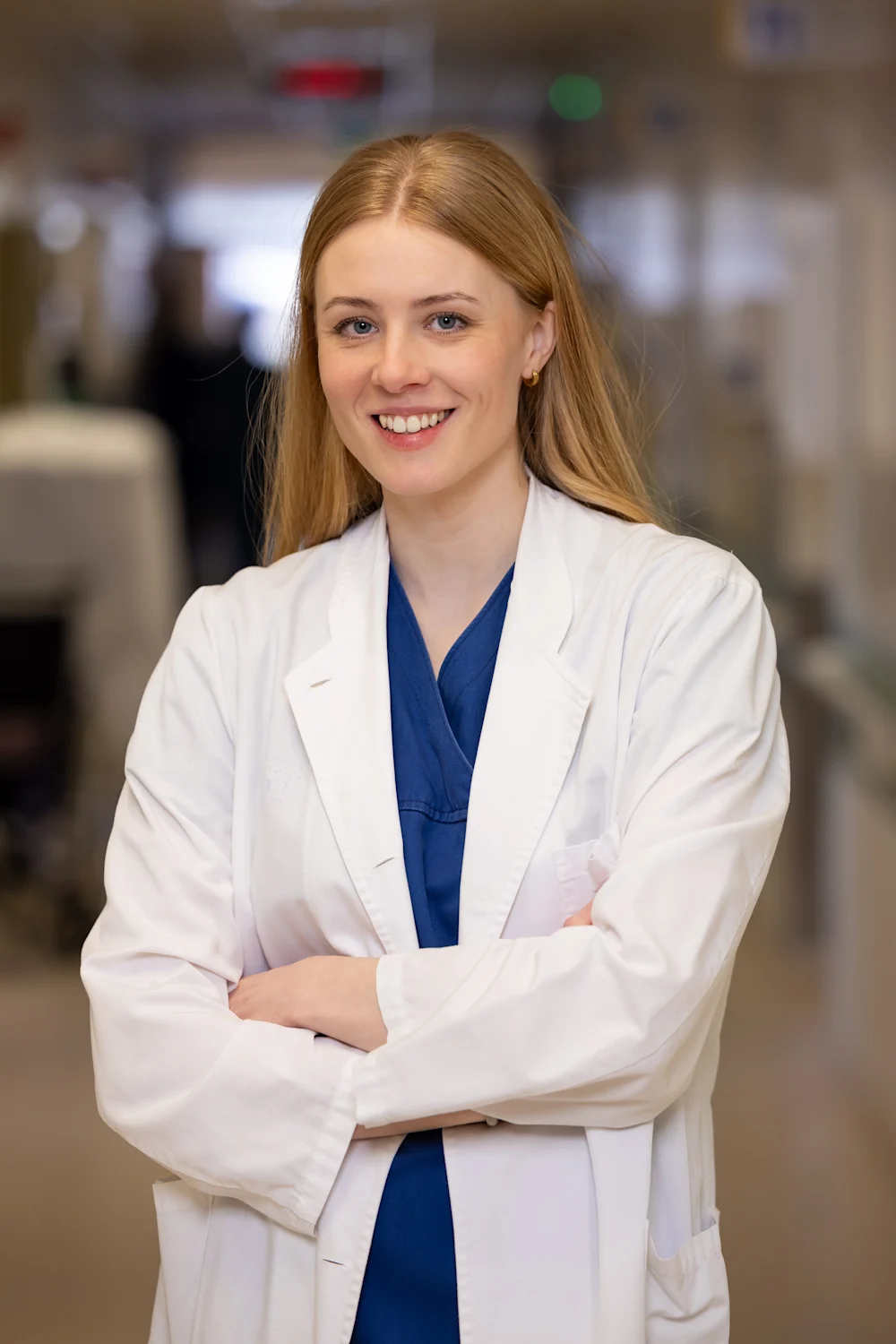
On the occasion of Doctors’ Day, celebrated today, May 17th, we spoke with Helga Björk Heiðarsdóttir about her path into medicine, her work today, and how she envisions the future of the healthcare system. Helga works as a physician in the internal medicine department at SAk and is one of the many doctors who dedicate themselves every day to providing high-quality, safe care for patients.
Slowly but Surely Decided to Become a Doctor
“There’s actually a rather funny story behind how I ended up studying medicine,” says Helga.
“I enjoyed physiology and anatomy in high school—also chemistry and mathematics. I worked at the hospital in Húsavík while studying, first doing cleaning and later patient care. I realized I was drawn to hospital life.”
After graduating, however, she wasn’t entirely sure which direction to take. She applied to study medicine in Oslo—without being certain whether medisin meant medicine or pharmacy.
“My aunt in Oslo thought medisin meant pharmacy, so I closed my application! But just before the deadline, she corrected herself—so at 18, I accepted the offer and went for it.”
Over time, Helga found medicine increasingly fascinating, and the health of patients and society more important. “Since then, I’ve met so many wonderful colleagues. I guess I slowly but surely decided to become a doctor.”
Patients Are More Complex—and More Numerous
Helga says that being a doctor today comes with many challenges. “Patients are becoming more complex and more numerous by the day. The number of doctors is growing slowly, so there’s often not enough time for each patient, nor the opportunity for a holistic and thorough approach—even when it’s clearly needed.”
She admits she’s a bit fearful of artificial intelligence: “Maybe that’s due to a lack of knowledge, and I try to believe that it will be helpful,” she adds with a smile, “and that it won’t replace us doctors.”
Wonderful to Work in a Job That Makes Life and the World a Little Better
When asked what she enjoys most about her work, Helga says she has always found the academic side of medicine exciting and that she enjoys working with people—both patients and great colleagues.
“It’s rewarding to see results and when things go well. The job is very varied, and no two days are the same. The pace is fast, and I feel like I’ve just arrived at work when it’s already time to clock out. But it’s just such a great feeling to work in a job that makes life and the world just a little bit better.”
Balance Between Work and Free Time
The medical profession and doctors’ job satisfaction seem to be shifting. Helga notes that work-related stress and imbalance between work and personal life are frequently discussed.
“It seems there’s room for improvement when it comes to psychological safety in the workplace. It’s time to acknowledge the need for flexibility and to allow space for different viewpoints.
There’s a serious shortage of doctors, and to retain people long-term, job satisfaction and well-being are essential—but that’s hard to achieve under a one-size-fits-all system. I believe it’s important for managers to engage with the daily work of doctors, with greater emphasis on collaboration and teamwork—because that’s the foundation for good and effective decision-making.”
Healing People Is at the Core of Our Profession
Many people probably chose the profession out of fascination with the human body and medicine.
“Some may have imagined the doctor in the white coat, possessing the magical skill to diagnose and heal various symptoms just by tapping reflex points or listening to the heart. A quick exam, a few pills, and all is well. That’s no longer enough.
Today, the art of healing is buried in obligations and bureaucracy. There are endless forms, applications, and administrative tasks. Everyday life is hectic—sometimes overwhelming.
Maybe the doctor shortage partly stems from this shift, from the art of medicine to nonstop typing at a keyboard instead of wielding the reflex hammer. Healing people is at the core of our job, and we want to spend most of our time with patients and their loved ones. Too much of our time goes into paperwork, and that’s inefficient on a societal level.”
We Must Increase Healthcare Funding
The conversation turns to the healthcare system overall and what Helga Björk would most like to change.
“I’d like to see improved efficiency in the system and services, better collaboration between institutions, and smoother transitions to ensure more consistent and safer follow-up care.
It’s also necessary to place greater emphasis on the well-being of healthcare workers—through better support and more staffing. All of this clearly requires funding, so increasing investment in healthcare is essential.
I believe it’s important to have doctors in leadership positions, but an understanding of the pressure involved could help with better prioritization. Prioritization that hopefully results in greater safety for everyone, more efficient service, stronger teamwork, improved well-being—and perhaps fewer cases of burnout and other stress-related effects.”
Midwife, Footballer, or PhD in Mathematics?
What would Helga Björk do if she weren’t a doctor?
“I honestly don’t know. I asked people around me and, without hesitation, their answers were exactly these: a midwife, a football player, or a PhD in mathematics.”
Grateful to Work in a Meaningful Profession
In closing, Helga says:
“I’m grateful to work in such a meaningful profession—Happy Doctors’ Day, dear colleagues!”