
Land and Forest Iceland
"Life in the Forest" – The 2026 Icelandic Forestry Conference
18th March - 19th March 2026
09:45 to 14:15
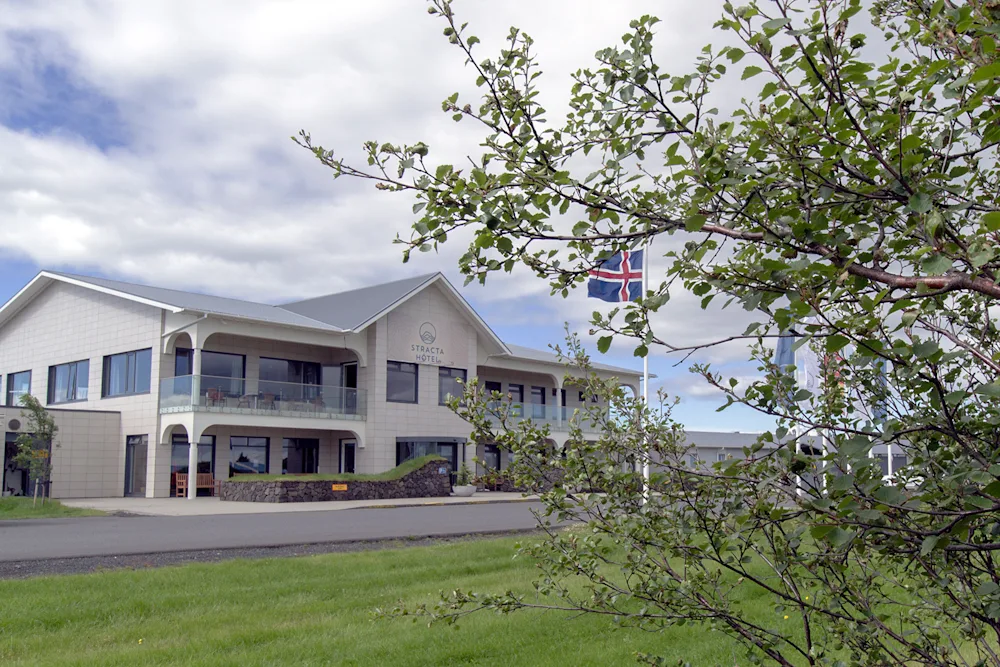
Stracta Hotel, Rangárflatir 4,
850 Hella
Streaming link
About the Conference
The Annual Icelandic Forest Science Conference, a collaborative effort between Land and Forest Iceland, the Agricultural University of Iceland, the Icelandic Forestry Association, the Icelandic Association of Foresters, and the Icelandic Farmers Association, is a long-standing forum for knowledge exchange and professional discussion within the Icelandic forest sector. Established at the turn of the millenium, the conference rotates annually between regions. In 2025 it was held at Hotel Hallormsstaður and in 2024 at the Hof Cultural House in Akureyri.
The conference's first day will feature presentations and discussions focused on the designated theme.
The second day offers a diverse range of presentations of any forest-related subject, including policy, research, education, innovation and technology.
Day 1
Program – Wednesday 18 March
Note: All the talks today will be presented in Icelandic except the one at 10:00
9:15 Registration
9:45 Opening remarks
Mayor of Rangárþing ytra, Jón G. Valgeirsson
Ministry Rpresentative, Salome Hallfreðsdóttir
10:00 Establishing new forests: practical and social lessons from Scotland – Olivia Murray (Tree Story)
10:30-10:50 Coffee break
10:50 Quality criteria guiding site selection for land reclamation and forestry – Brynjara Skúlason on behalf of the LOGS Working Group
11:10 ÍST 95 - Sustainable Forestry Standard – Úlfur Óskarsson and Gunnlaugur Guðjónsson (LOGS)
11:30 Species selection for land reclamation and forestry – Skúli Skúlason (HH)
Lunch
13:00 Skógvist II: Project background, goals and status – Brynja Hrafnkelsdóttir (LOGS)
13:30 Skógvist II: Forest's effects on soil composition – Kristín Sveiney Baldursdóttir (LOGS)
13:50 Skógvist II: Soil Biodiversity Under Forested Sites in Western Iceland (in English) – Safwan Daud (HÍ)
14:10 Skógvist II: Vegetation in forests and heathlands of Skorradalur – Járngerður Grétarsdóttir (NÍ)
14:30-14:50 Coffee break
14:50 Forest Politics – Auður Kjartansdóttir
15:10 Panel Discussions – Moderator: Edda S. Oddsdóttir
16:00 Depart of bus for excursion to Gunnarsholt
20:00 Conference Dinner – Stracta Hotel
– Song Book for download
How do we establish new forests that truly benefit communities?
Olivia Murray briefly guides us through the regulatory process for new forest applications in Scotland, including the stakeholder engagement required as part of the approval process. She shares stories and reflections from working with communities in three different locations, illustrating the opportunities and challenges that arise when proposing new forests. Crucially, she invites us to consider the stories we tell when presenting new woodland proposals to communities – and how those narratives can shape how projects are received.
Olivia Murray is a Forester at TreeStory, a Scottish forestry consultancy. Prior to working in forest management, she was a social scientist at Forest Research (UK) and a secondary school teacher, experiences that have shaped her strong interest in the social and community dimensions of forestry.
New quality criteria for land selection for afforestation
In Land og líf (Land and Life), the national land restoration plan and the national forestry strategy, one of the tasks is to develop quality criteria for the selection of land for afforestation. The plan states, among other things, that potential positive and negative changes associated with the selection of land for afforestation should be assessed. This includes consideration of the impacts of forestry on biodiversity, landscape, nature, geological heritage, cultural heritage, and the protection of valuable agricultural land according to land-use classifications in spatial planning, as well as other important factors.
When selecting land for afforestation, as also stated, it is important to identify the environmental and social values that may already exist within the proposed afforestation area and that could be affected by forestry activities. The plan further states that such an assessment should form part of the documentation accompanying applications for development permits for afforestation.
A working group at Land and Forest Iceland is overseeing the development of these criteria. The first version was published in June 2025, and work is currently underway on a second version to be released before spring 2026. Both versions have undergone review and received comments from numerous institutions and stakeholders, as well as internal review by staff at Land and Forest Iceland.
The application of the criteria is based on a checklist consisting of 32 items. These include, on the one hand, factors where afforestation is either prohibited or subject to significant restrictions, and on the other hand, factors used to assess the social and environmental impacts of afforestation. The working group hopes that the quality criteria will make applications for afforestation development permits clearer and simpler both for applicants and for municipalities responsible for processing such applications.
The criteria can also be used in spatial planning processes at various levels, for example in regional and municipal plans, to help identify suitable areas for afforestation in order to maximise positive outcomes while minimising potential negative impacts.
Authors:
Birkir Snær Fannarsson, Bryndís Marteinsdóttir, Brynjar Skúlason, Páll Sigurðsson
ÍST 95:2025 is a new Icelandic standard for sustainable forestry that provides a harmonised framework for the planning, design and management of forests in line with sustainability goals, legislation and international agreements. It is accompanied by supplementary material that offers guidance and advice based on research and professional expertise. The standard guides forestry practitioners in planning and implementing activities that promote quality and responsible use of forest resources. Authorities and regulatory bodies can also use the standard as a foundation for sustainability and transparent governance. The standard can be used by all stakeholders to strengthen quality management in forestry and in the preparation of forest management plans. In this way, working practices can be harmonised and support the development of a strong forest resource.
Species Selection in Land Reclamation and Forestry
The project Species Selection in Land Reclamation and Forestry is carried out by Land and Forest Iceland. Its main objective is to propose approaches and actions regarding species selection and species use in future forestry and land reclamation, with an emphasis on biodiversity in accordance with the policy Land and Life (Land og líf) and the government’s action plan.
This objective will be achieved by:
summarising the current state of knowledge;
analysing species use in land reclamation and forestry since the year 2000;
establishing a basis for risk assessment for selected species;
developing initial guidelines; and
publishing and presenting a final report.
The work follows the methodology of the ecosystem approach and is based on close consultation with stakeholders.
Skúli Skúlason, Bjarni Diðrik Sigurðsson, Hrefna Jóhannesdóttir, Jónína S. Þorláksdóttir, Sæunn J. Sigurjónsdóttir and Hafdís Hanna Ægisdóttir
The impacts of land-use change on biodiversity are among the major environmental issues of today. In the government’s action plan for land reclamation and forestry for 2022–2026, Land and Life (Land og líf), emphasis is placed on researching these impacts.
In Iceland, relatively few research projects have specifically focused on the effects of afforestation on biodiversity. One of the largest projects of this kind was SKÓGVIST (ICEWOODS), which took place from 2002 to 2005. The project was carried out in forests in eastern Iceland (Fljótsdalshérað) and western Iceland (Skorradalur), where forests had been established on previously treeless heathland.
To support the government’s policy objectives, the research project SKÓGVIST II was initiated, in which the same sampling plots in Skorradalur that were used in the original SKÓGVIST project were re-measured 20 years after the first surveys. The study includes nine plots consisting of pine, spruce, and birch forests of different ages, as well as heathland used as a reference. The project began in 2023 and field measurements were conducted in 2024. The study examines the species composition of birds, lichens, vascular plants, insects, earthworms, and trees in different forest stands and comparable heathland. Soil samples were also collected to analyse various soil properties. In addition, soil organisms were analysed using the latest techniques in life sciences (DNA sequencing).
The project is led by Land and Forest Iceland in collaboration with the Icelandic Institute of Natural History, the Agricultural University of Iceland, the University of Akureyri, the Northwest Iceland Nature Research Centre, and the University of Iceland.
This research will increase knowledge of Iceland’s ecosystems by examining how biodiversity and carbon stocks change when forests develop on previously treeless heathland. It will also investigate key organism groups in different forest types and how these groups change as forests age. The study will contribute to a deeper understanding of Icelandic forest ecosystems, facilitating informed decision-making regarding land-use change for afforestation and future land-use planning.
Brynja Hrafnkelsdóttir – Land and Forest Iceland
Forests have a significant influence on soil properties and their development over time, including through the accumulation of organic matter and changes in the chemical and physical characteristics of soils. Soil plays a key role in forest ecosystems and is also the largest carbon reservoir on Earth. It is therefore important to understand how afforestation and forest development affect soil and its carbon stocks.
Skógvist II is a research project that involves re-measuring various components of forest ecosystems that were previously studied in a comparable project about 20 years ago. One objective of the project is to assess the amount of carbon stored in soils of forests that have developed on formerly treeless heathland.
The study compared heathland with birch, spruce, and pine forests of different ages in Skorradalur in western Iceland. Preliminary results from soil sample analyses show a clear accumulation of carbon in the soil as forest stands age. The results also indicate that soil pH is lower in the surface layers than in deeper soil layers. Soil bulk density is highest in heathland and lowest in spruce forests, suggesting structural changes in the soil and increasing accumulation of organic matter as forest ecosystems develop. These findings highlight the important role of forests in soil development and long-term carbon sequestration in soils.
The forest soil microbiome is among the most complex microbiotic communities on the planet, encompassing thousands of taxa. However, as most soil microorganisms are difficult to observe directly, they are often neglected in biodiversity surveys. It was recently found that forest type influences microbial community composition and the inter- and intra-ecosystem variability of communities between and within forest ecosystems and that microbial communities respond to disturbance and forest management activities. In forests, soil microbes contribute to forest ecosystem health and connecting plant and ecosystem functions. However, changes in forest composition on these communities remains poorly understood.
Safwan Daud, Snæbjörn Pálsson, Helena Stefánsdóttir and Brynja Hrafnkelsdóttir
Vegetation was surveyed in eight forest stands as well as in heathland in Skorradalur in 2024, while similar measurements had previously been conducted in 2004. The forest stands consisted of two old naturally regenerated birch forests, three Scots pine stands, three Sitka spruce stands, and grazed heathland used for comparison. Vegetation measurements were carried out in ten subplots within five sample plots in each study stand.
The results show substantial differences in the cover of vascular plants and mosses among the different forest stands and the heathland. They also reveal changes in these variables between 2004 and 2024. The species composition of the vegetation in the study areas has changed during this period. The number of plant species varied considerably among sample plots and has changed since the 2004 survey; the highest number of species was found in heathland and the lowest in spruce forests.
The presentation will discuss the politics of forestry based on the author’s experience as Managing Director of the Reykjavík Forestry Association. Despite growing recognition of the importance of trees and forests for climate, public health, water protection, and biodiversity, they are often a weak component in spatial planning and land-use decision-making. The presentation is not an overview of the legal framework of forestry but is instead based on examples from the author’s professional experience.
Day 2
Program – Thursday 19 March
Note: All the talks today will be presented in Icelandic except the one at 13:00
Chair: Ragnhildur Freysteinsdóttir
9:15 Market Conditions and Financing of Nature-Based Projects – Gunnlaugur Guðjónsson
9:30 The Þverá Lawsuit – What Can We Learn from It? – Hilmar Gunnlaugsson and Valdimar Reynisson
9:45 The Highlands of Garðabær – Analysis of Wildfire Risk Areas – Ásdís Björk Friðgeirsdóttir
10:00 Timber Processing – Icelandic Structural Wood – Eiríkur Þorsteinsson
10:15–10:45 Coffee Break
10:45 An evaluation of tree colonization at the periphery of cultivated forests in Iceland. – Arnór Snorrason and Björn Traustason
11:00 A Driving Force in Society – Human Life and Vegetation – Kristinn H. Þorsteinsson
11:15 Poster Session chaired by Bryndís Marteinsdóttir
12:00–13:00 Lunch
Chair: Björn B. Jónsson
13:00 Aaron Shearer – Can't See the Forest for the Boundary: Peri-Urban Woodland Resource of Icelandic Towns
13:15 Ásrún Elmarsdóttir and Edda S. Oddsdóttir – Electrified Restoration
13:30 Jón Guðmundsson – Fertilization Effects of Legumes in Forestry
13:45 Eiður Eyþórsson – White Clover as a Nurse Crop for Newly Planted Tree Seedlings
14:00 Closing Remarks and End of Conference
The report Market Conditions and Financing of Nature-Based Projects examines the status and development of carbon markets and the financing of nature-based climate solutions in Iceland. The findings indicate that afforestation and other land-based projects can play a key role in carbon sequestration and deliver significant climate benefits in a cost-effective manner. Despite growing interest in carbon credits, the domestic market is still developing and demand from the largest emitters remains limited. This creates uncertainty regarding the financing and development of land-based projects. The report emphasises that a clear regulatory framework, reliable certification systems, and greater involvement from the state are key prerequisites for mobilising investment in afforestation and enabling forest farmers to become active participants in Iceland’s climate action.
The presentation reviews the background and legal proceedings related to a ruling by the National Planning Agency that the Yggdrasill Carbon project at Þverá in Reykjahverfi should undergo an environmental impact assessment. This requirement was made despite the project being almost completed, falling below the size thresholds for environmental impact assessment, and having obtained all necessary permits. The project is located within the Mývatn and Laxá catchment area, which the National Planning Agency attempted to interpret as a protected area. Yggdrasill Carbon appealed the ruling to the Environmental and Natural Resources Board of Appeal, which subsequently annulled the decision of the National Planning Agency.
The project presented here was carried out in spring 2024 as part of the forestry course Landscape Analysis IV at the Agricultural University of Iceland, in collaboration with the municipality of Garðabær.
Landscape analysis was used to develop a risk assessment for vegetation fires on vegetated land in the upland areas of Garðabær. Specific themes were examined in relation to the potential risk of fires in forest and vegetated landscapes. These included escape routes, access to water, and accessibility for emergency responders, taking into account road conditions and load-bearing capacity, vegetation density, and water protection areas. The aim was to propose a classification and identification of high-risk and risk areas with regard to vegetation fires.
The project was presented at Garðabær Town Hall in October 2024 and at a symposium on vegetation fires in the Capital Region organised by the Civil Protection Committee of the Capital Area in June 2025.
Icelandic timber is of satisfactory quality. Consequently, individuals are now able to construct residences using Icelandic materials.
This study assesses the natural spread of trees from cultivated forests in Iceland as part of research under the national Land and Life (Land og líf) program. Using the Icelandic National Forest Inventory sampling system, researchers examined forest edge plots and plots within cultivated forests between 2020 and 2024. Tree regeneration was recorded on 15% of edge plots and on 4% of plots within forests where natural regeneration covered at least half of the canopy. Native species—especially downy birch—dominated most regeneration sites. Exotic species occurred less frequently and rarely outside forestry areas. Estimated annual tree colonisation is about 218 ha from planted forests, with most regeneration occurring within or near managed forest areas.
The activities of the Icelandic Forestry Association and its member organisations have been diverse since its establishment in 1930. The Association and Icelandic foresters have always recognised and valued the idea that “culture grows in the grove of new forests.” Over time, the priorities within forestry have evolved. The presentation will focus on human life and diverse vegetation thriving in the shelter of forests.
Iceland’s urban areas serve 94% of the national population, yet the extent of forest resources accessible to these communities has not previously been quantified. This study integrates a national urban tree canopy (UTC) baseline for all 99 Icelandic urban areas with a peri-urban woodland (PUW) accessibility assessment and a temporal land cover transition analysis for Reykjavík.
UTC was assessed using i-Tree Canopy (v7.1) following Doick et al. (2017). PUW was quantified within 1 km buffers around urban boundaries using national forest inventory data, adapting the Woodland In and Around Towns framework (Ward Thompson et al., 2007). Temporal land cover dynamics were assessed through pairwise comparison of 1,000 points against 2004 and 2023 satellite imagery following Malkoç (2024).
National mean UTC was 9%, substantially below European averages. However, unique accessible PUW totalled 13,100 ha — comprising 45% native birch woodland (5,900 ha) and 55% planted forest (7,200 ha) — representing 6.2% of national forest cover and 15% of all planted forests in Iceland. A significant positive association was identified between UTC and PUW access, with urban areas possessing high PUW access exhibiting mean UTC of 15.4% compared to 4.2% for those with no accessible woodland.
A substantial proportion of PUW directly touches or overlaps urban boundaries, and when buffer distances are extended progressively, several regions approach or exceed the 30% canopy target recommended by Konijnendijk (2023), demonstrating the functional significance of these peri-urban resources for settlement populations.
Temporal analysis of Reykjavík’s combined urban and peri-urban area revealed that tree cover increased from 11.7% to 18.3% between 2004 and 2023, a 56% relative increase driven predominantly by conversion of bare soil (43% of gains) and grassland (41% of gains) to tree cover in peripheral afforestation zones. Net gains yielded a gain-to-loss ratio of 3.4:1.
However, transition analysis identified grass replacement as the dominant loss pathway, accounting for 48.1% of all tree cover losses, with combined impervious surface conversion comprising 44.4%.
This pattern indicates that canopy loss in Reykjavík is driven substantially by management decisions rather than development pressure, representing a distinct and policy-addressable loss mechanism. These findings demonstrate that Iceland possesses substantial peri-urban woodland resources that are largely absent from current urban green infrastructure planning. Formal incorporation of PUW into municipal planning frameworks, alongside the establishment of UTC targets and tree replacement mandates, could enable Icelandic communities to access comparable green infrastructure benefits to those available in other Nordic countries. The combination of national canopy assessment with temporal transition analysis provides a replicable methodological framework for ongoing monitoring of Iceland’s urban forest resources.
Landsvirkjun has long participated in collaborative efforts in afforestation and land restoration with the aim of restoring vegetation that has been disturbed, strengthening habitats, and preventing soil erosion. These projects are also linked to the company’s mitigation and climate actions.
In recent years, the focus has increasingly shifted towards targeted ecosystem restoration, emphasising the interactions between soil, vegetation, and biodiversity. Particular emphasis is placed on the use of native tree species.
At the same time, working procedures and documentation have been strengthened, with a focus on transparency, standardised practices, and the evaluation of outcomes. The projects are carried out in cooperation with landowners, local communities, non-governmental organisations, and professional institutions.
The presentation will discuss the implementation of these projects, their outcomes, and the importance of collaboration.
Several legume species will be discussed and their quantifiable impact on soil nutrient levels.
In afforestation in Iceland, newly planted seedlings are usually fertilised to ensure rapid initial growth and to reduce the risk of frost heave, which is a common problem in Icelandic soils. Afforestation sites are often nutrient-poor, with deficiencies of both nitrogen and phosphorus in the soil. This is particularly the case when birch forests are established on degraded land where soil has largely been lost due to erosion. Experience shows that a single fertiliser application at the time of planting is insufficient under such conditions; the seedlings require repeated fertilisation over several years to ensure growth and survival. This approach is costly and leaves a carbon footprint due to the production and distribution of fertilisers.
This study examined whether white clover (Trifolium repens) could improve the survival and growth of birch (Betula pubescens Ehrh.) when planted in nutrient-poor areas in afforestation and land restoration projects. Particular emphasis was placed on two sowing methods: sowing white clover in multipot trays together with birch, and sowing it around the seedlings at the time of planting. The experiment was conducted at four sites in Iceland with differing vegetation and soil conditions, where different fertiliser treatments (organic, inorganic, and an unfertilised control) were compared.
The results showed significant effects of both fertiliser treatment and site on the height and survival of the birch seedlings. However, the survival of white clover was generally low and appeared to depend more on local site conditions than on fertiliser type. Climatic challenges during the summer of 2023, as well as possible effects of cold periods and the lack of snow cover during the winter of 2023–2024, may have negatively affected clover germination and survival. Although sowing white clover with newly planted trees produced limited success in this experiment and mortality was high in many locations, the results are not sufficient to entirely rule out its potential. Further research is needed to determine whether, and under what conditions, such an approach could be effective in afforestation on nutrient-poor sites.
Registration
Registration is closed. Deadline was 13 March!
Stay
Stracta Hotel, the conference venue. Please book via:
Email: info@stractahotels.is.
Refer to code 70932468
Information on who will be paying (company/association/institution or direct payment)
Any questions?
Contact petur@logs.is
Sponsors of the Icelandic Forestry Conference 2026
Songbook of the Icelandic Forestry Conference
It is customary to sing some songs together during the festive dinner and even during the excursion or whenever the occasion arises. The songbook can be downloaded here: