
Suðurnes Hospital & Health Center
Influenza
8th April 2026
Information about symptoms and treatment of influenza
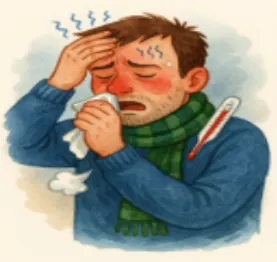
Influenza
Influenza is a viral infection of the upper respiratory tract caused by influenza viruses A and B.
It is usually seasonal, typically occurring from October to March, and can cause both mild and severe illness.
Symptoms
Influenza usually begins suddenly and is characterized by:
Fever (especially in children)
Headache, joint pain, and muscle aches
Cough and runny nose
Sore throat and sometimes cold-like symptoms (less common)
Difference Between Influenza and the Common Cold
Symptom | Influenza | Common Cold |
Onset | Sudden, within 24 hours | Gradual, over several days |
Fever | Common | Rare |
Aches | Severe | Mild |
Cough | Common | Common |
Sore throat | Sometimes | Common |
Fatigue | Very common | Mild |
Modes of Transmission
Transmission | How It Happens | How Common |
Droplet transmission | Coughing, sneezing, talking | Very common |
Contact transmission | Contaminated surfaces | Fairly common |
Airborne transmission | Tiny particles in the air | Rare but possible |
Incubation and Infectious Period of Influenza
After infection, symptoms usually appear within about 2 days, though the incubation period can range from 1 to 4 days.
On average, a person is contagious for about 6 days — 1–2 days before symptoms appear and 5–7 days after illness begins.
People with weakened immune systems may be contagious for a longer period.
Diagnosis
Diagnosis is primarily clinical and based on symptoms.
A specific test can be taken from the nasal or throat area and analyzed, either with a rapid test or in a laboratory.
Prevention
Handwashing: Soap and hand sanitizer kill the virus.
Limit contact with infected individuals.
Use a mask if needed to reduce the risk of transmission.
Influenza viruses can remain infectious on surfaces outside the body for extended periods — from days up to weeks.
Therefore, it is important to clean shared surfaces with soap or disinfectant.
Vaccination Provides the Best Protection
The following risk groups are prioritized for influenza vaccination:
Children aged 6 months to 5 years
Adults aged 60 years and older
Children and adults with chronic heart, lung, kidney, or liver diseases, diabetes, cancer, or other immune-suppressing conditions
Healthcare workers caring for individuals in the above risk groups
Pregnant women
Treatment
Drink plenty of fluids.
Rest and get enough sleep.
Take fever-reducing medication.
Stay home until fever-free for at least 24 hours without medication and feeling better.
Be patient — it takes the body 1–2 weeks to recover from influenza.
The antiviral medication Tamiflu is sometimes given to high-risk individuals who have severe or worsening symptoms.
Precautions After Infection
Cover your mouth and nose with your elbow or a tissue when coughing or sneezing.
Use disposable tissues and discard them immediately after use.
Wash hands regularly with soap and water or use sanitizer.
Wear a face mask.
Physical distancing and self-isolation can help reduce airborne transmission.
Improve ventilation — for example, by opening windows and letting in fresh air.
When to Seek Medical Attention
Contact your healthcare center (urgent care) if you experience:
Coughing up blood
Abdominal pain
Chest pain
Dizziness or confusion
Vomiting lasting more than two days
Go to the emergency department if you experience:
Shortness of breath
Signs of dehydration
If a Child Gets Influenza
Take your child to the emergency department immediately if:
Breathing is rapid or difficult
Lips turn blue
Signs of dehydration appear
The child is difficult to wake or unresponsive
The child initially improves but then worsens again with fever or cough