
The Directorate of Health
A new Nordic report highlights the importance of early support during pregnancy and early childhood
13th May 2026
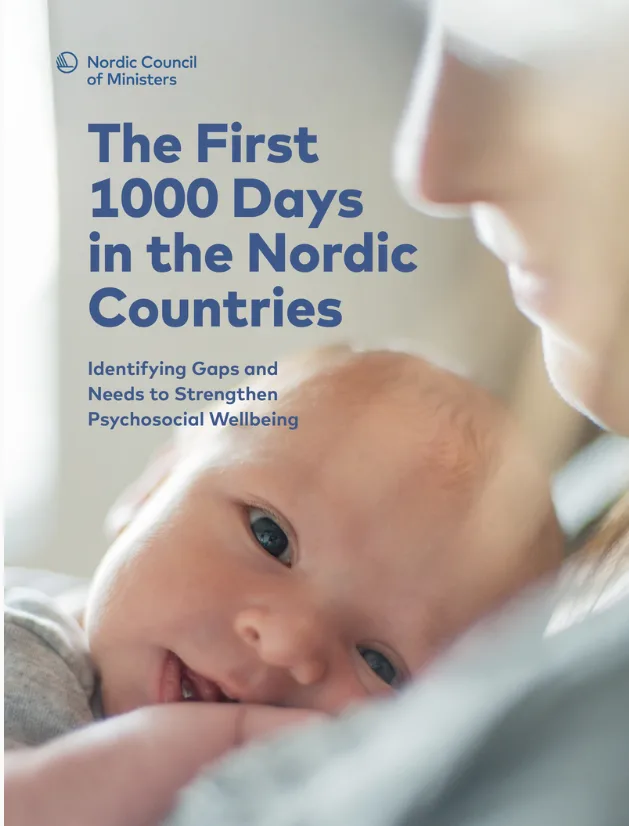
A new report launched within Nordic co-operation on the first 1000 days of life highlights the importance of identifying risk factors early and ensuring families receive appropriate support and services. Special emphasis is placed on families facing multiple challenges.
-Automatic translation
The report was presented at a webinar on May 11th. Its aim was to identify the psychosocial needs of young children and parents, the main risks and protective factors, and effective psychosocial interventions. It also examined how to support systematic and sustainable implementation in the Nordic countries.
Parents' mental health affects children's well-being and development
The results of the report show that diverse challenges related to mental health often occur during pregnancy and in the first year after birth, such as depression, anxiety, stress and trauma-related symptoms, which often occur alongside other challenges. Even mild symptoms during this sensitive period can have long-term effects on attachment and parent and child wellbeing if not addressed in time.
Calls for increased focus on the needs of both parents
Furthermore, too little attention has been paid to the mental health of fathers and the non-birthing parent, even though their well-being affects the well-being of the child and the family. It is also pointed out that interventions are often less tailored to the needs of certain groups, such as immigrants and refugees, queer parents and parents who live with complex and interacting risk factors.
Emphasis is placed on the fact that healthy development, mental health and infant safety are largely determined by the quality of attachment with caregivers. It is therefore important to systematically monitor the stress and mental health of both parents during pregnancy and the first years of their children's lives.
A need for a broader perspective and integrated services
The report also calls for a broadening of the perspective to include not only serious clinical symptoms but diverse factors such as stress, loneliness, screen use, poverty and marginalisation. Furthermore, it is emphasised that it is not acceptable to focus only on the mother or birth parent in antenatal care and infant care.
Finally, it is noted that there are no evidence-based interventions available for all the challenges families face in the first years of children's lives, and that a gap remains between research findings and their implementation in services. It is necessary to implement clearer service processes, develop hierarchical services and strengthen the training and professional development of healthcare professionals.
Following the presentation of the report, a panel discussion with experts from Finland, Norway, Iceland, and Sweden was held, during which the results were discussed, and their relevance to the situation in each country was examined.
About the report and Nordic cooperation
The report is available on the Nordic Council of Ministers' website, and a recording of the online event will be temporarily available.
The report was prepared on the initiative of the Nordic Network about the child´s first 1000 days, in collaboration with the Nordic Welfare Centre. The report was produced by the Itla Children's Foundation in Finland and was funded by the Nordic Council of Ministers. Nordic co-operation in this area formally began in 2019 with Iceland's presidency of the Nordic Council of Ministers and the First 1000 Days of the Child in the Nordic Region, led by the Directorate of Health. After the project ended in 2022, the co-operation has continued under the auspices of the Nordic Network on the child´s first 1000 days – a healthy start in life - with a mandate from the Nordic Council of Ministers.
The report: The First 1000 Days in the Nordic Countries
More information
Jenný Ingudóttir and Sigrún Daníelsdóttir
Project managers in the Public Health Division and representatives in the Nordic Network on the first 1000 days of the child