9th April 2026
9th April 2026
RSV vaccinations have been discontinued for this period
RSV vaccination for newborns was discontinued on April 8. Originally, it had been planned not to continue after April 1, but the RSV epidemic this winter started very late. Although it was never very widespread, it was not clearly declining by the end of March, so vaccinations continued past Easter.

- Automatic translation
Participation in RSV vaccination this winter was very good. However, participation in March was somewhat lower than in previous months, and few children born in April have been vaccinated so far.
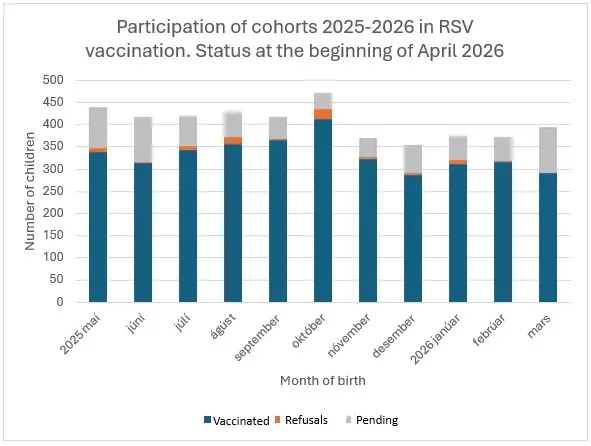
Fig. 1. Participation in the RSV vaccinations has been very good.
RSV distribution this winter
The spread of RSV was much lower than during the RSV seasons of the past two years (Figure 2). It is known that RSV epidemics vary greatly in intensity from year to year, and the lower spread in other age groups cannot be attributed to newborn vaccination. Proportionally fewer infections occurred this winter among children in their first year of life, especially the youngest infants. More detailed information about the RSV epidemic this season and previous seasons is available on the Directorate of Health's dashboard.
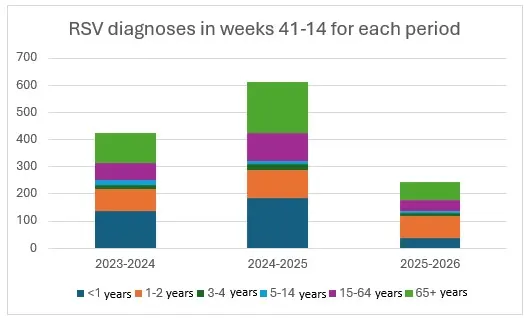
Fig. 2. RSV diagnoses at the Department of Microbiology and Virology, LSH, have been very few so far this winter compared to the same period in the past two winters and are now clearly declining.
Even though this winter’s RSV epidemic has been mild, there are signs that the age distribution of diagnoses differs from what we are used to, raising hopes that the impact of RSV vaccination on the health of young children in Iceland can be demonstrated.
Final analysis of the effects of RSV vaccinations cannot be carried out until the RSV season is fully over, and statistical comparisons with previous years will be more reliable after a second winter with vaccinations. However, some effects are already apparent. A simple model based on the proportion of 7–12-month-old children of the total number of children with RSV in the 2023–2024 and 2024–2025 winters can provide a rough estimate of how many children under 6 months of age would have been expected to be diagnosed with RSV during this mild epidemic without vaccination (Figure 3).
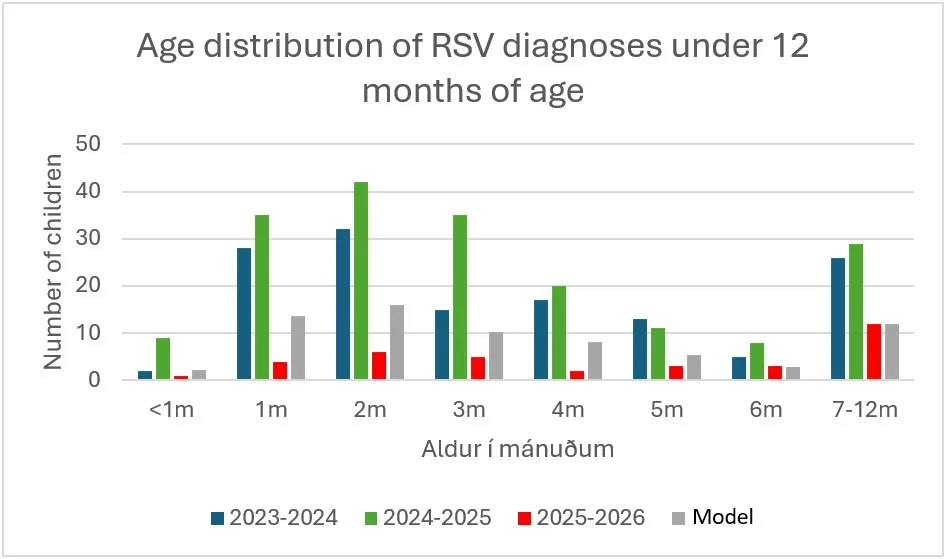
Fig. 3. Age distribution of RSV infections in children under 12 months this winter and the previous two winters, along with the estimated number expected during this winter’s epidemic without vaccination. The entire period is shown for the previous winters.
The calculated number (“Model”) is based on the assumption that vaccination of children under 6 months of age did not affect RSV in 7–12-month-old children, and their numbers are used to predict how the distribution would likely have looked if no vaccinations of younger children had been carried out this winter. The model suggests that without vaccination, approximately 70 cases would have been expected among children under 12 months, based on the age distribution of infections in the past two winters, compared to 36 cases actually diagnosed at the time of writing.
Thus, it appears that, regardless of vaccination uptake, the vaccination program reduced infections in children under 6 months of age by more than half. The model has certain limitations, such as using age at diagnosis rather than month of birth, which is more closely linked to whether a child was eligible for vaccination. Nevertheless, it still provides a strong indication that the vaccinations had a positive impact on this winter’s RSV epidemic.
The Chief Epidemiologist