29th April 2026
29th April 2026
New database on parliamentary elections
A new online database on parliamentary elections in the years 1874–1903 will be launched on the website of the National Archives of Iceland on the occasion of International Workers’ Day, 1 May.
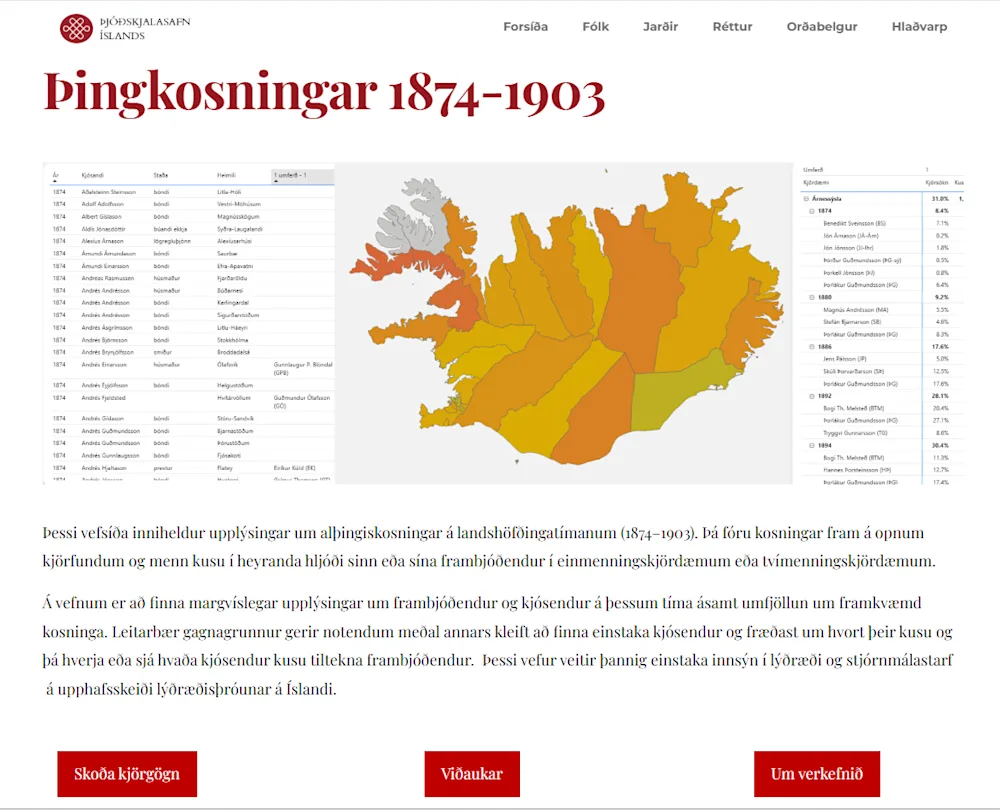
The database, which is accessible here, is a collaborative project between the National Archives of Iceland and the historian Hrafnkell Lárusson. It is based on a digital transcription of voter registers and voting records from 1874–1903, which until now have only been available in paper form.
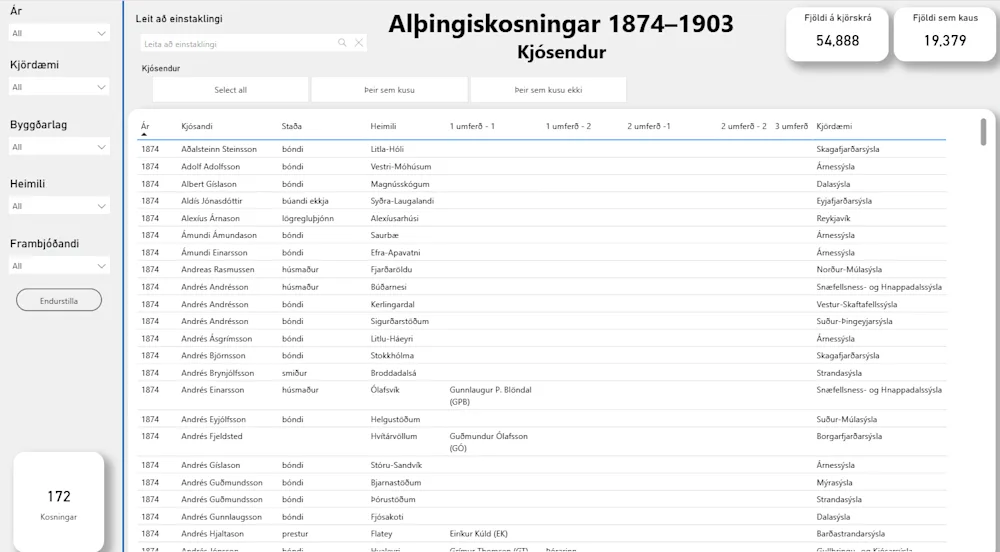
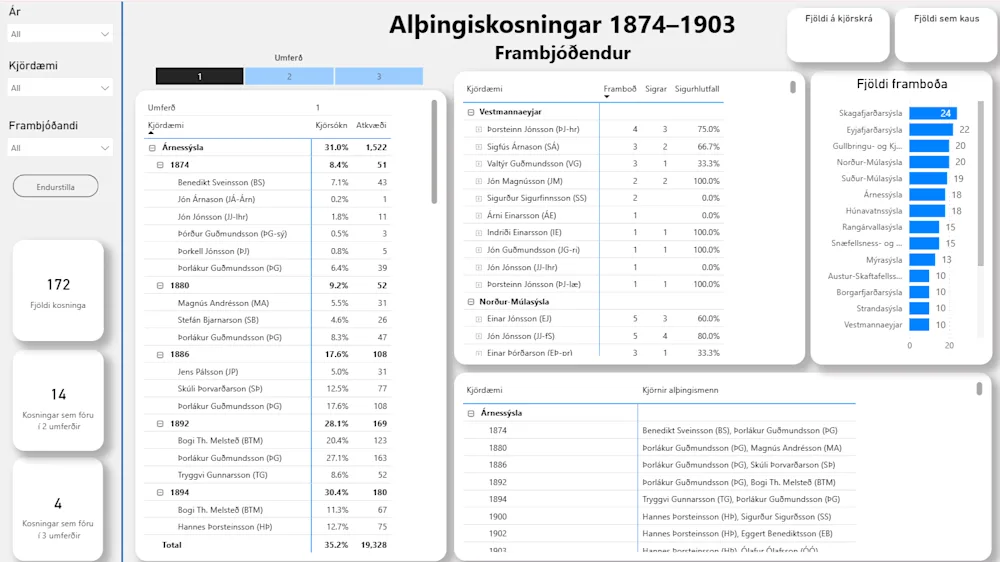
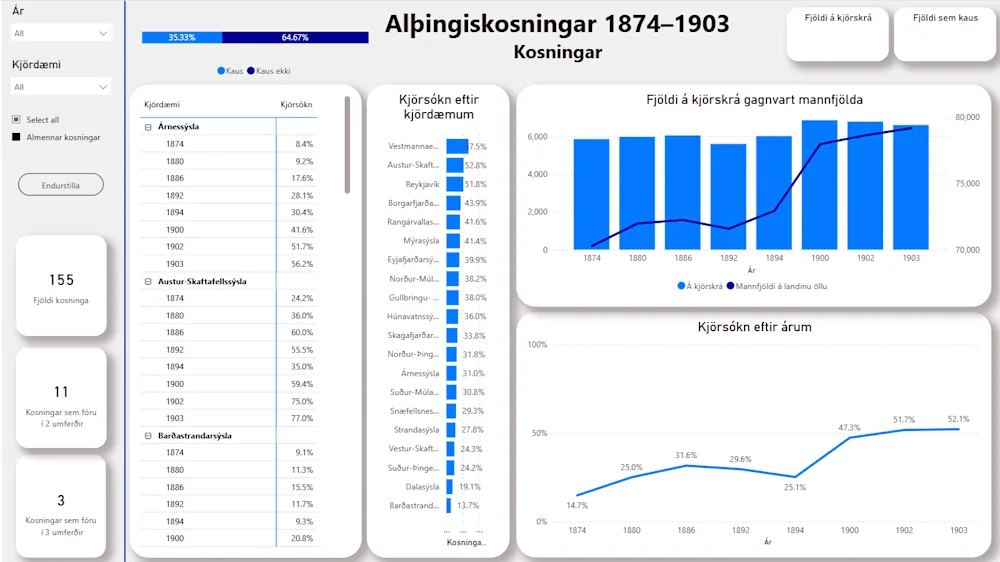
The database consists of two parts. On the one hand, there is an information page created by staff of the National Archives, containing explanations and analysis of the electoral data prepared by Hrafnkell Lárusson. On the other hand, there is the online presentation of the database itself, designed by the company Expectus ehf. in cooperation with those responsible for the project. The online database allows users to search for individuals—both voters and candidates—and to retrieve information using various search options, as well as to view a range of statistical data on elections during the period.
The final quarter of the 19th century and the early years of the 20th century were a time of radical change in most areas of Icelandic society. Among these developments were a marked growth in civic associations, democratic progress, and a stronger struggle for public rights, which resulted, among other things, in an expansion of voting rights to social groups that had previously been excluded from full citizenship. It is therefore particularly fitting to launch this election database on International Workers’ Day and in the run-up to upcoming municipal and local government elections.
The creators of the database hope that it will be useful for both research and teaching, and that it will also be of interest to those curious about political history and elections.
On Tuesday, 5 May, an episode of the National Archives’ podcast Til skjalanna will be published on the National Archives’ website. In the episode, Unnar Ingvarsson, Head of Digital Reconstruction at the National Archives, and the historian Hrafnkell Lárusson discuss the origins of the database, how it works, and its possible uses.
The database is accessible here.
Below are screenshots of the website showing the wide range of search options available in the electoral records: