5th June 2026
5th June 2026
Iceland Signs Declaration on Sustainable Forests for Resilient Societies
At the tenth Ministerial Conference of Forest Europe, representatives of 46 European countries signed a declaration on sustainable forests for resilient societies. On behalf of Iceland, the declaration was signed by Ágúst Sigurðsson, Director General of Land and Forest Iceland.
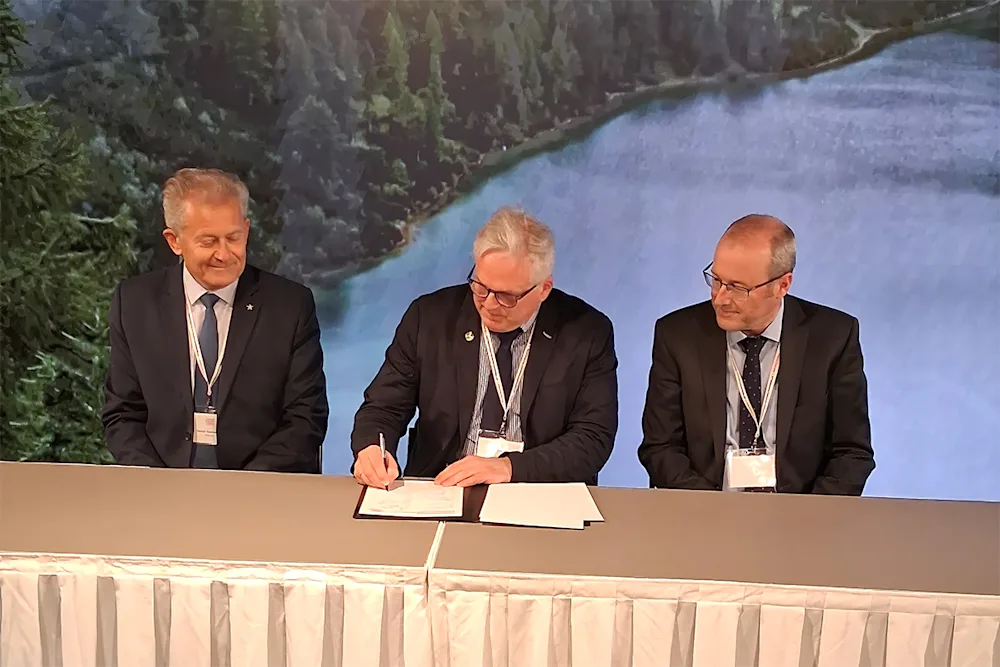
Representatives of Hungary, Iceland and Ireland sign the declaration. Dr Ágúst Sigurðsson, Director General of Land and Forest Iceland, is pictured in the centre. Photo: Forest Europe
The conference, held in Stockholm on 2–3 June, highlighted a number of emerging priorities in European forestry. Among the most prominent themes were the increasing use of timber in construction and the growing recognition of forests as critical infrastructure within national defence and preparedness strategies.
A new report on the status and significance of Europe’s forests was presented at the conference. According to the report, Europe’s forests cover 232 million hectares, representing approximately 40% of the continent’s land area—equivalent to around twenty-three times the size of Iceland.
Forest Europe serves as a platform where ministers, experts and government officials collaborate on policies and guidelines for the protection, sustainable management and use of forests across Europe.
The declaration on sustainable forests for resilient societies promotes sustainable forest management as a comprehensive framework for policy development and planning. Its aim is to strengthen the long-term resilience of both forests and communities in the face of environmental, economic and social challenges.
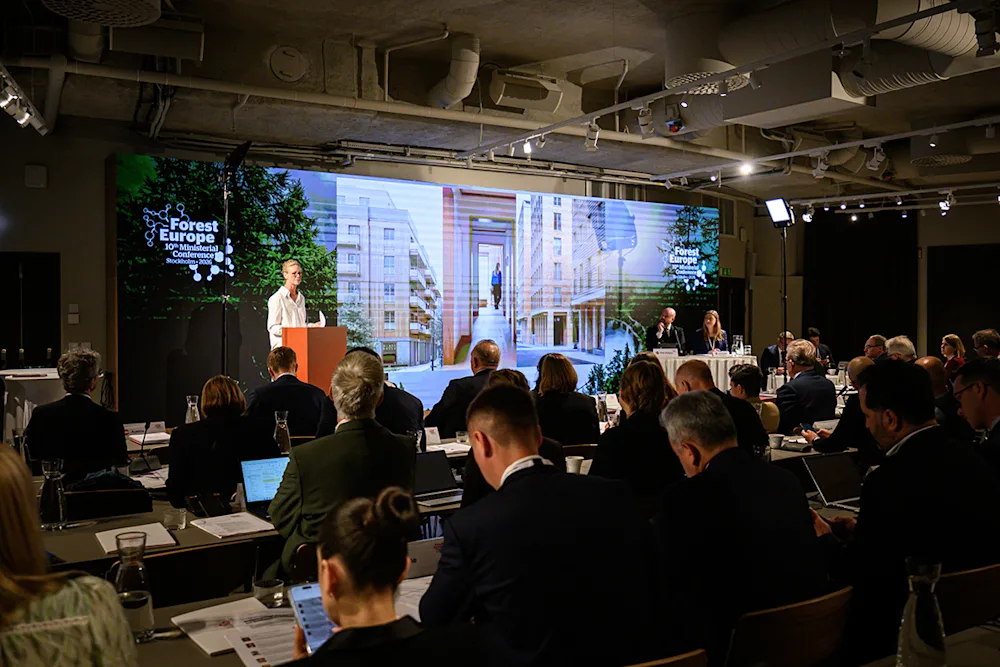
Ágúst Sigurðsson attended the conference and signed the declaration on behalf of Iceland under the authority of the Icelandic Government. The image below was taken by Peter Rombai during discussions at the Ministerial Conference of Forest Europe.
Climate Change, Biodiversity and Architecture
Current forestry challenges are closely linked to climate change adaptation, biodiversity conservation, protection against forest damage and the role of forests in supporting the bioeconomy.
Considerable attention was given to the increased use of timber in construction. It was noted that greater reliance on timber buildings could reduce carbon dioxide emissions by up to 50% compared with more carbon-intensive building materials such as concrete.
The conference also highlighted the important role architects can play in advancing timber construction. Europe is home to approximately 580,000 practising architects, making the profession a potentially powerful driver of change. Several innovative projects were presented, including the Sickla development in Stockholm, where all buildings are being constructed from timber, covering a total floor area of 250,000 square metres.
Biodiversity conservation and the financing of biodiversity-related initiatives were also major topics of discussion. Finland was presented as a leading example in this field, having recently launched a market for “nature credits”, designed to support investments in biodiversity and ecosystem services.
Forest Pests, Wildfires and Security Concerns
The conference addressed a range of threats affecting forests across Europe and beyond. These include insect pests, drought, heat stress and increasingly frequent and severe wildfires.
Globally, wildfires affect approximately 390 million hectares of land each year. Around 60% of this area is located in Africa, while approximately 4% is in Europe. Wildfires are often caused by lightning strikes but may also result from human activity.
A representative from Ukraine presented powerful images and video footage from areas affected by the ongoing war. The material illustrated the devastating impact of the conflict on people, landscapes and forests. Deliberate forest fires have been used as a tactic of war, causing extensive environmental damage.
It was reported that around 20% of Ukraine’s forests are expected to remain hazardous for many years because of landmines and unexploded ordnance. Clearing these areas is likely to take decades, if not centuries.
The conference also reflected a changing geopolitical landscape. Many European countries now recognise forests as part of their critical national infrastructure and include them in defence and resilience planning.
Albania to Assume the Chairmanship
Sweden has chaired the Forest Europe process in recent years. At the turn of the year, Albania will assume the chairmanship, reflecting the growing role and increasing momentum of Albanian society and institutions in European cooperation.
State of Europe's Forests Report
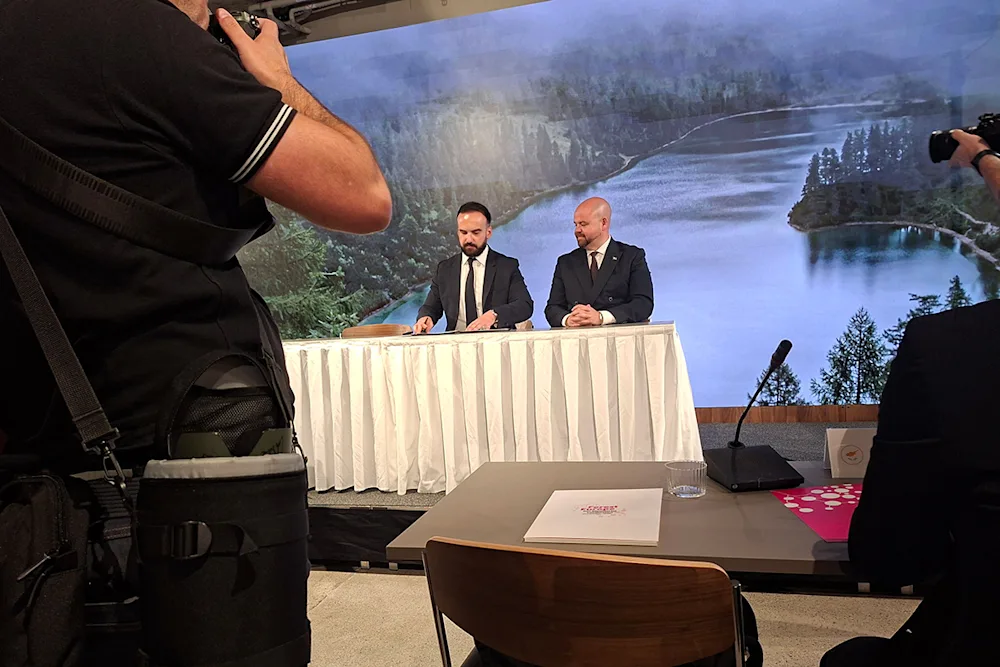
Peter Kullgren, Sweden's Minister for Rural Affairs, and Sofjan Jaupaj, Albania's Minister of the Environment, during the signing ceremony. Photo: Forest Europe