20th May 2026
20th May 2026
Graduation of the Kraftmiklir krakkar research project
The research project Kraftmiklir krakkar (e. Powerful Kids) was presented at Sjónaukinn 2026 at the University of Akureyri earlier this week. The project, which is an innovation initiative within primary healthcare at the South Iceland Health Institution, shows positive outcomes from family-centered treatment delivered in primary care.
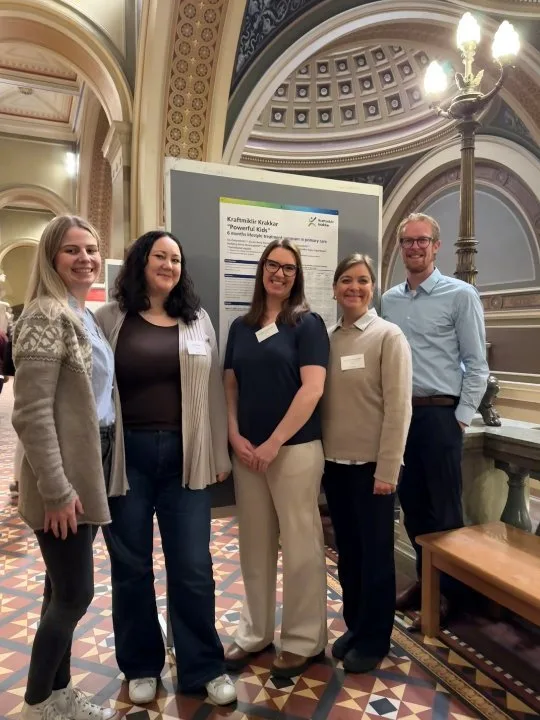
The aim of the team is therefore to respond to the increasing prevalence of childhood obesity and to provide professional treatment and support within primary healthcare for all children in the South of Iceland, regardless of place of residence.
The results of the study showed success, with a reduction in the standard deviation of body mass index (BMI SD) among children across all grades, with statistically significant decreases for children in the 4th and 7th grades. The findings also demonstrated positive changes in lifestyle factors; for example, sugar consumption decreased, more children began taking fish oil and vitamin D, more parents used food labeling to choose lower-sugar products and to avoid ultra-processed foods. There are also indications of increased physical activity among both children and parents, earlier reduction in screen use, and a greater number of children reporting improved self-satisfaction at the end of the treatment.
The purpose of the study was to examine whether the professional treatment and support provided within primary healthcare through the lifestyle intervention Kraftmiklir krakkar (“Powerful Kids”) is effective.Þorbjörg Anna Steinarsdóttir completed her Master’s thesis as part of a larger study. Along with Þorbjörg, the Kraftmiklir krakkar team includes Bjarnheiður Böðvarsdóttir (nurse), Eyrún Anna Stefánsdóttir (resident in family medicine), Íris Óskarsdóttir (family physician), and Vignir Sigurðsson (pediatrician).
It is the team’s hope that this represents a model for a treatment program for children with obesity that is feasible to implement in primary healthcare across the country. Early intervention—by offering treatment immediately following screening in school health services—ensures that care is provided at the right time. By delivering family-centered lifestyle treatment within primary healthcare, the aim is to provide the right service in the right place.