3rd April 2026
3rd April 2026
Electronic registration in ambulance services
The implementation of electronic registration in ambulance services is now in full swing.
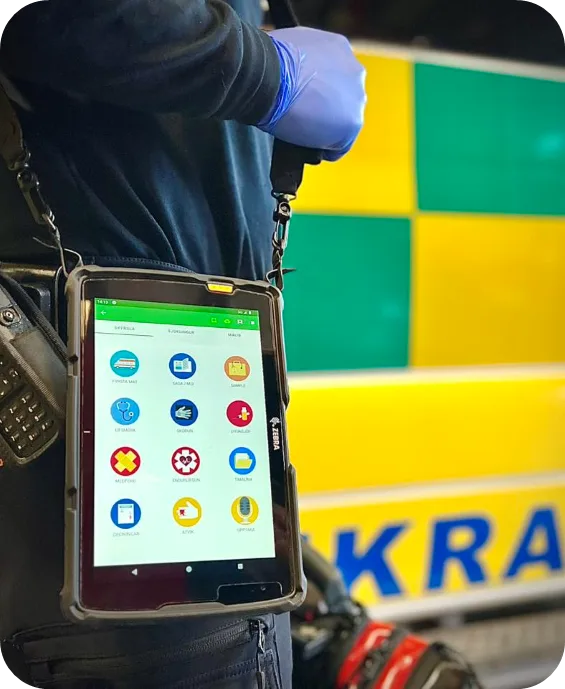
An important technological innovation in ambulance services is now well underway with its implementation across the country, as digital registration replaces the older technology of paper-based records. Paramedics now use a specially-designed tablet application to record patients' vital signs and treatment on their way to medical facilities. The development of this solution has a long history and was carried out in close consultation with its users, the paramedics, to simplify their work in the best possible way.
This digital development also allows paramedics to record information about a patient's condition, medication administered, treatment, etc., quickly and efficiently.
The main advantages of digital registration include minimising human error, data quality, and an increased flow of information to medical facilities, which can be even better prepared to receive patients before they arrive at their destination. Although the implementation is well advanced, the development of the application itself is far from over; new features and automation will continue to be added with the aim of further increasing integration between systems.
“This is not just about putting paper aside and saving time, but about creating interconnected systems that support data-driven decision-making, which is crucial in modern healthcare,” says Ólafur K. Ragnarsson, who developed the new solution. Ólafur, a computer scientist at Digital Health, is very familiar with the challenges that needed to be solved, being a former paramedic with 24 years of experience with the Capital Area Fire and Rescue Service.
The project marks the first major milestone in the operations of Digital Health, a centre intended to be a cornerstone in the development of coordinated technological solutions in healthcare. Digital Health began its operations at the start of the year and will connect all branches of the healthcare system with a modern, common infrastructure that will benefit both staff and patients.