11th June 2026
11th June 2026
Continued Efforts Needed to Improve Data for Agricultural Land Classification
It is important to continue improving the data used for the classification of agricultural land in Iceland. Land and Forest Iceland’s work on regional forestry plans is now gaining momentum, and discussions are currently under way with municipalities on how best to prepare these plans. These issues were among the topics addressed at a seminar on agricultural land ownership held at the Agricultural University of Iceland at Hvanneyri on 4 June.
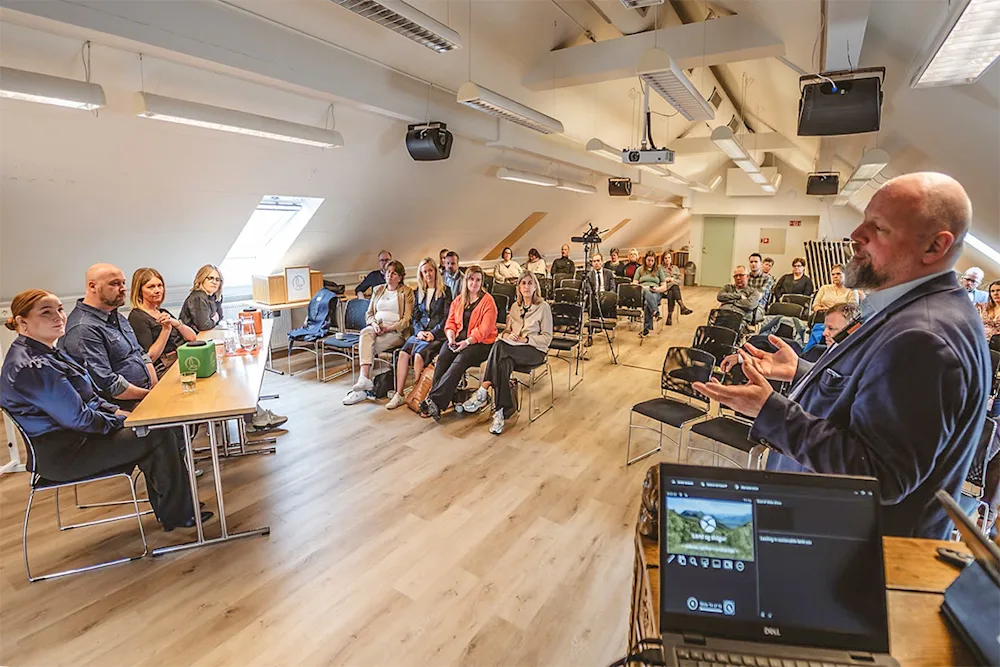
Dr. Eyjólfur Guðmundsson moderating the panel discussion. Photo: LbhÍ
Land and Forest Iceland participated in the seminar, which was well attended both in person and via livestream. The opening address was delivered by Hanna Katrín Friðriksson, Minister of Industries. Among other points, she emphasised that a clear policy on agricultural land ownership is essential if Icelandic agriculture is to thrive.
At the seminar, Ásdís Hlökk Theodórsdóttir and Torfi Jóhannesson presented a report commissioned by the Agricultural University of Iceland in cooperation with the Ministry. The report examines agricultural land ownership and the development of regulatory frameworks, comparing Iceland with the other Nordic countries, European Union member states and the United Kingdom.
The report notes that agricultural production is carried out on only around one-third of Icelandic registered farms and that the regulatory framework in Iceland is relatively liberal. Denmark, Norway and Sweden have much clearer provisions regarding the ownership and occupancy of agricultural properties. Among the report’s recommendations are improved recording of how registered farms in Iceland are used, a review of rules concerning the accumulation of agricultural land holdings, a reassessment of regulations governing foreign ownership of agricultural land, the collection of better data on ownership, land use and planning, and stronger protection of high-quality agricultural land.
Agricultural Land Classification and Regional Forestry Plans
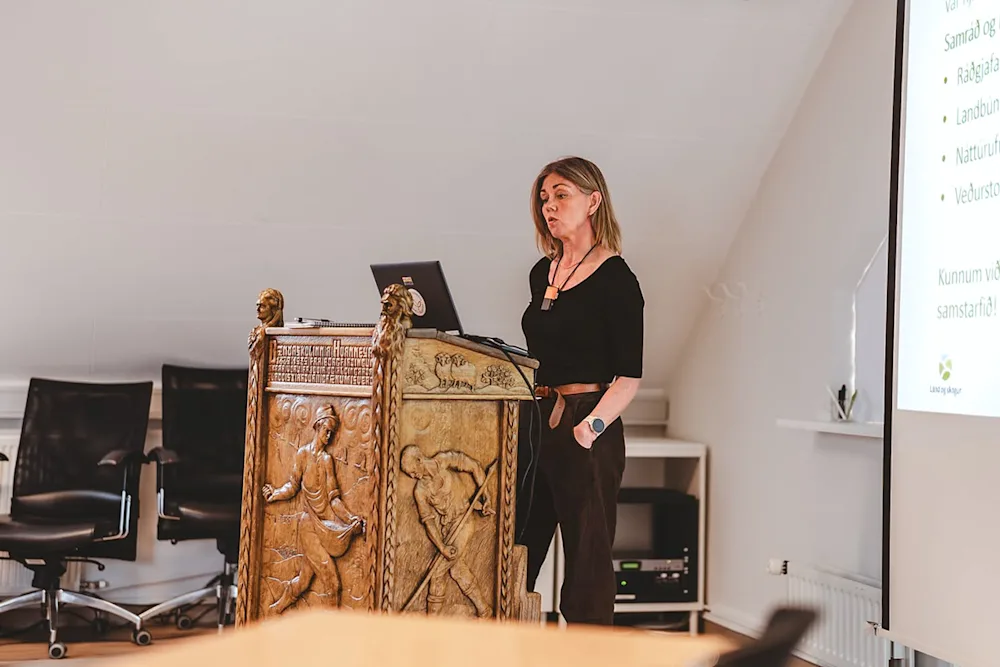
A few years ago, Land and Forest Iceland was assigned responsibility for developing a register and classification system for agricultural land in Iceland. Hrefna Jóhannesdóttir, a specialist at the institution, presented this work at the seminar and participated in a panel discussion.
Hrefna noted that the classification of agricultural land aligns closely with the organisation’s objective of providing integrated land-use advice that takes all relevant factors into account. This approach helps identify the full range of opportunities available on individual properties, including land restoration, afforestation and wetland restoration.
She also highlighted that Land and Forest Iceland’s work on regional forestry plans makes an important contribution to the broader picture that is being developed of Icelandic farmland and agricultural properties. This work is now progressing well, and discussions are taking place with municipalities on how best to prepare such plans. Regional forestry plans will be an important tool in developing a clearer understanding of the current status of Icelandic agricultural properties and their future potential.
Greater Coordination and Consultation
During the seminar, the Minister discussed the need for a clear and transparent regulatory framework that does not hinder legitimate transactions or discourage initiative in farming, tourism or other forms of value creation in rural areas, while at the same time providing society with a comprehensive overview of land ownership and land use.
It is clear that improved planning, greater coordination and consultation among stakeholders involved in the use of agricultural land, together with better information on the current status and opportunities associated with agricultural properties, can significantly enhance that overview. Land and Forest Iceland’s work on agricultural land classification is closely aligned with these objectives.
The current classification of agricultural land is by no means final. Continued efforts are needed to gather more and better data and to strengthen the foundation of the classification system. For example, Land and Forest Iceland maintains a dedicated online map portal through which users can submit comments, suggestions and feedback. Municipalities can also make a valuable contribution by reviewing these data during the preparation or revision of municipal master plans.
Such contributions are important in the ongoing effort to develop a more robust and reliable classification of agricultural land, alongside improved information on factors such as habitat types, soil characteristics, soil stoniness and other relevant variables.
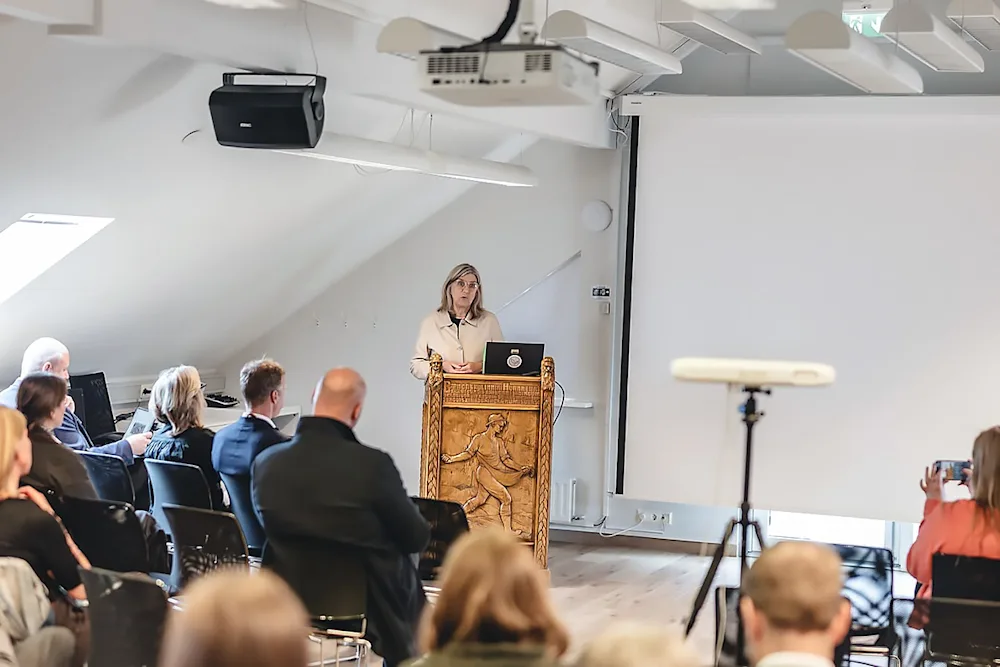
Hanna Katrín Friðriksson, Minister of Industries, delivering the opening address. Photo: LbhÍ