
The Healthcare Institution of South Iceland
“It is far preferable to be weather-bound on site than delayed many miles away.”
19th October 2026
This summer, the South Iceland Health Institution (HSU) has provided emergency medical response services at Landsvirkjun’s power generation and construction sites in the Þjórsá and Tungnaá region. An HSU paramedic is stationed in the area from morning until evening and remains on call overnight. As a result, emergency medical services are available around the clock, year-round, despite the considerable distance to the nearest ambulances located in populated areas.
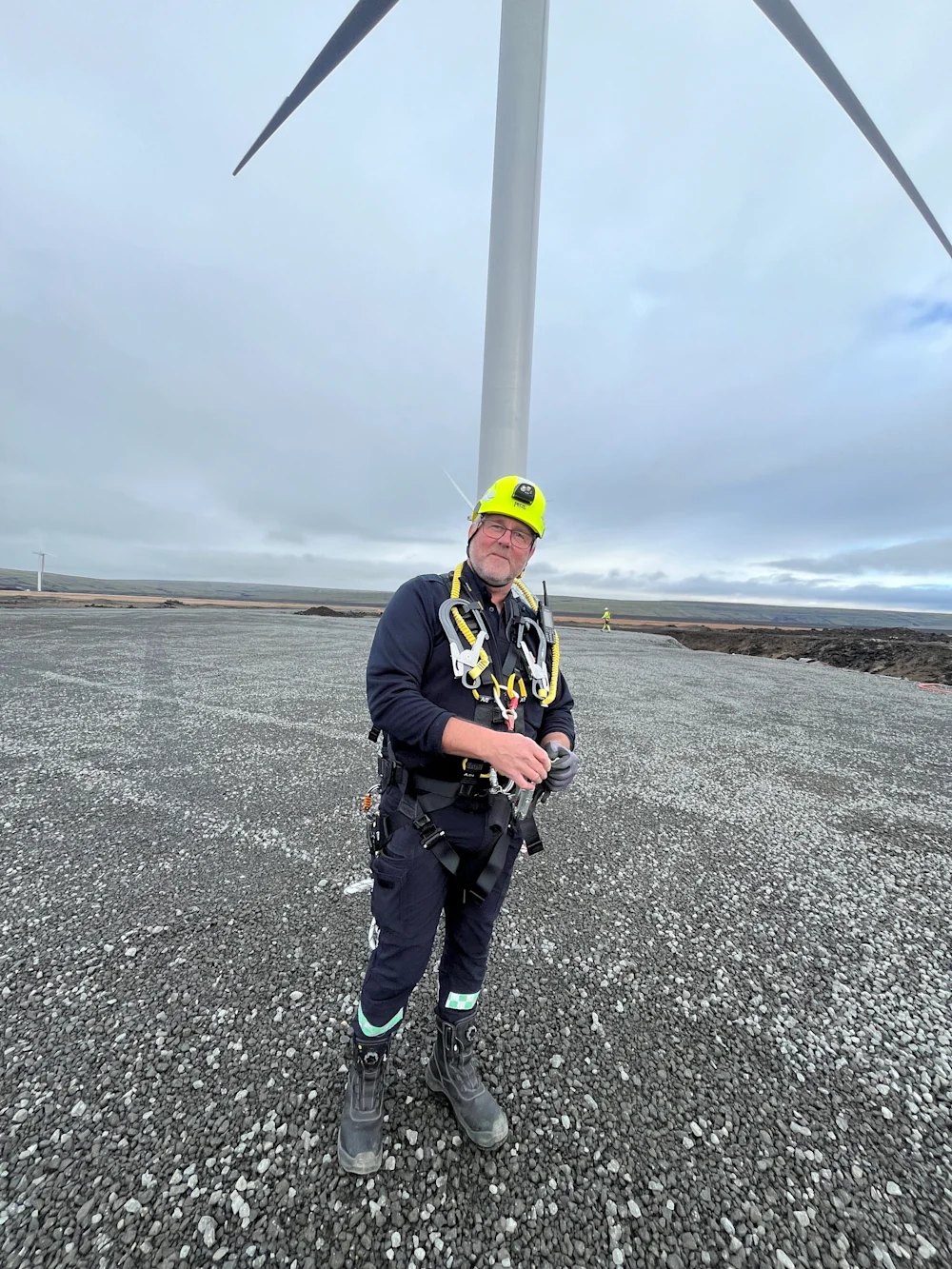
On the Highland, construction is underway on the Vaðalda Wind Farm and the expansion at Sultartangi, while several Landsvirkjun power plants are already in operation in the area. Hundreds of people now work there, and Einar Tryggvason, a paramedic with HSU, is one of those ensuring that help is never far away.
“There is one paramedic on site, operating a four-wheel-drive response vehicle equipped with most of the equipment found in a standard ambulance,” says Einar. “We are either out in the field or stationed at HSU’s facilities in Landsvirkjun’s control center at the Vaðalda site. At other times, we remain on call and stay overnight in the area.”
The role involves serving as the first responder to accidents, incidents, and medical emergencies, assessing patients’ condition and transportation needs, providing care, and preparing patients for transport by ambulance or helicopter when necessary, or resolving the situation on site. In addition, HSU nurses visit the area twice a week, spending several hours at a time on site.
As Far as Selfoss to Borgarnes
Distances on the Highland are considerable, and time is often critical.
“For example, Sigalda Power Station is about 105 km from Hvolsvöllur and 111 km from Selfoss, where the nearest ambulances are based,” says Einar. “To put that into perspective, that is roughly the same distance as from Selfoss to Borgarnes. And some of the power stations located deeper in the Highland are even farther away.”
Under normal conditions, response times may differ by more than an hour. During winter, there are also periods when routes between locations become completely impassable.
“In those circumstances, it is certainly preferable to be weather-bound at the scene, together with the staff working there, rather than being delayed far away.”
More Than Ambulance Services
The work is not solely about emergency response. HSU personnel participate in daily safety meetings with Landsvirkjun management and the safety and inspection teams of the engineering consultancy COWI. These meetings cover all aspects of safety at work sites and during travel to and from the area, highlighting both successes and areas for improvement.
Staff have also attended training exercises and courses, including certification programs that allow them to access and work in wind turbines.
“It is fair to say that emergency medical response is only one part of our mission here. Increasingly, our focus is on prevention and safety oversight, and we believe that trend will continue.”
The challenges are diverse. Work inside wind turbines takes place at heights of up to 90 meters. At Sigalda, construction activities occur beneath steep hillsides where there is a risk of rockfall, falling into fast-flowing water, and electrical accidents. Reservoir operations involve water pressure hazards, flood risks, and diving below 20 meters. On top of that, there is the unpredictable Highland weather.
“At work sites, we constantly emphasize caution and good judgment,” says Einar.
From Motorcycle Accidents to Nutrition Advice
According to Einar, the summer’s assignments have been highly varied. Cases have included fainting, allergic reactions, motorcycle accidents, hypothermia, vehicle collisions, cars swept into fast-flowing rivers, and falls into rivers and waterfalls.
At the same time, the job can be as simple as administering pain medication for a headache, providing treatment for acid reflux, or discussing healthier eating habits and lifestyle choices.
More serious incidents require pain management, medication administration, experience, sound decision-making, and extensive cooperation with other ambulance personnel, HSU primary care staff, the Icelandic Coast Guard helicopter unit, search and rescue teams, police, the Icelandic Road and Coastal Administration, and employees working in the area.
“Vehicle After Vehicle, Day and Night”
The emergency response service extends well beyond the construction sites.
“We respond to all callouts, whether that means heading down to the lowlands to assist our ambulance colleagues or helping tourists who need assistance in the nearby Highland. If there is a good chance we will arrive first or can make a meaningful contribution, we go. It makes no difference whether the person is a local resident, a tourist, or anyone else.”
What surprised Einar the most after the summer was the volume of traffic.
“I was astonished by how much traffic passes through this area, whether people were heading to Landmannalaugar, Veiðivötn, or somewhere else. It was vehicle after vehicle, day and night.”
In fact, some of the most serious incidents to date have involved tourists with no connection to the construction projects.
The workforce on site greatly appreciates the local presence.
“People are very aware of how far it is to all services available in populated areas, and they feel safer knowing that we are here with the equipment and medications we have at our disposal.”
Time Matters for the Injured
In Einar’s view, experience clearly demonstrates the benefits of having emergency resources distributed throughout HSU’s service area, much like the emergency response model operating in Öræfi.
“First responders can intervene immediately, assess the need for additional resources, and initiate treatment when appropriate. Even if we do not transport patients ourselves, time matters to those who are injured and waiting for help.”
Finally, Einar says it is always rewarding to witness the impact that a commitment to workplace safety can have.
“Through risk assessments, procedures, emergency plans, training, and proactive interventions, a work environment employing hundreds of people has been created here, yet serious incidents have remained rare. We hope to maintain that success.”
Response Operations Moving to Sigalda This Winter
Plans are now in place to relocate the emergency response operation from Vaðalda to Sigalda for the winter season.
Most construction activity will take place at Sigalda during the winter months, while activity at Vaðalda will be limited. This ensures that emergency resources are positioned where the need is greatest at any given time.