
The Directorate of Health
Respiratory infections – Week 43, 2026
29th October 2026
The number of diagnoses of respiratory infections is decreasing week by week, as is the number of hospital admissions at Landspítali University Hospital involving respiratory infections. Influenza vaccinations are now available to all priority groups.

-Automatic translation
The situation in Iceland
Considerably fewer cases of influenza were diagnosed in week 43 compared with weeks 40–42. Fewer cases of COVID-19 were also diagnosed in week 43 compared with weeks 41 and 42. Rhinovirus detections also decreased, although rhinovirus remains the most prevalent respiratory virus currently being detected. More cases of parainfluenza were diagnosed in week 43 than at any other point during this period. No cases of respiratory syncytial virus (RSV) have been detected so far this winter.
The number of patients hospitalized at Landspítali University Hospital with respiratory viral infections decreased from the previous week. Most notably, no patients were hospitalized with COVID-19 in week 43, and the number of patients hospitalized with influenza was nearly half that recorded in week 42.
The proportion of positive respiratory samples among all samples tested has decreased over the past two weeks.
The Chief Epidemiologist's dashboard on respiratory infections has been updated with data up to the end of week 43 of 2026 (19–25 October 2026).
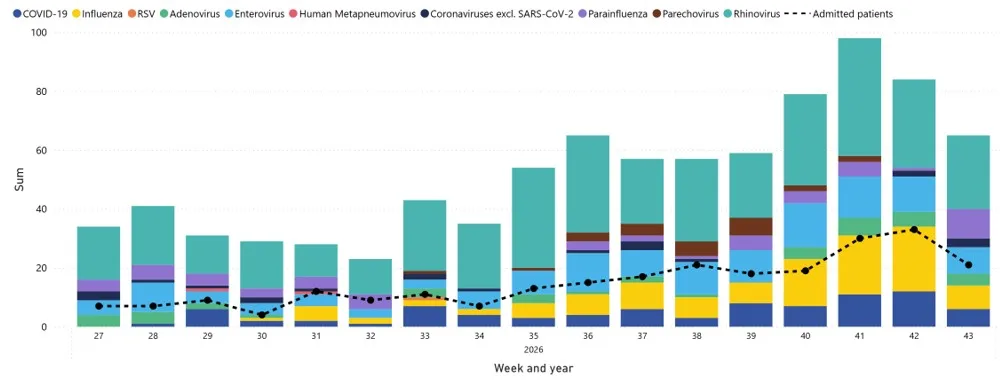
Figure 1: Number of respiratory virus diagnoses and the people admitted to Landspítali with respiratory viruses. See the dashboard.
The situation in Europe
Visits to healthcare facilities due to respiratory infections have increased in many EU/EEA countries. However, activity levels remain generally low, with few cases of influenza and COVID-19 being detected. Most individuals diagnosed with influenza or COVID-19 in healthcare settings are aged 65 years or older. Respiratory syncytial virus (RSV) infections are rarely being detected in EU/EEA countries. For further information, see the European Centre for Disease Prevention and Control website.
The Chief Epidemiologist reminds people that:
Influenza vaccinations are now available to all priority groups.
Stay at home while experiencing symptoms of a respiratory infection until you are well on the road to recovery and have been fever-free for 24 hours.
Take extra precautions around vulnerable individuals if you have symptoms of an infection.
Minimise contact with others who have symptoms of an infection.
Cover your mouth and nose when coughing or sneezing.
Wash your hands frequently and thoroughly.
Clean frequently touched shared surfaces and ventilate shared indoor spaces as much as possible.
Consider wearing a face mask depending on the circumstances.
The Chief Epidemiologist