
The Directorate of Health
Respiratory infections – Week 42, 2026
22nd October 2026
Influenza and COVID-19 diagnoses are increasing slightly. Testing for respiratory infections has also increased in recent weeks, but the proportion of positive samples fell last week compared with the previous week. This mainly coincides with a decrease in rhinovirus diagnoses, which have been most prominent recently. No RSV has been detected this season yet.

-Automatic translation
The situation in Iceland
Testing for respiratory infections increased by almost 20% in week 42 compared with the previous week. However, the proportion of samples testing positive for respiratory viruses fell from around 47% to 34%, mainly because rhinovirus diagnoses, which have been most prominent in recent weeks, declined.
Influenza diagnoses continue to rise, although confirmed cases remain relatively few. COVID-19 diagnoses have also increased. No RSV cases have been detected this season. Among other respiratory viruses, rhinovirus (the common cold virus) and enterovirus are currently the most commonly detected.
The figures are based on samples sent for testing, as before, with most coming from hospitals. The number of people admitted to Landspítali (the National University Hospital of Iceland) with a respiratory viral infection has increased steadily since the summer.
Nasal influenza vaccination has begun for children aged 2–4 years. The conventional influenza vaccine for children aged 6 months to 2 years and adults is being distributed, with vaccinations starting in the coming days.
The Chief Epidemiologist's dashboard on respiratory infections has been updated with data up to the end of week 42 of 2026 (12–18 October 2026).
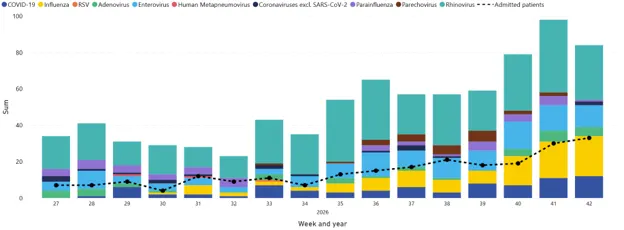
Figure 1: Number of respiratory virus diagnoses and the people admitted to Landspítali with respiratory viruses. See the dashboard.
Influenza
Influenza diagnoses continue to rise. However, the increase in influenza diagnoses between weeks 41 and 42 was small and smaller than the increase in testing.
In week 42, 22 individuals were diagnosed with influenza. Just over half (14 individuals) were aged 65 or over, and eight were aged 15–64. The vast majority (20 individuals) were diagnosed with influenza type A(pdm09). One was diagnosed with type A(H3), and one with both type A(pdm09) and influenza B.
Over the same period, the number of inpatients with influenza at Landspítali University Hospital rose from seven to 11, which may indicate a growing influenza burden. This figure includes all inpatients with a positive viral test, regardless of the reason for admission. Of the 11 individuals in hospital in week 42, nine were aged 65 or over and two were aged 15–64.
COVID-19
COVID-19 diagnoses have also risen somewhat in recent weeks, although increased testing may account for part of this rise. However, the number of COVID-19 inpatients has remained similar.
In week 42, 12 individuals were diagnosed with COVID-19. The majority (eight) were aged 65 or over, and four were aged 15–64. Six individuals with COVID-19 were at Landspítali University Hospital, five aged 65 or over and one aged 15–64.
Other respiratory infections
Diagnoses of other respiratory viruses have generally increased since the summer, although week 42 saw slightly fewer diagnoses than the previous week. Rhinovirus remains one of the most commonly detected respiratory viruses, with 30 individuals diagnosed in week 42, down from the previous week. No RSV cases were diagnosed last week or during this period (since week 40).
The situation in Europe
Visits to healthcare facilities for respiratory infections are rising in many EU/EEA countries, although rates remain generally low and few influenza and COVID-19 diagnoses are being made. Most individuals diagnosed with influenza and COVID-19 in primary care are aged 15–64, whereas most hospital diagnoses are in those aged 65 or over. RSV infection is barely detected in EU/EEA countries. For further information, see the European Centre for Disease Prevention and Control website.
The Chief Epidemiologist reminds people that:
Routine influenza vaccinations will begin in the days ahead.
You should stay at home while you have symptoms of a respiratory infection and until you are on the way to recovery and have been fever-free for 24 hours.
You should take particular care around vulnerable individuals if you have symptoms of an infection.
You should minimise contact with others who have symptoms of an infection.
You should cover your mouth and nose when coughing or sneezing.
You should wash your hands frequently and thoroughly.
You should clean shared surfaces and ventilate shared spaces as far as possible.
You should consider wearing a face mask, depending on the circumstances.
The Chief Epidemiologist