
The Directorate of Health
Respiratory infections – Week 40 2026
8th October 2026
Diagnoses of respiratory viral infections have generally risen in Iceland in recent weeks, as expected at this time of year.

-Automatic translation
Influenza diagnoses have risen recently, though they remain relatively low. There are no signs of a comparable increase in COVID-19 diagnoses. No new RSV cases have been reported in recent weeks. Among other respiratory viruses, rhinovirus (the common cold virus) and enterovirus are currently the most frequently detected. As before, the figures are based on samples sent for testing, with most coming from hospitals. The number of individuals admitted to Landspítali (the National University Hospital of Iceland) with a respiratory viral infection has risen steadily since the summer.
Individuals in risk groups should watch for the start of seasonal influenza vaccination.
The Chief Epidemiologist's dashboard on respiratory infections has been updated with data up to the end of week 40 of 2026 (28 September to 4 October).
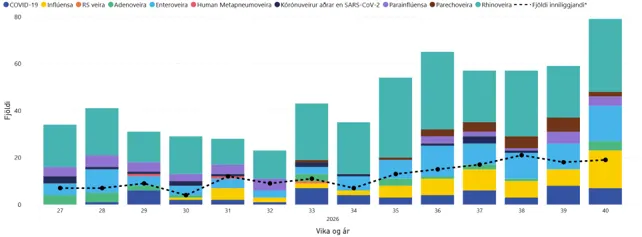
Figure 1: Number of respiratory virus diagnoses and the number of individuals admitted to Landspítali with respiratory viruses. See the Dashboard.
Influenza
Influenza diagnoses are now increasing but remain relatively low. Isolated cases were diagnosed from the end of July to the end of August, after which cases began to rise slowly. Last week (week 40; 28 September – 4 October), 16 people were diagnosed with influenza. Over half of those diagnosed (10 individuals) were aged 65 or over. Four were aged 15–64, one was aged 5–14, and one was under 5. The majority (14 individuals) were diagnosed with influenza type A(pdm09), and two had type A(H3). In addition, three individuals were admitted to Landspítali with influenza, all aged 65 or over.
The nasal spray influenza vaccine has arrived in the country, and vaccination of children aged two and over has begun. The standard influenza vaccine for younger children and adults has been delayed because of production issues affecting all of Europe. Still, vaccination is hoped to begin at health centres and other locations where priority groups are vaccinated from mid-October.
RSV infection
Only one case of RSV infection has been diagnosed since the beginning of July: a child under 1 year of age, diagnosed in week 33 (10–16 August).
COVID-19
Since the beginning of July, between one and eight people have been diagnosed with COVID-19 each week. Unlike influenza, COVID-19 diagnoses have not risen as autumn has progressed. In week 40, seven individuals were diagnosed with COVID-19. The majority (five) were aged 65 or over, one was aged 15–64, and one was under 5. Four individuals were admitted to Landspítali with COVID-19, all aged 65 or over.
Other respiratory infections
Diagnoses of other respiratory viruses have been rising since the beginning of August. Rhinovirus remains one of the most commonly detected respiratory viruses, with more than 20 individuals diagnosed with rhinovirus infection each week since mid-August. Enterovirus diagnoses have also increased since the summer, with nine to 15 individuals diagnosed with enterovirus infection each week since the beginning of September.
The situation in Europe
Overall, respiratory infection activity in EU/EEA countries is low, although a few countries report increases in primary care and in hospitals. Influenza diagnoses are few, with increases mainly observed in hospitals among older people (aged 65 and over). RSV activity is low, as expected at this time of year. COVID-19 diagnoses have increased slightly in both primary care and hospitals. For further information, see the website of the European Centre for Disease Prevention and Control (ECDC).
The Chief Epidemiologist reminds people to:
Individuals in risk groups should watch for when seasonal influenza vaccinations begin.
Stay at home while you have symptoms of a respiratory infection and until you are on the way to recovery and have been fever-free for 24 hours.
If you have symptoms of an infection, take particular care around vulnerable individuals.
Minimise contact with others who have symptoms of an infection.
Cover your mouth and nose when you cough or sneeze.
Wash your hands often and thoroughly.
Clean shared surfaces and ventilate shared spaces as much as possible.
Consider wearing a face mask depending on the circumstances.
The Chief Epidemiologist