
The Directorate of Health
Measles in Iceland – Following a Recent Case
12th January 2026
Following an announcement by the Directorate of Health on 8 January that measles had been diagnosed in a child in Iceland, the Chief Epidemiologist wishes to provide the public with further information on the current situation, risks, and vaccination.
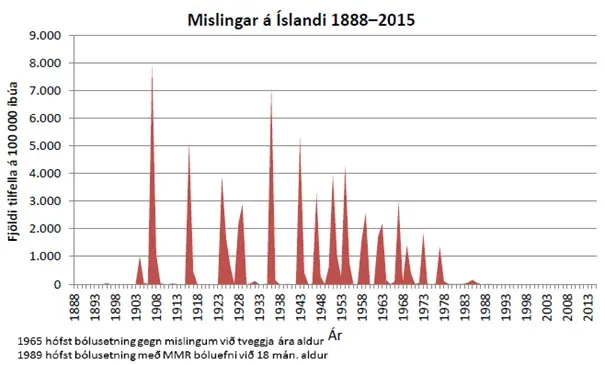
Figure 1. Measles in Iceland, 1888–2015
- Automatic translation
No new cases have been identified since the case in question was confirmed. All individuals in Iceland who were considered to have been exposed to infection, including those who were at Landspítali at the same time as the infected individual and passengers on the flight to Iceland, were either offered vaccination on 8 January or placed under appropriate follow-up by the Primary Health Care of the Capital Area.
The incubation period for measles is usually 7–14 days but can be up to 21 days; surveillance will therefore continue until that period has elapsed.
Measles – History and Situation in Iceland
Measles is a highly contagious disease and was previously one of the most serious childhood infectious diseases in Iceland. After organized vaccination began in 1976 and the MMR vaccine (measles, mumps and rubella) was introduced in 1989, the disease gradually declined and was eliminated in Iceland in 1996 (Figure 1). Since then, only sporadic cases or small clusters have been identified, usually linked to imported infections from abroad.
The largest outbreak in recent years occurred in 2019, when nine individuals were diagnosed with measles, including six cases in a cluster that could be traced to an unvaccinated traveller. Extensive control measures were implemented at that time, including vaccination of approximately 6,800 individuals, successfully halting further spread.
During the COVID-19 pandemic from 2020 to 2023, no measles cases were detected in Iceland. In 2024, however, two isolated cases occurred, one in February and one in April, both in adults who were infected abroad. In neither case was onward transmission detected.
Vaccination Coverage in Iceland
The Icelandic measles vaccination program is based on two doses of the MMR vaccine:
first dose at 18 months of age,
second dose at 12 years of age.
To maintain herd immunity against measles, coverage ideally needs to exceed 95% for both doses.
According to the most recent assessment of routine childhood vaccinations for 2024, vaccination coverage in Iceland is generally good among younger children but lower among older children and adolescents:
18-month-old children (birth cohort 2022): 95% vaccinated nationwide,
12-year-old children (birth cohort 2012): 89% vaccinated nationwide.
In the capital area, coverage in 2024 was recorded at 94% among 18-month-old children and 87% among 12-year-old children. In some regions of the country, coverage of the second dose is below 90%, which is under the threshold required to ensure adequate population protection. Nationwide coverage below 90% increases the risk that measles could become established if the virus is introduced into the country.
Measles Situation in Europe and Globally
Measles cases have increased in Europe and elsewhere following the COVID-19 pandemic. From September 2023 to August 2024, 138,740 measles cases were reported in Europe, with 96% occurring in just ten countries, including the United Kingdom, Romania, Türkiye and Russia (Figures 2 and 3).
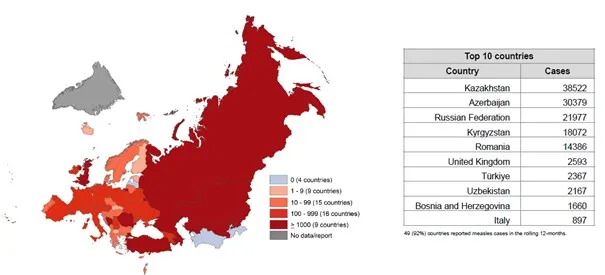
Figure 2. Measles cases in the World Health Organization (WHO) European Region, September 2023–August 2024
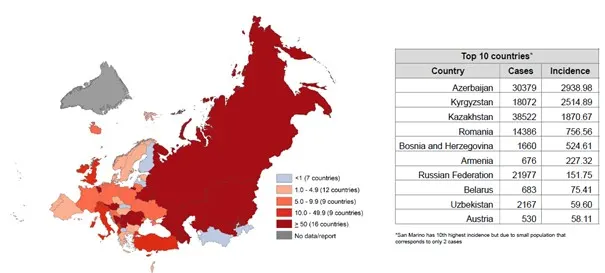
Figure 3. Measles incidence per million population in the World Health Organization (WHO) European Region, September 2023–August 2024
Globally, measles is still far from being eradicated. According to the World Health Organization (WHO), an estimated 11 million people were infected with measles in 2024 and approximately 95,000 died. WHO has specifically warned that measles is resurging in many high-income countries where vaccination coverage has stagnated or declined. Despite the recent increase in cases, WHO estimates that measles vaccination has prevented approximately 59 million deaths since the year 2000.
Worldwide, measles vaccination coverage remains below the level required to maintain herd immunity; in 2024, only an average of 84% of children had received the first dose of the vaccine. WHO warns that without increased investment in immunization, surveillance and response systems, the risk of serious outbreaks will continue to rise in the coming years.
Advice to the Public
The Chief Epidemiologist encourages all individuals born between 1975 and 1987, or those who are unsure whether they have received two doses of the MMR vaccine (see My Pages on heilsuvera.is), to check their vaccination status with their primary health care center and receive a booster vaccination if necessary, particularly in relation to international travel.
Children may be vaccinated against measles from 6 months of age if there is a specific risk of exposure, for example due to travel to areas where measles is circulating. Such a dose is considered an additional dose and must be followed by the routine vaccination schedule later.
Outlook
With generally high vaccination coverage, rapid response measures and continued surveillance, it is expected that the case identified on 8 January will not lead to further spread. Experience nevertheless shows that imported infections can always reach the country as long as measles continues to circulate globally.
The best protection against measles is, and will remain, full vaccination.
The Chief Epidemiologist